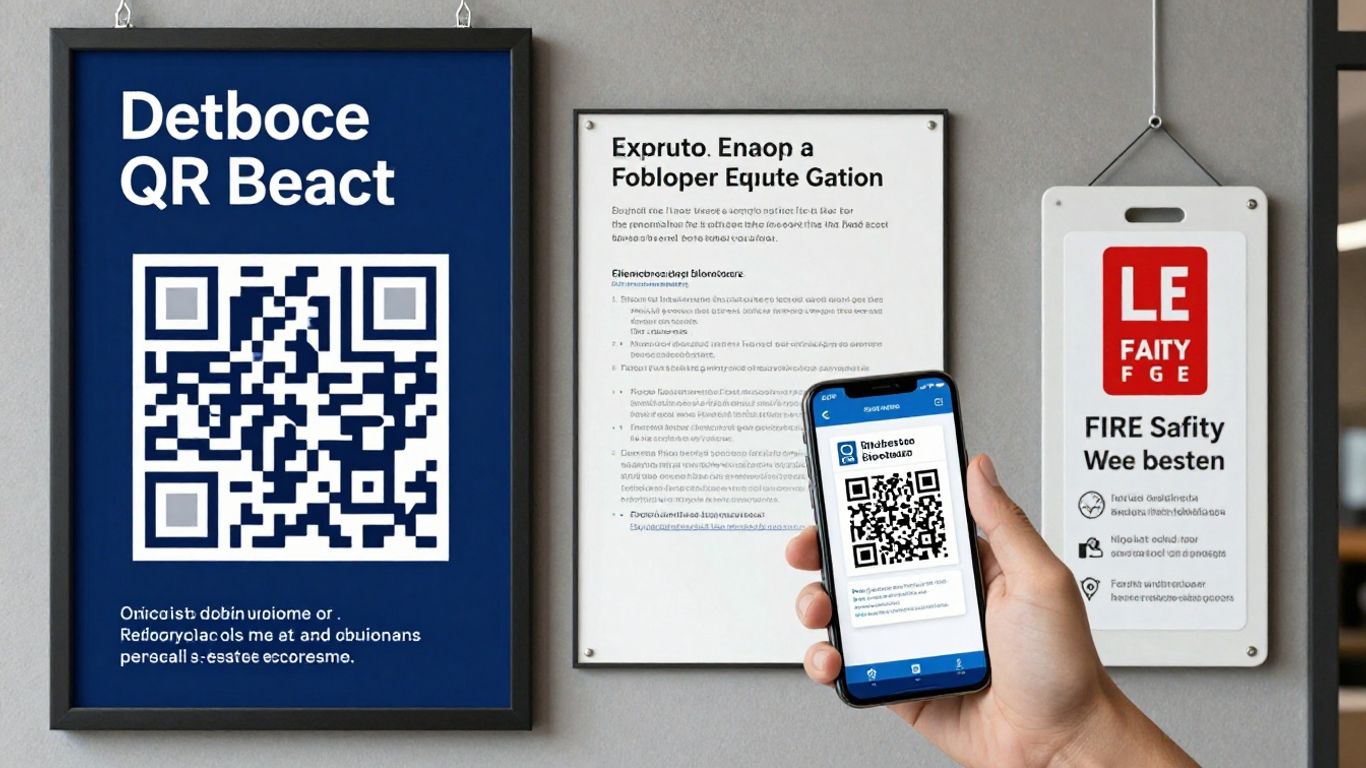

If you’re asking how do I update a QR code that is already printed on signage, the answer depends entirely on what type of code you’re working with. The sign is up and the QR code is printed, but the destination it points to is broken, outdated, or pointing somewhere it shouldn’t. You need a fix now, and you don’t want to pay for a full reprint to get it.
When considering how do I update a QR code that is already printed on signage, remember that the process varies based on the QR code type.
Before you do anything, you need to know which situation you’re actually in. Either your code is already dynamic and editable through a platform dashboard, it’s static but encodes a short URL you happen to control, or it’s a fully static code with the destination baked permanently into the pattern. Each situation has a different solution, and choosing the wrong one wastes time and money.
Understanding how do I update a QR code that is already printed on signage is essential for effective management.
QR code management platforms like Xcan It are built specifically for organisations managing printed signage at scale, where reprinting every time a destination changes isn’t a viable option. But even if you’re dealing with existing signage today, there’s a logical path forward. Start by diagnosing your code type, then apply the right fix.
Knowing how do I update a QR code that is already printed on signage can save you money and time.
Why some QR codes can be updated and others can’t
Many ask how do I update a QR code that is already printed on signage, highlighting its importance.
The answer comes down to where the destination URL actually lives. With a static QR code, the full destination URL is encoded directly into the pixel pattern at the moment of creation. The code literally is the URL. There is no server layer, no redirect, and no way to intercept a scan before it reaches the destination. Once printed, it’s fixed permanently.
An effective method for how do I update a QR code that is already printed on signage is crucial for businesses.
A dynamic QR code works completely differently. Instead of encoding the final destination, it encodes a short redirect URL, a QR short URL, hosted on a platform’s server. When someone scans the code, their device hits that server, the server checks what the current destination is, and redirects them there instantly. The printed code never changes because it never needs to. Only the server-side destination does.
To fully grasp how do I update a QR code that is already printed on signage, it’s beneficial to explore your options.
A useful analogy: a static QR code is like printing a street address directly on a flyer. Whatever address you printed is the address people will go to, forever. A dynamic QR code is like printing a forwarding service number. The service can send callers to any address you choose, and you can change that address any time without reprinting the flyer.
In conclusion, knowing how do I update a QR code that is already printed on signage empowers users.
What’s actually inside a static QR code
The full destination URL is encoded as a fixed data pattern in the code’s pixel grid. There is no redirect layer and no server connection involved in the scan. The destination is permanently embedded, which means no amount of platform access or dashboard editing can change where it leads.
How dynamic codes redirect at the server level
The printed code encodes a QR short URL, something like xcn.it/abc123 on the Xcan It platform. When scanned, the device opens that short URL, the platform’s server checks the current destination associated with it, and the user is redirected there. The process typically happens in a fraction of a second, though network latency and server load can affect timing. It happens invisibly to the person scanning.
Why the printed code pattern rarely needs to change
With a well-managed dynamic code, the short URL embedded in the printed pattern stays constant for as long as the platform account and domain remain active. The only thing that changes is the destination stored on the server side. This is the entire mechanism that makes dynamic codes reprint-proof, and it’s the reason they function as long-term signage infrastructure rather than one-time campaign assets. Note that if a provider shuts down, changes their domain, or an account is deleted, that short URL will stop resolving, so choosing a stable, established platform matters.
How do I update a QR code that is already printed on signage? Diagnose first
Before moving forward, consider how do I update a QR code that is already printed on signage.
Many people genuinely don’t know which type of code they’re working with. Before you attempt any fix, run through a quick diagnostic so you don’t waste time trying to edit something that structurally cannot be edited.
The most reliable check is to scan the code and observe the URL that briefly appears before any redirect happens. If you see a long URL that starts with the actual destination domain (e.g., yourcompany.com/page/specific-resource), it is almost certainly static. If you see a short, unfamiliar URL from a platform domain (e.g., xcn.it/abc, qr.io/xyz, bit.ly/xxx), it was almost certainly created as a dynamic, editable QR code and may be editable.
Read the URL your scanner surfaces
Most smartphone camera apps and QR scanner apps briefly display the URL before opening it. That URL tells you everything you need to know. A long destination URL means the code is static and the destination is baked in. A short, branded redirect URL means there’s a server layer in place, and the code is likely dynamic.
Check whether you have a dashboard account
Log in to wherever the code was originally created. If a dashboard exists and your code appears in it with an edit or redirect option, it’s a dynamic, editable QR code and you can update the destination right now. If the code was created using a free online generator with no account, or you have no login credentials for any platform, the code is almost certainly static and cannot be edited.
What to do if you genuinely can’t tell
Open an incognito browser window and use a redirect-tracing tool such as wheregoes.com. Paste in the URL the scanner revealed. If the trace shows a chain of redirects with a platform domain as the first hop, the code is dynamic. If the trace goes straight to the final destination with no intermediary, it’s static. This takes less than two minutes and removes all guesswork.
How do I update a QR code already printed on signage: the sticker overlay fix
Exploring how do I update a QR code that is already printed on signage can enhance your signage strategy.
If the code is static and there’s no redirect layer to work with, a QR overlay sticker is the fastest physical fix available. A new QR code, printed on adhesive vinyl, goes directly over the original. The sign stays in place, the cost is a fraction of a full reprint, and if you use a dynamic code on the overlay, you won’t face this problem again.
This approach makes practical sense when the sign itself is in good condition, the QR code area is flat and accessible, and a medium-term fix is acceptable. It doesn’t make sense when the surface is curved, highly reflective, or textured in a way that prevents proper adhesion. High-traffic areas prone to vandalism or tampering are also poor candidates, since a QR overlay sticker is easier to remove or deface than an integrated printed panel.
Choosing the right overlay material for your environment
For indoor signs, standard adhesive vinyl is sufficient and keeps costs low. Outdoor signs need UV-resistant, weatherproof vinyl with a matte or satin finish to reduce glare and maintain scannability in direct sunlight. In UK conditions specifically, laminated polyester or industrial-grade vinyl rated for freeze-thaw cycles will hold adhesion through winter far better than uncoated stock materials.
What to get right before the sticker is printed
The replacement QR code printed on the overlay must be dynamic, not static. Printing a static code as your fix resets the clock to zero: the next time the destination changes, you face exactly the same problem. Use a QR code management platform to generate a dynamic code before the sticker is produced, so the overlay becomes permanently manageable from day one.
Cost and realistic lifespan of a sticker overlay
As of 2026, UK commercial signage pricing for vinyl overlay work typically runs between £80 and £400 depending on sign size, material specification, and whether installation is included. UV-resistant laminated options sit at the higher end of that range. Lifespan varies considerably by material grade, lamination quality, and UV exposure, basic uncoated vinyl may degrade within one to two years outdoors, while industrial-grade laminated materials can perform reliably for several years. Budget and reassessment schedules should reflect the specific material specified and your site’s exposure conditions.
Redirect fix: updating the destination through a URL you control
By understanding how do I update a QR code that is already printed on signage, you can improve customer experience.
If the printed QR code encodes a short URL that you own or have account access to, you’re in the easiest possible situation. You can change where the code points without touching the physical sign at all. The code stays valid; only the destination updates.
This covers two main scenarios. First, you created the short URL through a third-party shortener like Bitly or Short.io and still have account access. Second, the short domain is self-hosted and you can modify redirect rules via your hosting environment or domain registrar. Both options let you update the QR code redirect without any physical intervention on the signage.
Updating a redirect through a shortener dashboard
Log into the shortener account, find the link associated with the printed QR, click the edit or redirect option, and enter the new destination URL. Save the change. That’s the entire process. For hosted shortener services, changes typically apply to every subsequent scan quickly, though if you’re using a custom domain or self-hosted redirect, DNS propagation can introduce delays of a few hours up to 48 hours depending on TTL settings.
Updating a redirect via DNS or server config
If the short domain is self-hosted, update the destination using an .htaccess 301 redirect rule on an Apache server, or through the domain redirect tool in your registrar’s control panel. Once the change is in place, confirm it has propagated by testing the URL in incognito mode. DNS propagation typically completes within a few hours but can take up to 48 hours depending on TTL settings and your registrar’s infrastructure.
The limitation of this approach
This only works if you already control the short URL. If the QR code encodes a full destination URL directly, that is, a static code, there is no redirect layer to intercept. The scan goes straight to the destination, and you have no mechanism to change it without reprinting. This is precisely the scenario where moving to a dedicated QR code management platform stops being optional.
The right long-term fix: migrating to dynamic QR codes
Temporary fixes solve today’s problem. Dynamic QR codes solve every future version of it. For any organisation managing more than a handful of signs, staying on static codes means every destination change triggers a physical intervention, whether that’s a new sticker, a reprinted panel, or a full sign replacement. The cumulative cost of that approach over two or three years far exceeds the investment in a dynamic QR code management platform.
Migration doesn’t require retiring all existing signage overnight. The practical approach is to start with high-priority signs: the ones with the highest scan volumes, the most frequently changing destinations, or the highest reprint cost if something goes wrong. Apply dynamic QR overlays to those first. Build the managed inventory progressively, and extend the approach as signs come up for natural refresh.
What you lose by staying on static codes
Static codes provide no analytics, no editability, and no flexibility after printing. Every destination change means generating a new code, commissioning a new print job, and spending budget on physical installation. There is no engagement data, no way to A/B test destinations, and no ability to respond quickly when a linked page goes offline or a campaign ends.
How migration works in practice
Create new dynamic codes through a QR code management platform, assign each code a destination, and then either overlay them onto existing signs or incorporate them into the next scheduled reprint. From that point forward, destination updates happen entirely through the platform dashboard. No one needs to visit the sign, no printer needs to be briefed, and no budget needs to be allocated for physical intervention.
Why this matters most for multi-site or high-volume signage
One static sign with a broken link is a minor inconvenience. Twenty sites, each with dozens of signs, creates an unmanageable maintenance overhead if every code is static. The operational leverage of dynamic QR management compounds directly with scale: the more signs you manage, the more disproportionate the benefit of having a centralised system where a destination update takes seconds and applies everywhere simultaneously.
How Xcan It makes destination updates instant across all your printed signage
Addressing how do I update a QR code that is already printed on signage can lead to better management practices.
Xcan It is purpose-built for printed and physical environments where reprinting is expensive, slow, or operationally impractical. It’s not a basic QR generator and it’s not a URL shortener. It’s a QR code management platform that treats every deployed code as a managed asset with a full lifecycle, from creation through to ongoing destination control and engagement tracking.
The platform operates on a Create, Connect, Control model. You create the dynamic code once, connect it to an initial destination, and then control that destination from the dashboard in real time, indefinitely. The printed code remains permanently valid for as long as the account and platform domain are active, and every change you make applies to the next scan regardless of where the sign is physically located. Check Xcan It’s current plan terms for details on destination update limits by subscription tier.
Real-time destination updates without touching the sign
Log into the Xcan It dashboard, locate the code you need to update, change the destination URL, and save. The update applies immediately to every subsequent scan, whether the sign is in a shop window on the high street, a construction site compound, or a roadside public notice board managed by a council. There is no propagation delay and no physical access required.
Scan analytics that basic redirects don’t provide
Every scan through Xcan It generates data: when the scan happened, where it occurred, and what device was used. Standard server-side redirects like .htaccess rules do not log scan analytics by default. Some URL shortener services provide basic click statistics, but a specialised QR code management platform typically offers more granular tracking, device type, timestamp, and geolocation, in a single dashboard built around signage use cases. For organisations that need to report on campaign engagement, demonstrate asset usage, or prove that public signage is actually being interacted with, that depth of data is operationally significant.
Managing signage QR codes at scale from a single dashboard
The Xcan It centralised dashboard lets teams manage hundreds of codes across multiple sites without needing physical access to any of them. Role-based permissions mean the right people can update the right codes, while access to sensitive or high-stakes destinations is restricted to authorised team members only. For enterprise teams, multi-site facilities managers, and public sector bodies managing signage across large geographic areas, this level of control is the difference between a manageable system and an unmanageable one.
Making sure your replacement QR code is scannable on existing signage
Incorporating how do I update a QR code that is already printed on signage into your processes is essential.
Whether you’re applying a QR overlay sticker or fitting a reprinted panel, the replacement code needs to work reliably in the actual conditions of your sign’s environment. Most failed replacement QR codes don’t fail because of a technical error in the code itself. They fail because of poor sizing, insufficient contrast, or surface incompatibility that was never tested before the sign went back up.
For outdoor signage scanned from a distance, the 10:1 rule applies: the code should be at least 1 cm wide for every 10 cm of intended scanning distance. At 1 metre, a 10 cm code is the minimum. At 2 metres, 20 cm. For roadside or public signage where people may be scanning from further away, scale up accordingly. The absolute floor of 2 cm by 2 cm applies only for close-range use; it is not appropriate for any signage where the scanner isn’t directly in front of the sign.
Size and contrast rules you can’t afford to ignore
Black on white is the optimal combination and the most reliable in all lighting conditions. Any deviation from high-contrast dark-on-light increases the risk of scan failure, particularly in low ambient light, on reflective surfaces, or in direct sunlight. Branded QR codes with custom colours can work, but they must be tested against the specific background of the existing sign rather than assumed to be acceptable based on how they look on screen.
Quiet zone and surface compatibility
The clear border around a QR code, known as the quiet zone, must be at least 4 modules wide. This blank margin separates the code from surrounding design elements and prevents scanner misreads. On busy signage backgrounds, a quiet zone that’s been reduced or compromised by design choices is a common reason replacement codes fail to scan reliably. Reflective, textured, or ribbed surfaces also interfere with scan performance and should be assessed before an overlay is specified.
How to test before the sign goes back up
Before reinstalling any sign with a replacement code, run a full test sequence. Scan with the iOS camera app, Google Lens, and at least one dedicated third-party scanner app. Test on both iOS and Android devices. Test at multiple distances, in the actual lighting conditions the sign experiences, and from angled positions that reflect how people will realistically approach it. If any test fails, adjust the code’s size, contrast, or placement before committing to installation.
When reprinting is genuinely the right answer
By knowing how do I update a QR code that is already printed on signage, you set the foundation for future success.
Not every situation can be resolved with a sticker or a dashboard update. There are cases where reprinting is the only viable option, and attempting a workaround would waste both time and money. If the sign itself is physically damaged, with warping, deep peeling, corrosion, or surface degradation that would prevent a QR overlay sticker from adhering reliably, the sign needs physical replacement regardless of what happens with the QR code.
Understanding how do I update a QR code that is already printed on signage can prevent future issues.
If a reprint is unavoidable, treat it as an opportunity rather than a cost. This is the moment to replace every static QR code on that sign with a dynamic one. Briefing your print supplier to include dynamic codes from the outset, or using Xcan It’s in-house QR production service, means the new sign arrives with codes that are already tracked, already manageable from the dashboard, and won’t require physical updates when destinations change.
Consideration of how do I update a QR code that is already printed on signage is vital for durability.
Physical damage that overlays can’t fix
When evaluating options, reflect on how do I update a QR code that is already printed on signage.
Surface conditions that prevent reliable sticker adhesion include deep peeling, warped substrates, corroded metal faces, and significant UV degradation that has compromised the sign’s surface coating. Attempting an overlay on a surface in this condition results in premature lifting, edge peeling, and eventual scan failure as the overlay detaches. These signs need full physical replacement, and that replacement should be specified with dynamic codes from the start.
Many people are asking how do I update a QR code that is already printed on signage to improve their workflow.
How to future-proof the replacement print
Knowledge of how do I update a QR code that is already printed on signage aids in effective strategy development.
Specify dynamic codes in the print brief, not static ones. Use a QR code management platform like Xcan It to generate the codes before the sign goes to production, so each code is already registered in the dashboard with its destination assigned before the ink is dry. The moment the sign is installed, it’s already part of a managed, trackable, and editable signage infrastructure.
Exploring how do I update a QR code that is already printed on signage can lead to more creative solutions.
The decision in one place
To summarise, learning how do I update a QR code that is already printed on signage is invaluable.
Check the code type first. If it’s dynamic with dashboard access, update the destination in two minutes and you’re done. If it’s static but encodes a short URL you control, update the QR code redirect at the platform or server level. If it’s fully static with no redirect layer, apply a dynamic QR overlay sticker as the immediate fix, and use the opportunity to migrate to a dynamic QR code management platform so this never recurs.
Ultimately, grasping how do I update a QR code that is already printed on signage is essential for any sign manager.
Static codes create ongoing maintenance costs that compound with every sign, every site, and every destination change. Dynamic codes, managed through a platform like Xcan It, turn your printed signage into a permanently flexible and measurable asset. One dashboard update replaces what would otherwise be a print job, a site visit, and a budget allocation.
In today’s fast-paced environment, knowing how do I update a QR code that is already printed on signage is crucial for competitiveness.
If you’re still asking how do I update a QR code that is already printed on signage, the answer is: with the right platform, it takes less than a minute. Start with Xcan It and create your first dynamic code today, the one you’ll never need to reprint.
For those in need, understanding how do I update a QR code that is already printed on signage is key to ongoing success.
Thus, the question of how do I update a QR code that is already printed on signage remains a priority for many.