xcan.it vs Scanova: Which Dynamic QR Code Platform Is Better for UK Businesses?
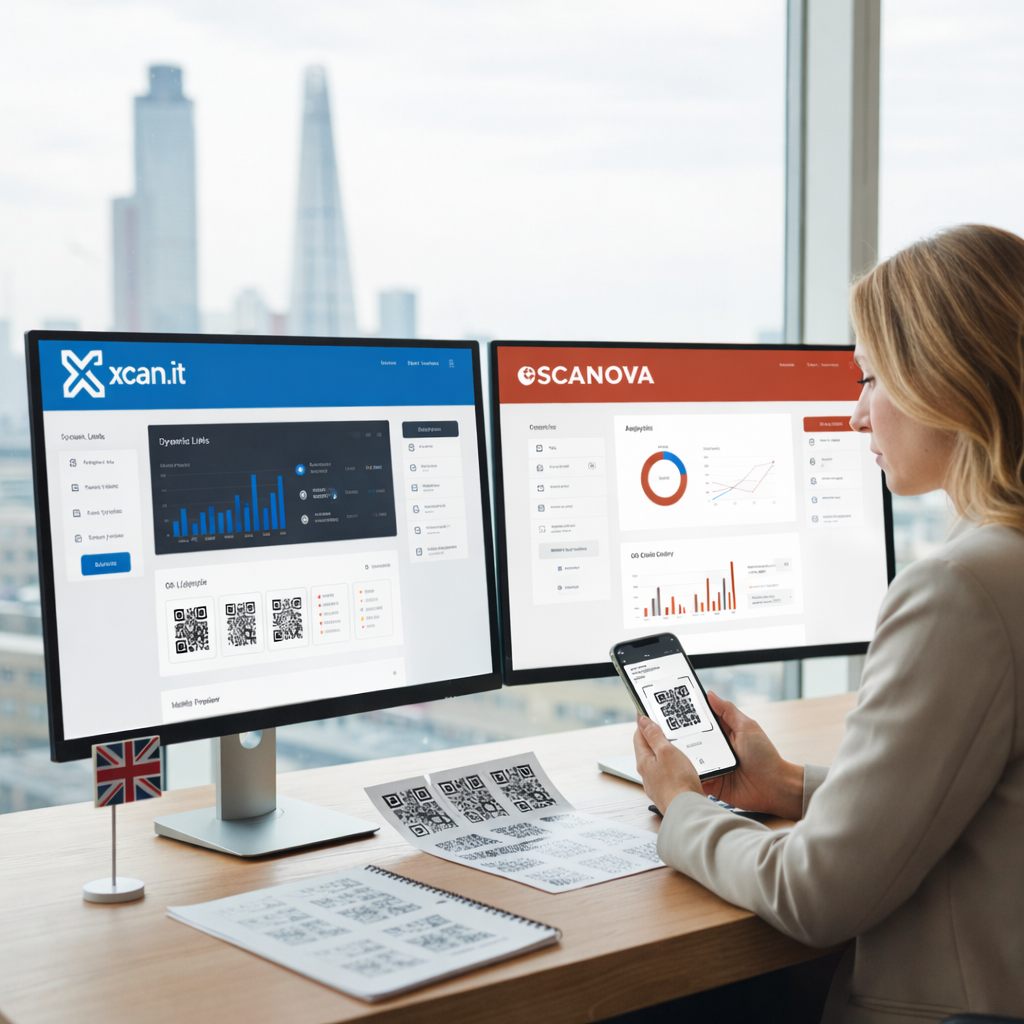
If you’re a UK business choosing between xcan.it and Scanova, the real decision isn’t “who makes QR codes?” It’s who helps you run QR as an operating system across print, packaging, posters, venues, retail, and multi-location teams — with editability, reliable routing, and scan analytics you can actually act on. This long-form guide compares both platforms through a UK lens: how dynamic QR works, what to look for, how tracking drives ROI, and what advanced use cases matter most in London and Greater London.
To sanity-check the wider market as you research, see independent testing like G2’s “Best QR Code Generators” guide and other dynamic QR comparisons such as Hovercode’s “best dynamic QR generators” roundup.
💡 Short answer
For most UK businesses, the “better” platform depends on three things: (1) how often your destinations change, (2) how much you need scan analytics, and (3) how many locations and stakeholders manage your codes. xcan.it is positioned around long-lived print workflows where you want to print now and decide (or change) the link later — a practical fit for posters, stickers, packaging, and campaigns that evolve. Scanova offers a broad feature set for dynamic QR creation, analytics, and campaign controls. The right choice is the one that turns QR into a measurable, governable channel for London, Greater London, and UK-wide teams.
Quick facts: what UK businesses should compare in xcan.it vs Scanova
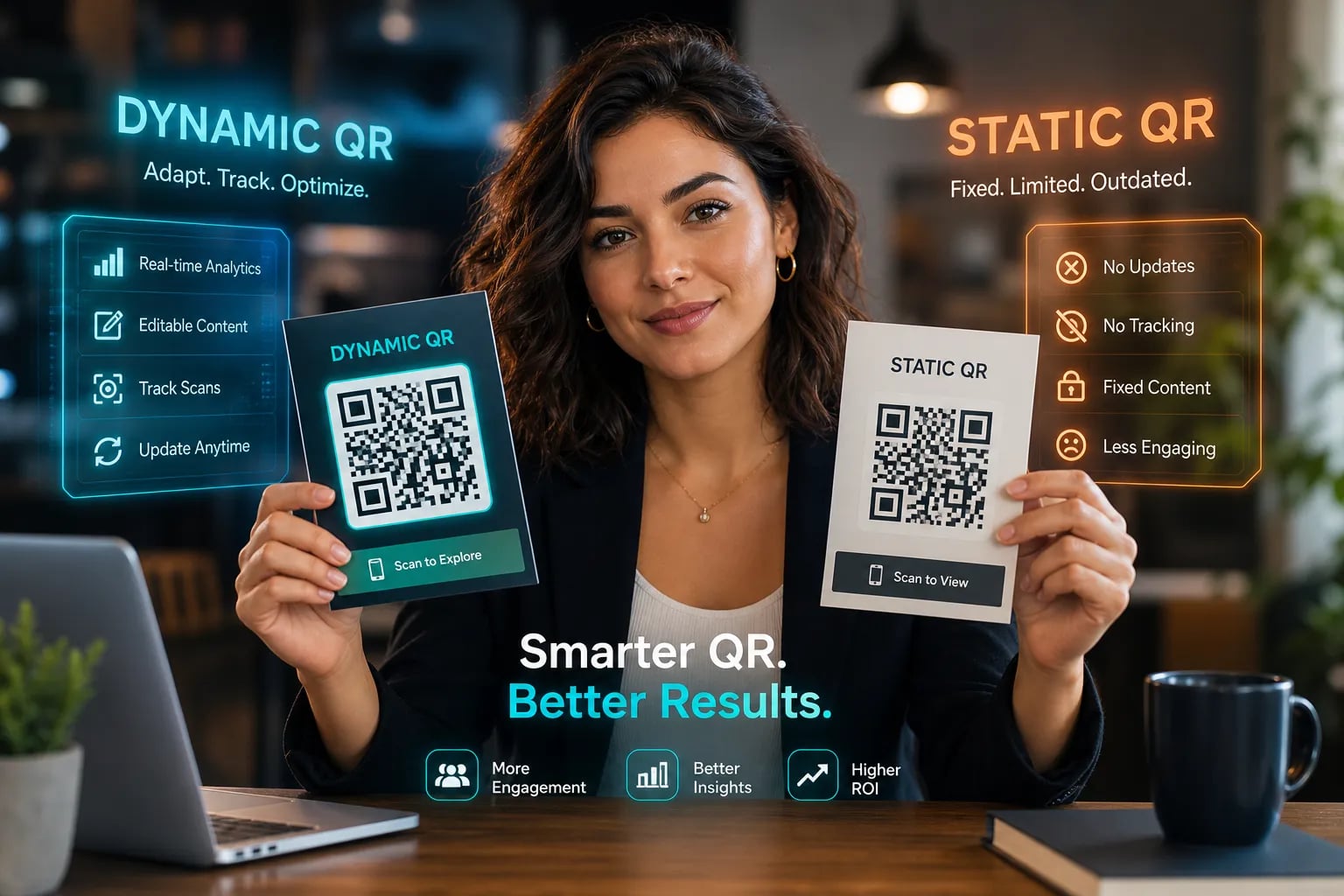
- Dynamic QR ≠ just a QR code: you’re buying a managed routing layer (edit destinations later) plus measurement (scan analytics) and governance (how teams manage many codes).
- Tracking is how QR becomes ROI: scan timing, device patterns, and location signals help you decide which posters, venues, menus, or packaging placements actually drive action.
- Bulk and multi-location management matters fast: one café chain in London can quickly end up with hundreds of codes across tables, windows, receipts, delivery bags, loyalty prompts, and posters.
- “Print once, update forever” is the win: static QR codes hard-code a destination; dynamic platforms keep your print alive even when menus, offers, landing pages, or hours change.
- Governance is part of the decision: if you’re tracking scans, your team should align QR journeys with privacy and policy (what you measure, why, and who can access reporting).
Complete comparison guide: xcan.it vs Scanova for UK dynamic QR codes
1) First: what does a “dynamic QR code platform” actually do?
Both xcan.it and Scanova (and most serious providers) operate on the same core idea: the QR code doesn’t need to store your final destination. Instead, it points at a managed routing link that can forward to a destination you control. That’s why dynamic QR codes can be edited after printing and why they can produce scan reporting.
- Scan: someone scans the code on a poster, menu, sticker, packaging, signage, or receipt.
- Route: the dynamic link forwards to the destination you set (a page, form, menu, booking, WhatsApp, etc.).
- Measure: the platform records aggregated scan activity (often by time, device, OS, and location signals).
- Update: you can change the destination later without changing the printed QR artwork.
2) The real question: what problem are you solving in the UK?
UK businesses rarely fail with QR because they picked the “wrong generator.” They fail because they treat QR like a one-off graphic instead of a managed channel. Here are UK realities dynamic QR helps with:
- Physical assets outlive campaigns: posters can stay up for months; packaging can be in circulation for years; signage can be semi-permanent.
- London moves fast: venues change line-ups, restaurants rotate menus, retailers shift promos weekly, and listings update constantly.
- Teams and agencies touch your codes: marketing, ops, franchise managers, and partners all need guardrails and visibility.
3) xcan.it vs Scanova: what each platform is positioned for (from public materials)
Scanova markets a feature-rich dynamic QR suite built around editable content, scan tracking (typically including time/device/location signals), and campaign controls. You can review their positioning directly via their public pages for dynamic QR features and pricing.
xcan.it is positioned as a UK-built dynamic QR platform focused on “print now, link later” workflows and scan analytics for real-world print. If your print goes out before your final landing pages are locked, that workflow can be the difference between delays and launching on time. You can start with the Free Dynamic QR Code Generator or Start for free.
4) How to pick the “better” platform: a UK decision framework
Here’s the practical way to decide without drowning in feature lists. Score each platform against the workflows you actually run.
4.1) Editability under pressure (aka “how quickly can you fix a live mistake?”)
In the real world, links break. Landing pages change. Offers end early. For UK businesses, the “better” platform is often the one that makes fast changes safe and traceable.
- If you change destinations often: prioritise a platform that makes edits fast, clear, and reversible.
- If you print before final assets are ready: “print now, link later” workflows become a major advantage (useful for OOH, events, and product launches).
4.2) Scan analytics depth (what you can measure and act on)
Most dynamic QR platforms report some mix of total scans, scan timing, and device signals. The question is: can your team use the data to make decisions?
- Placement performance: compare scans from the same creative placed in Soho vs Shoreditch vs Canary Wharf.
- Time-of-day patterns: see whether posters drive scans at commute time, lunch, or late evening.
- Channel learning: use scan spikes to correlate with influencer posts, email drops, or in-store footfall.
4.3) Bulk creation and multi-location operations
If you’re managing a London chain, a property portfolio, or an event programme, manual QR management becomes painful fast. Bulk and repeatable workflows matter.
- Bulk generation: create many QR codes quickly for tables, rooms, posters, products, or asset IDs.
- Structured naming: ensure staff can find the right code (“Camden-Storefront-Poster-A”, “Soho-Table-12-Menu”).
- Migration readiness: if you switch platforms later, keep a clean mapping between print assets and destinations.
4.4) Governance, privacy, and “who can change what”
If your QR codes are on packaging, posters, or public signage, changing destinations is powerful — and risky. Treat dynamic QR like a controlled channel:
- Access control: who can edit destinations, pause codes, or export analytics?
- Auditability: can you trace changes if something goes wrong?
- Privacy-by-design: ensure your QR journeys match your policy (e.g., cookie banners on landing pages, form consent, and data retention).
5) Benefits for UK businesses: what “better” looks like in outcomes
When dynamic QR is done properly, you typically get three outcomes:
- Less waste: fewer reprints because destinations can change without changing the printed code.
- More engagement: QR becomes a frictionless bridge from physical to digital: menus, bookings, offers, reviews, demos, downloads, and lead capture.
- Clearer decisions: scan analytics help you stop guessing which placements are working.
6) Advanced use cases (where the platform choice matters)
If you’re only linking to a homepage, nearly any tool works. The platform difference shows up when you run QR like a channel:
- Campaign switching without reprints: the same QR on a poster can move from “pre-launch waitlist” → “launch offer” → “post-launch support”.
- Multi-phase events: update destinations across check-in, schedules, maps, sponsor offers, and feedback forms.
- Operational QR: asset tagging (maintenance, compliance checks, staff training) where destinations evolve as procedures update.
- Lead capture and attribution: route to trackable landing pages, measure scans by placement, and connect outcomes to CRM workflows (see QR and CRM Integration).
- Location-led journeys: guide customers to branches or venues and compare scans by borough (see Location QR Codes Guide).
7) Dedicated examples: London & Greater London scenarios (what you can do this week)
Below are “doable in a week” examples that show how UK businesses benefit from engagement + scan tracking. The goal is simple: make every printed QR measurable.
- Soho café group (menus + reviews + offers): put a dynamic QR on each table tent. Route to the menu by default, then switch to “leave a review” after peak hours. Track which locations drive more scans and which CTAs perform best.
- Camden retailer (window posters + product drops): use one poster QR for a monthly drop. Update the destination weekly to the current product page or “sold out” waitlist without touching the print. Track scan spikes by day to time releases.
- Brixton venue (line-ups + tickets): posters can go up early with placeholder destinations, then switch to ticketing when live. Use scans to compare placements near stations vs nearby bars.
- Westfield kiosk (rotating daily promos): a single QR on counter signage can rotate offers; analytics reveals which times and days deliver the best response.
- Greater London property management (maintenance + compliance): QR stickers on assets route staff to the latest checklist or reporting form. When procedures change, update once in the dashboard — no relabelling the estate.
- UK-wide packaging (setup → support → accessories): keep one QR on packaging that evolves with the customer journey: setup instructions first, then troubleshooting, then upsell accessories. Scan data highlights where customers struggle (and which guides reduce support tickets).
8) YouTube video walkthrough (one example)
This short walkthrough shows a practical end-to-end flow: create a dynamic QR code, download print-ready artwork, and understand how editability supports real campaigns.
9) Quote: how to think about “better” in dynamic QR
“The best dynamic QR platform isn’t the one with the longest feature list — it’s the one that keeps your printed QR assets correct, measurable, and governable when reality changes. In London, reality changes constantly.”
— Mark Hickman, Co-founder, Xcan It
10) Investigative checklist: questions to ask before you choose
Use these questions to compare xcan.it and Scanova (or any two platforms) in a way that reflects how UK teams actually work:
- Change frequency: how often do destinations change per month across your estate?
- Scale: will you manage 10 codes… or 1,000 codes across London and the UK?
- Analytics depth: do you need simple counts, or time/location/device breakdowns?
- Workflow: do you need “print now, link later” for campaigns that launch in phases?
- Governance: who is allowed to edit destinations and export performance data?
- Landing pages: will you use your own pages, or built-in mobile pages/lead forms?
- Bulk ops: can you generate/update in bulk for assets, tables, properties, or SKUs?
- Reliability: what happens if a destination breaks — can you redirect instantly?
Conclusion: which is better — xcan.it or Scanova?
If you’re deciding between xcan.it and Scanova for a UK business, choose based on the reality of your print and location footprint:
- Choose xcan.it if your world is posters, stickers, packaging, signage, and campaigns that change — and you want a platform positioned around print longevity, fast destination updates, and practical scan measurement across London and Greater London.
- Choose Scanova if you want a broad dynamic QR feature set with established analytics and bulk-management capabilities described in their public materials.
In both cases, the winning move is the same: treat QR codes as a managed channel, not a disposable graphic. When you do that, you stop reprinting, you learn what works in the real world, and you can prove engagement in a way your team can act on.
FAQs
Is xcan.it or Scanova better for UK businesses?−
It depends on your workflow. If you need print-first flexibility and the ability to change destinations as campaigns evolve (without reprints), xcan.it is a strong fit. If you want a broad suite of dynamic QR features with well-documented options and analytics, Scanova is a strong option. Use the checklist in this guide to match platform strengths to your needs.
Do dynamic QR codes always require internet to work?+
Usually yes. Dynamic QR codes route through a managed redirect layer to provide analytics and editability, so the user generally needs connectivity to reach the final destination.
How can I compare QR scan performance across London locations?+
Use separate codes per placement (e.g., Soho poster vs Brixton poster) or consistent naming per venue, then compare scan trends by time and location signals in your analytics dashboard. This makes it easier to identify which boroughs, venues, and placements drive the most engagement.
What are advanced QR use cases beyond “link to a website”?+
Advanced use cases include campaign switching without reprints, multi-phase event journeys, asset and compliance tagging, lead capture with attribution, and packaging journeys that evolve from setup to support to upsell over time.
Can I migrate from one dynamic QR platform to another later?+
Sometimes — but it depends on how your QR codes were created and whether you can preserve routing links. If you think migration is likely, use strong naming conventions and keep a mapping of printed asset → QR ID → destination so you can rebuild cleanly if needed.
Talk to an Xcan It Specialist
Choosing between xcan.it and Scanova? We’ll help you map your UK use case, design QR journeys that drive engagement, and set up tracking across London and Greater London.