What are the main advantages of using dynamic QR codes over static ones?
Dynamic QR codes solve the biggest real-world problem with QR in print: change. A static QR code hard-codes the destination, so if your link changes (or you want to test a new offer), you often need to reprint. A dynamic QR code routes through a managed link layer, which means you can update the destination later and track scans across campaigns, locations, and time. For businesses in London and Greater London, that’s the difference between “we put QR on things” and “we can measure what works, optimise fast, and prove ROI” — powered by Xcan It’s dynamic QR platform.

💡 Short answer
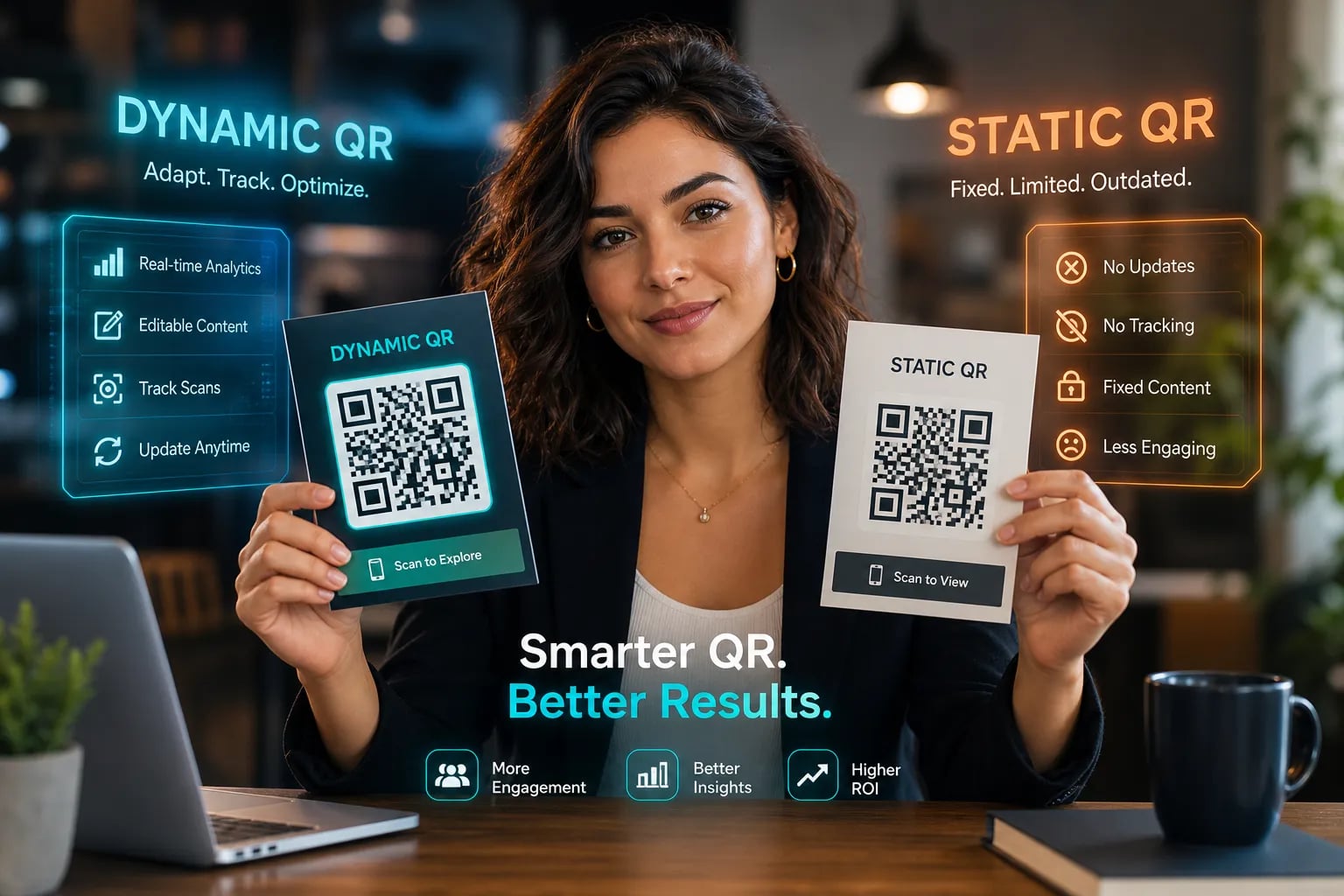
The main advantages of dynamic QR codes over static QR codes are: editability (change where the code goes after printing), tracking (see scan performance by time/location/device), and control (run campaigns, test creatives, and manage many codes without reprinting). Static QR codes are fine for information that never changes, but dynamic QR codes are built for real marketing, operations, and compliance workflows where links, offers, and destinations evolve.
Quick facts: what changes between static and dynamic QR codes?
- Static QR codes store the destination in the code: the QR pattern directly encodes the URL or data, so edits usually mean generating a new code and reprinting.
- Dynamic QR codes store a “routing link”: the QR points to a managed redirect (a short link), which can forward to different destinations over time.
- Scan tracking is the practical difference: dynamic platforms can report total scans, scan timing trends, rough location signals, and device/OS patterns.
- Campaign management is where businesses win: dynamic codes help you organise and compare performance across posters, packaging, receipts, events, and venues.
- Reprinting is the hidden cost static codes create: the moment your landing page changes, a static QR can become outdated in the wild.
Complete guide: the advantages of dynamic QR codes (and how they work in practice)
1) How do dynamic QR codes work compared to static ones?
Static QR code: the QR pattern contains the final destination (like a full URL). When you scan it, your phone opens that exact destination. If the destination changes, the code doesn’t.
Dynamic QR code: the QR pattern contains a managed link that forwards people to a destination you control. The platform can update that forwarding destination later — which is why dynamic QR can support long-lived print and fast campaign iteration.
- Scan: someone scans the code on a poster, menu, packaging, signage, or receipt.
- Route: the dynamic link forwards to the current destination you’ve set.
- Measure: the platform records aggregated scan activity.
- Update: you can change the destination later without changing the printed QR artwork.
2) What are the main advantages of dynamic QR codes over static ones?
Here are the business advantages that make dynamic QR codes the default choice for most real campaigns:
- Editability (print once, update later): swap destinations as offers change or stock changes.
- Tracking and reporting: see which placements drive engagement and when scans happen.
- Campaign control at scale: manage many codes across teams and locations.
- Faster optimisation: test two creatives or two offers and keep the winners.
- Reduced reprint risk: redirect immediately if a link breaks.
3) What benefits do businesses get beyond “more scans”?
Dynamic QR codes are most valuable when you treat them as a measurable offline-to-online channel:
- Attribution you can actually use: know which poster or counter stand created outcomes.
- Operational agility: redirect customers during outages or seasonal hours.
- Consistency across locations: standardise a system across London while localising the journey.
4) What are advanced use cases that static QR codes struggle with?
- Time-based switching: route to different pages depending on the day (e.g., weekday vs weekend menu).
- Location-aware journeys: run the same creative but direct users to the nearest branch.
- A/B testing in physical spaces: compare two QR variants on different creatives.
- Product lifecycle journeys: packaging QR that evolves from “setup” to “accessories”.
5) How businesses in London & Greater London can use Xcan It
Xcan It is built for editability, tracking, and campaign control. Use it as the “control layer” between the physical world and your digital destinations across all London boroughs.
6) Dedicated examples: dynamic QR code wins in London
- Soho café group: instant seasonal menu updates via table QR.
- Camden retailer: evolving packaging QR from setup to troubleshooting.
- Brixton venue: real-time event updates and ticket sales on posters.
- Westfield kiosk: rotating daily offers based on scan timing.
7) YouTube video walkthroughs
8) Quote: why dynamic beats static
“Static QR codes assume nothing will change. Dynamic QR codes accept reality: offers evolve, pages move, and campaigns get optimised. Print once, then iterate without reprinting.”
— Mark Hickman, Co-founder, Xcan It
9) When should you still use a static QR code?
Static QR codes are appropriate when content is genuinely permanent and reporting is unneeded:
- Internal Wi-Fi access: fixed guest Wi-Fi credentials.
- Simple contact info: basic vCards in low-change environments.
- One-off events: where destinations are 100% certain not to change.
Conclusion: dynamic QR codes give you editability, tracking, and control
The main advantages of dynamic QR codes over static ones are simple: you can change destinations after printing, track scan performance, and manage QR at campaign scale. For businesses in London, it's the professional choice for measurable marketing.
FAQs
What are the main advantages of dynamic QR codes over static QR codes?−
Dynamic QR codes are editable, trackable, and reprint-free. Static QR codes are fixed and require reprinting if links change.
Do dynamic QR codes always require the internet to work?+
Yes, because they route through a managed redirect layer to provide analytics and editability.
Are dynamic QR codes worth it for small businesses?+
Yes, they save money by preventing the need for expensive reprints when menu items or website links change.
Talk to an Xcan It Specialist
Want to switch from static to dynamic QR codes? We’ll help you design QR journeys that drive engagement across London and Greater London.