QR codes for UK schools are increasingly central to how classrooms, libraries, and corridors connect printed materials to live digital content, yet the technology keeps failing in practice, and the reason is almost always the same. Picture this: September, your classroom display goes up, the code is laminated, and by November the linked YouTube playlist has been deleted. A room full of students scans the code and gets an error page. Many teachers have experienced exactly this. The frustration isn’t with the technology itself. It’s with how QR codes are typically deployed in schools: as one-off, static links that no one maintains.
Among forward-thinking teachers, IT leads, and school leaders, there is a growing shift from disposable codes to managed infrastructure, codes that stay live, destinations that update without reprinting, and scan data that shows what’s working. This guide covers where to place codes across your building, three classroom activities ready to run this week, tool recommendations sized to different budgets, and the GDPR and safeguarding checks your school cannot skip.
No technical background required. If you can print a document and log into a dashboard, you have everything you need to get started.
Why QR codes belong in every UK school environment
The gap between printed resources and live digital content
Schools are physical environments built around printed materials: displays, worksheets, library labels, notice boards, equipment tags. The problem is that digital content moves fast. A worksheet pointing to a reading guide, a library label linking to an AR (Accelerated Reader) scheme, a reception notice board connecting parents to the current calendar, all of these break the moment the destination URL changes and no one has the budget or time to reprint. In schools, where resources are expected to last a full academic year and reprinting budgets are tight, this mismatch is especially costly.
The solution isn’t to stop using printed materials. It’s to decouple the printed code from the destination it points to, so the physical asset stays permanent while the content behind it stays current.
What scan data reveals about how students engage
Practitioners at Ennis Community College documented students describing QR-linked resources as a way to “learn for themselves” and access videos “without waiting” (see the published case study on QR integration in post-primary settings for full context and quotes). That shift, from teacher-controlled pace to student-initiated access, is one of the more significant things QR codes bring to a classroom. Research published in Frontiers in Education used a pre-test, post-test, and follow-up design to examine QR-linked multimedia materials; results indicated improved learning outcomes, with no significant drop between post-test and follow-up scores, suggesting the engagement is durable rather than novelty-driven. Students in that study reported positive responses across cognitive, emotional, and behavioural dimensions. (Readers are encouraged to consult the original paper for full methodology and effect sizes.)
For UK school leaders thinking about evidence-informed practice, that’s a meaningful signal. QR codes in education aren’t just a convenience tool. When embedded thoughtfully, they can support independent learning across year groups.
The shift from one-time codes to always-on resources
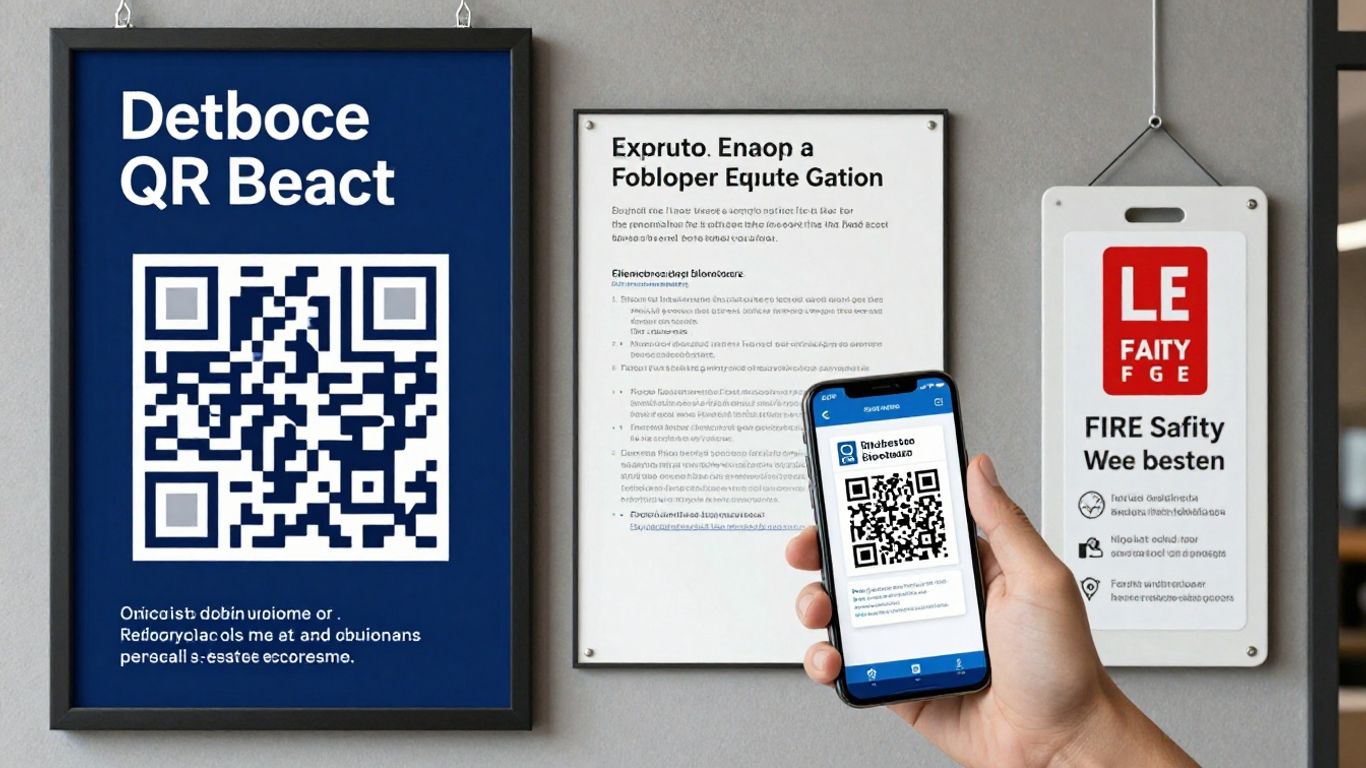
The most effective school QR setups aren’t single-use campaign tools. They’re infrastructure. A library shelf label that always points to the current recommended reading list. A fire evacuation notice that always links to the live assembly point map. A piece of equipment with a maintenance guide that updates centrally whenever the safety sheet is revised. This infrastructure thinking is what separates schools that get lasting value from QR codes and schools that end up with a corridor full of dead links by February.
Where to place QR codes for UK schools: a building-wide guide
Classroom displays and learning walls
Classroom QR codes work best when they extend a static display into something interactive. A science diagram can link to a short animation; a history timeline can connect students to a documentary clip; a phonics display can point teaching assistants and parents to the exact same videos being used in the lesson. The display stays physically identical while the linked content evolves throughout the year. No reprinting, no laminating over old codes, no chasing down who printed the original file.
Primary teachers are finding particular value in using QR codes on reading corners to share the same resources with parents at home, closing the gap between classroom practice and home support without creating extra workload.
Library shelves, reading lists, and self-access resources
A small QR label on a shelf end, a genre section, or an individual book can link to a curated reading list, an author interview, or a Lexile-level guide. School librarians can update the destination without touching the physical label, which matters enormously when reading lists rotate each term or when new author content becomes available. This approach also supports independent reading challenges and Accelerated Reader schemes, giving students a direct path to their next step without queuing at a desk. This approach is discussed in QR Codes Transform Textbooks: Enhancing Learning and Safety Across Regions.
Notice boards, reception areas, and parent-facing displays
Reception and corridor notice boards are high-traffic and high-turnover. A single printed QR code on a term-dates poster can point to the live school calendar, the current newsletter, or the parent portal, updated from a dashboard the moment information changes. The Tes case study on primary school transition documented exactly this approach: families accessed induction information via QR during Covid restrictions, and the school retained the practice because it worked. A welcome-pack code printed in June can link to a video introduction, a meet-the-teacher page, or an FAQ document, with the destination refreshed as new content becomes available and no reprinting required.
Equipment labels and asset tracking
IT equipment, science lab apparatus, sports kit, and specialist tools across secondary schools and sixth forms all benefit from QR labels. Scanning the code on a piece of equipment takes the user directly to the current user guide, a maintenance log, or an up-to-date safety instruction sheet. When guidance is updated, as happens periodically under UK health and safety frameworks, the change is made centrally in the dashboard. The physical label on the asset never needs replacing. For schools managing expensive equipment across multiple rooms or sites, this represents a meaningful reduction in administrative overhead.
Three classroom activities you can run this week
The activities below are practitioner suggestions rather than formally evaluated programmes. They draw on widely used active-learning formats; schools are encouraged to trial them and assess what works for their context.
1. The QR scavenger hunt
Create a series of QR codes, each linking to a clue, a fact, or a question. Students move around the classroom or school site scanning codes in sequence. At primary level, this works well for phonics, maths facts, or science vocabulary, stick codes to tables, window frames, or display boards and let students work in pairs. At secondary level, the same structure suits revision circuits, geography fieldwork, or history source analysis. The teacher only needs to update the destination links to refresh the activity for a new class or topic; the printed codes on the wall stay exactly where they are.
2. QR login cards for platform access
Discovery Education’s QR sign-in workflow is a useful model here. Teachers generate student codes from the classroom admin area, print them as individual cards, and pupils scan to access their accounts without typing a username or password. For younger pupils or those with literacy barriers, this removes a significant friction point and gets students into their learning faster. Login cards can be laminated and reused across the year; most platforms allow code regeneration if a card is lost or damaged. The initial setup, one printing session at the start of term, saves time across lessons throughout the year.
3. Self-paced revision stations using QR-linked video
Set up four to six stations around the room, each with a printed QR code linking to a short video explanation or audio walkthrough. Students rotate through the stations and self-quiz after each scan. The teacher can swap the video destinations between lessons without moving a single piece of paper from the wall. This format works particularly well for students who benefit from revisiting content at their own pace, without the social pressure of asking a question in front of the class. It also gives teaching assistants a structured, independent task to support while the teacher works with a small group.
The reprinting problem and why dynamic QR codes fix it
Static versus dynamic QR codes: the key difference
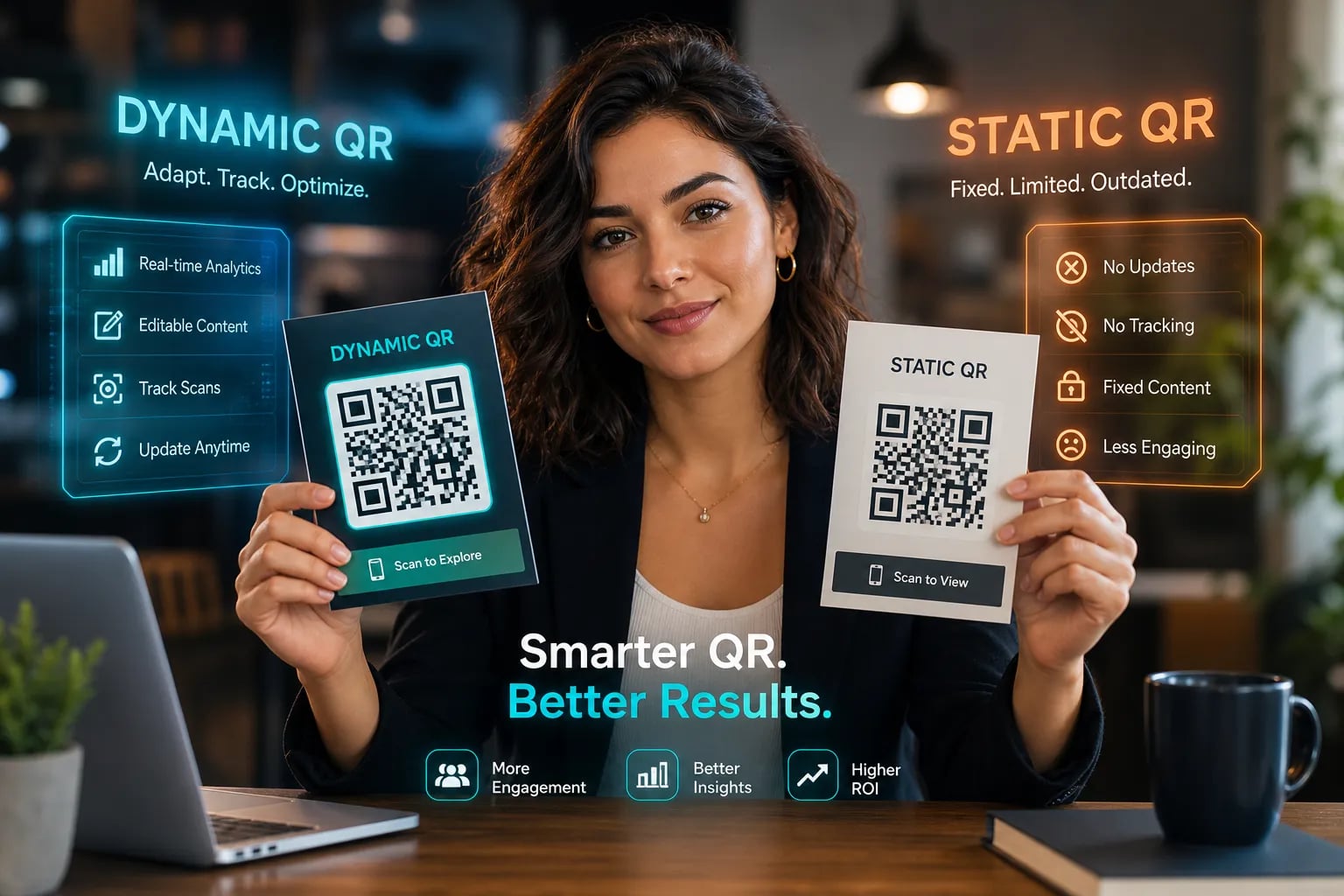
A static QR code has its destination permanently encoded. If the URL changes, the code is dead and must be replaced. A dynamic QR code points to a redirect, the destination can be changed at any time without touching the printed code. For a school with hundreds of laminated labels, corridor displays, and library assets, the practical difference is significant. Static codes are appropriate for one-off, low-stakes uses where the destination genuinely won’t change. For anything expected to stay live across a term or a full academic year, dynamic codes are generally the more sustainable choice. For guidance on when to use text-based codes, consult Text QR Codes Explained: When to Use Them and Why They’re Still Powerful.
How a central dashboard changes everything for school administrators
Managing dozens of individual redirect links in a spreadsheet is exactly as painful as it sounds. A platform like Xcan It replaces that with a single dashboard where every deployed code across the building can be monitored and updated in real time. A librarian swaps a reading list link. An IT lead updates a device guide. A school business manager redirects a notice board code to the new term’s newsletter. None of these changes require printing, laminating, or physically accessing the location where the code is displayed.
Xcan It is designed for physical environments where reprinting is impractical, schools, campuses, and multi-site organisations where codes are expected to outlast the content they originally pointed to. The platform’s Create, Connect, Control approach gives administrators full lifecycle management of every code: from first print through every destination update across the academic year. Scan analytics show which codes are being used and which are being ignored, so decisions about where to invest display space are grounded in actual engagement data rather than assumption.
QR codes for school admin and home-school communication
Attendance registration and sign-in
Sixth forms and secondary schools are increasingly exploring QR-based attendance systems. Each session generates a unique code; students scan on entry and the system logs timestamp data automatically. The reported benefits are practical: reduced paper registers, real-time punctuality monitoring, and pattern identification that supports early intervention for students showing signs of disengagement. Staff retain manual override capability for edge cases, so the system supports rather than replaces professional judgement. Schools piloting this approach have noted improvements in data consistency compared with manual registers, though outcomes will vary by context and implementation. See an example registration workflow at MedLearn Help.
Parent newsletters, transition packs, and school events
The transition use case is one of the strongest documented examples of QR codes improving home-school communication. A printed QR code on a Year 6 transition pack gives families a single, always-current gateway, updated as the summer term progresses without reprinting anything. The same logic applies to event programmes, sports day schedules, and school performance tickets: print once, update the destination as details are confirmed, and families always reach current information rather than an outdated version.
Ofsted and school accountability transparency
Ofsted has encouraged schools to make inspection reports easily accessible to parents, and some schools have responded by placing a QR code on their reception notice board linking directly to the published report. (Schools should check current Ofsted guidance for any specific requirements.) This is low effort and high impact: a single dynamic code satisfies the transparency expectation, and the destination can be updated to each new report without replacing the physical display.
Choosing the right QR code tool for your school
Free generators for occasional classroom use
Tools like QR Code Monkey, GoQR, and Adobe Express are appropriate for teachers who need a one-off static code for a lesson activity or a single display. They’re quick, free, and require no setup. The important caveat for UK schools is that free tools often do not provide GDPR-compliant data processing agreements, this limits their appropriate use to scenarios where no pupil data is involved and the destination is unlikely to change. A phonics display linking to a publicly available YouTube channel is fine. A code linking to a system that processes pupil account data is not. Always check the tool’s privacy policy before use. For a comparison of dynamic QR code generators, see 5 Dynamic QR Code Generators UK Businesses Should Consider in 2023.
Managed platforms for school-wide deployment
For IT leads and school business managers responsible for codes across a full site, a managed platform is the more sustainable choice. Xcan It is built for this context: dynamic codes that remain editable after printing, a centralised dashboard for updating all destinations, scan analytics to monitor engagement across the building, and branded code design for professional-quality output. The platform supports multiple output formats, labels, signage, PDFs, and PNGs, covering everything from a small classroom resource card to a full-size reception display. For schools managing codes at scale across multiple rooms, year groups, or campuses, it offers the kind of centralised control that spreadsheet-based approaches cannot.
UK GDPR, safeguarding, and Ofsted: what your school needs to check
What the law requires when QR codes link to external sites or pupil data
UK GDPR and the Data Protection Act 2018 apply to any QR code that links to a system processing pupil data. The key obligations are lawful basis, data minimisation, purpose limitation, transparency, and security. If a code on a public notice board links to a third-party platform that collects analytics or user data, the school must assess whether that collection is appropriately controlled, whether a data processing agreement is in place where the third party is acting on the school’s behalf, and whether the privacy notice has been updated to reflect the use. The ICO Children’s Code does not directly apply to schools, but the ICO recommends schools aspire to its standards: privacy by default and the best interests of the child as a primary consideration.
KCSIE and safeguarding expectations for digital tools in school
Keeping Children Safe in Education 2024 expects schools to risk-assess digital tools before pupils use them, maintain appropriate filtering and monitoring, and be able to demonstrate safe online practice to an inspection team. For QR codes specifically, this means three things:
- QR-linked content must be age-appropriate and either school-controlled or explicitly vetted before deployment.
- Staff must understand how QR codes fit within the school’s online safety and safeguarding policies.
- The school must address the physical risk of tampered codes: a printed code could, in theory, be covered with a sticker redirecting to an unvetted site. Managing codes through a platform with an audit trail reduces this risk by making unexpected destination changes immediately visible.
A pre-deployment checklist for every code your school publishes
Before any QR code goes on a school wall, the responsible person should work through four questions. First: is the destination school-controlled, or has it been explicitly vetted for age-appropriateness and data practices? Second: does the destination expose personal data to an audience wider than intended? Third: if a third-party platform is involved, is a data processing agreement in place? Fourth: is this code referenced in the school’s privacy notice where relevant? Codes linked to sensitive pupil information, SEND records, attendance data, safeguarding notes, medical information, must never appear in public-facing locations. The privacy obligation is clear, and the safeguarding risk of getting it wrong is significant.
Getting your first school QR codes live: a practical setup guide
Mapping your school’s highest-priority locations first
Start with three to five high-value, high-turnover locations rather than attempting a whole-school rollout at once. The main reception notice board, the library entrance, and the IT suite equipment labels are a sensible starting set for most secondary schools. Primary schools might begin with the reading corner display, the entrance transition board, and the home-school communication notice. Beginning with a manageable scope lets the school test the workflow, gather staff feedback, and build confidence before expanding. It also makes the GDPR and safeguarding checks more manageable, five locations with documented risk assessments is far more defensible than a rushed school-wide deployment.
Creating, testing, and deploying codes correctly
The practical sequence is straightforward. Choose a dynamic code platform, create the code and assign the destination, then download in the correct format for the intended print size: vector formats for large signage, PNG for smaller labels. Print on durable material for high-traffic areas. Test the code by scanning from multiple devices before laminating or fixing to the wall, including older smartphones and tablets that students actually use, not just your own device. Then test again after installation. A code that scans correctly on a screen doesn’t always read cleanly once it’s laminated under a fluorescent light, and catching that before students do saves considerable frustration.
Keeping codes current across the academic year
The value of a managed platform is most visible over time. At the start of each term, a school administrator logs into the dashboard, reviews which destinations need updating, and makes changes centrally. No new printing, no chasing staff to replace labels, no dead links discovered mid-lesson. Scan analytics show which codes are actively being used and which have gone quiet, useful intelligence for deciding where to invest display space and which resources are genuinely reaching students.
QR codes in UK schools work best when they’re treated as living infrastructure, not disposable campaign tools. The physical code is permanent; the content behind it evolves. That’s the model that delivers value across a full academic year and beyond, and it’s the one that removes the September-to-November problem that started this conversation.
The clearest takeaway for school leaders
QR codes for UK schools are most valuable when they connect permanent physical assets to content that evolves, without the cost or waste of reprinting. The use cases are broad: classroom displays, library labels, notice boards, equipment assets, login cards, parent communication, attendance systems, and Ofsted transparency. The principle behind all of them is the same, one printed code, updateable destinations, always-current information for whoever scans it.
Choosing a dynamic platform that gives your administrator central control is what separates a sustainable, school-wide system from a collection of one-off codes that quietly stop working by spring term. Before any code goes live, work through your GDPR obligations, vet third-party destinations, and align with KCSIE and your school’s online safety policy. The technology is genuinely straightforward. The planning is what makes it last.
If you’re ready to move from one-off codes to a managed system built for physical environments, Xcan It is built for exactly this transition. Start with a handful of priority locations, see how the dashboard works in practice, and build from there. The September problem, the laminated display with the dead link, becomes a problem you used to have.
Frequently asked questions
Are QR codes GDPR-compliant for use in UK schools?
QR codes themselves are not inherently a data protection risk. The obligation arises from what the code links to. If the destination collects or processes pupil data, UK GDPR and the Data Protection Act 2018 apply, and the school must ensure lawful basis, a data processing agreement with any third-party processor, and appropriate transparency notices. Codes linking only to publicly available content with no data collection carry minimal compliance burden.
What is the difference between a static and a dynamic QR code?
A static QR code has its destination fixed at creation. If the URL changes, the code stops working and must be replaced. A dynamic QR code uses a redirect, you can update the destination at any time without reprinting the code. For school displays, labels, and resources expected to stay live across a term or academic year, dynamic codes are the more practical choice.
Do free QR code tools meet UK school data protection requirements?
Most free QR generators do not publish GDPR-compliant data processing agreements, which limits their appropriate use to situations where no pupil data is involved. Always check the tool’s privacy policy before use. For any deployment where scan data is collected or the code links to a system handling pupil accounts, a managed platform with a documented DPA is the safer route.
How should schools address the risk of tampered QR codes?
Keeping Children Safe in Education 2024 expects schools to risk-assess digital tools used by pupils. For QR codes, the practical risk is a sticker placed over a legitimate code to redirect students to an unvetted site. Using a managed platform with destination audit trails makes unexpected changes immediately visible. Regular visual checks of high-traffic displays are also advisable as a straightforward physical safeguard.
What is a good starting point for schools deploying QR codes for the first time?
Begin with three to five high-value locations: the main reception notice board, the library entrance, and one or two classroom displays. Document your GDPR assessment for each, test codes on multiple devices before installation, and review destination links at the start of each term. A small, well-managed rollout builds staff confidence and produces better outcomes than an ambitious whole-school launch without the supporting workflow.