
Physical assets are the tangible backbone of any organization: the machinery on a factory floor, the vehicles in a municipal fleet, the signage in a hospital corridor, the equipment bolted to a campus lab bench. These are the things your teams interact with every day. And yet the information attached to them (maintenance schedules, safety instructions, inspection records, contact details) is almost always out of date, incomplete, or impossible to access at the moment someone actually needs it.
That gap between what’s physically in front of a worker and what information they can actually access is where safety incidents happen, compliance checks fail, and operational time gets wasted. Many organizations have invested heavily in tracking the assets themselves. Far fewer have solved the problem of keeping the information about those assets accurate and accessible over time.
This guide is for anyone responsible for physical infrastructure: facilities managers, compliance officers, asset managers, public-sector operations teams, and anyone who has ever watched a printed label become useless six months after it was installed. The core idea is straightforward. Attaching a dynamic QR code to a physical asset turns that asset into a live information point, one that stays current for as long as the asset itself is in service, without ever reprinting a label.
Why physical assets need dynamic QR labels
Static labels decay. Information changes. And large inventories of tangible property make that decay expensive and, in regulated industries, genuinely risky. Dynamic QR codes solve this by separating the physical identifier from the digital destination, so the label stays permanent while the information behind it stays current. The sections below explain how that works in practice and where it matters most.
What physical assets actually are and why managing them is harder than it looks
The full range of tangible assets most organizations own
Physical assets, also called tangible assets or, in accounting terms, property, plant and equipment (PP&E), cover everything from land and buildings to vehicles, machinery, tools, furniture, signage, and raw materials. The distinction between current and fixed assets matters here. Current assets like inventory turn over quickly, sometimes within weeks. Fixed assets, production equipment, infrastructure, facilities, have multi-year or even multi-decade lifespans. Many mid-to-large organizations carry hundreds or thousands of fixed assets spread across multiple sites, departments, and geographies, which means managing the information attached to those assets is a genuine operational challenge, not a minor administrative one.
Why the scale creates a management problem
Every physical asset carries information that needs to stay accurate: maintenance schedules, safety operating procedures, inspection records, warranty status, emergency contacts. As the number of assets grows, so does the gap between what’s printed on a label and what’s actually true. A label that was accurate on day one becomes progressively less reliable as protocols change, documentation moves, and personnel turn over. Static labels become a liability once the information on them changes, and in large asset inventories, that change happens constantly.
The real cost of poor asset information
Poor asset information isn’t just an inconvenience. Missed maintenance windows accelerate equipment deterioration and increase repair costs. Outdated safety instructions create compliance exposure in regulated industries. Workers who can’t quickly access documentation for a piece of equipment lose time and sometimes make preventable errors. Across enterprise and public-sector environments, inaccurate asset data ranks among the most cited operational pain points for teams managing large fixed asset inventories. The cost compounds with scale.
The information problem hiding in plain sight on your equipment and signage
Why printed labels and static tags stop working
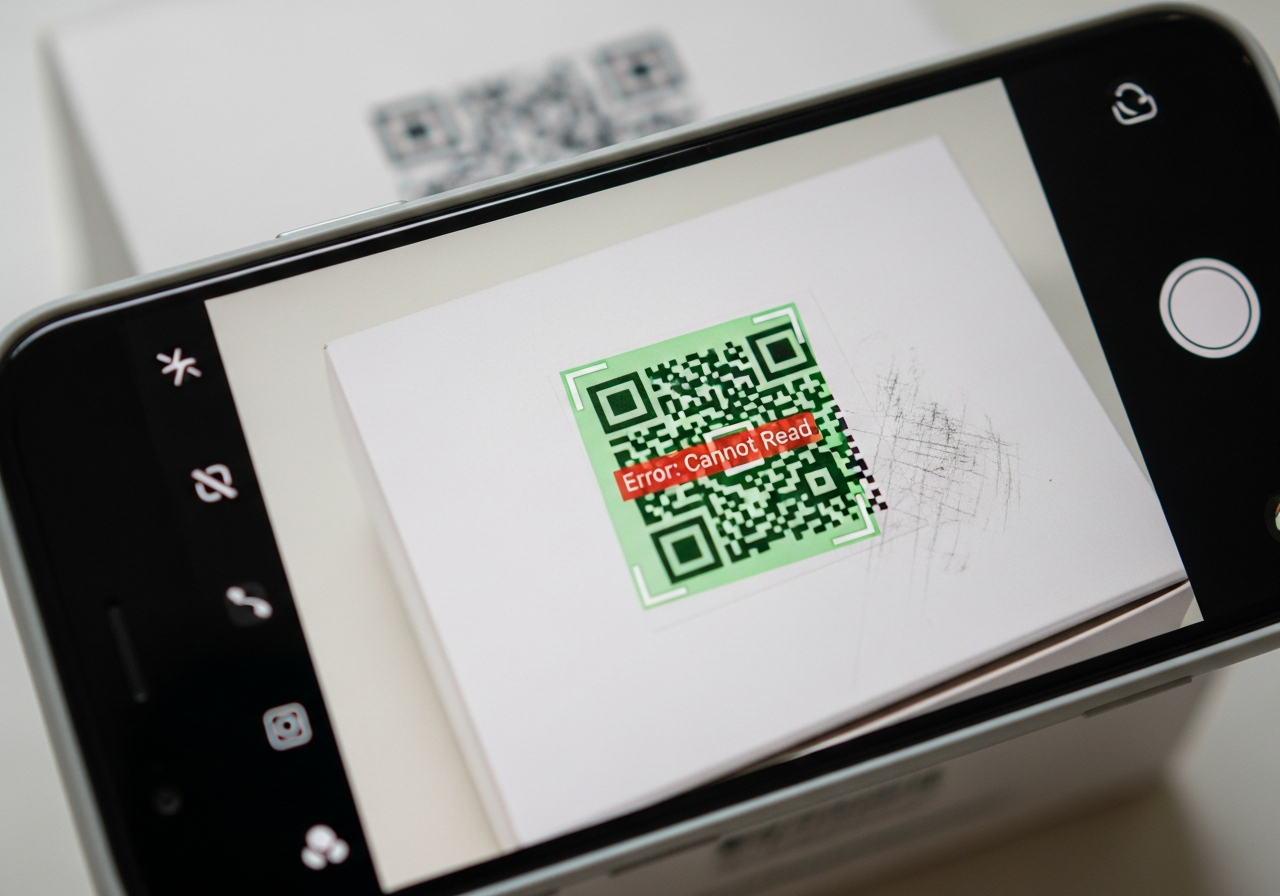
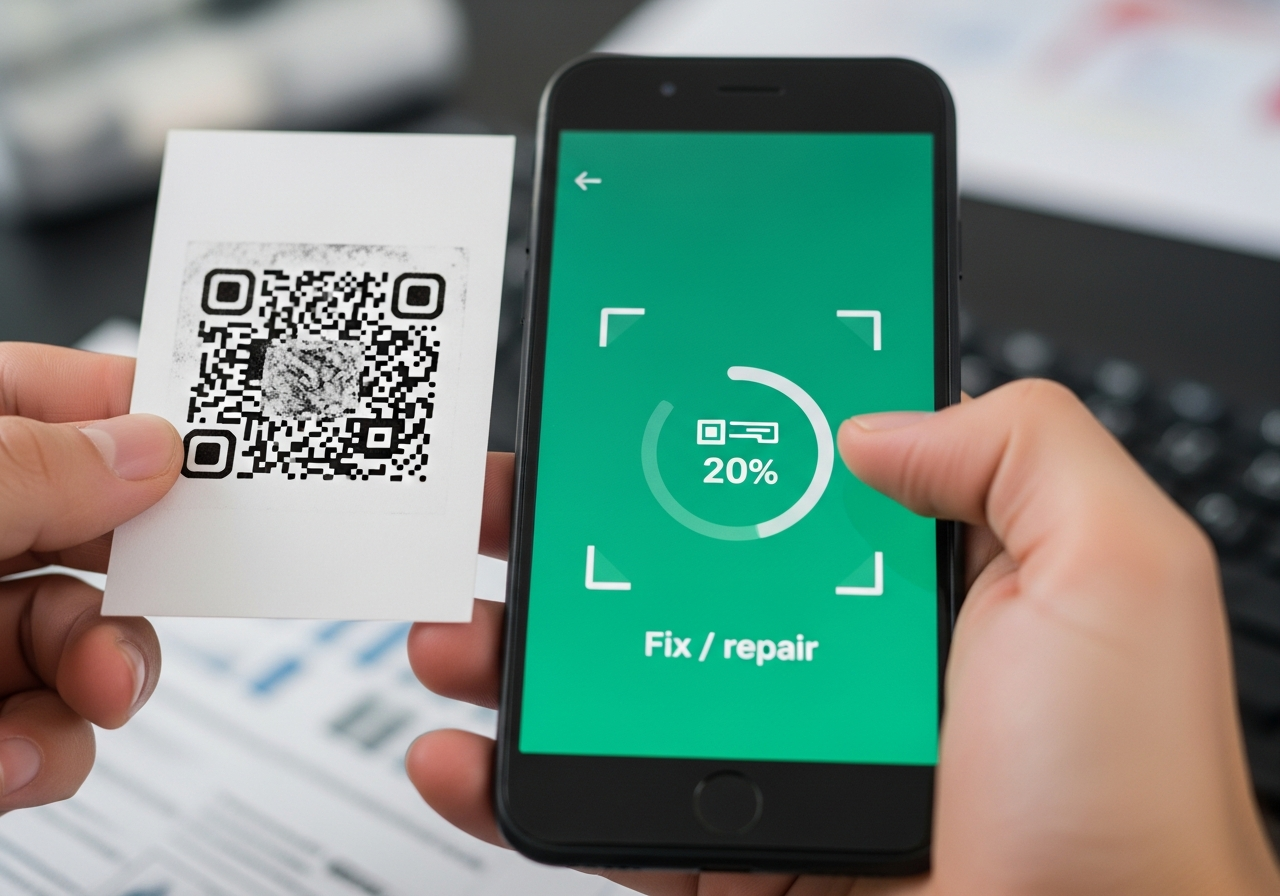
Physical assets outlast the information printed on them. A piece of manufacturing equipment installed in 2019 might carry a label pointing to a decommissioned web page, an outdated service phone number, or a maintenance protocol that was revised three years ago. The label still exists. It looks official. It just leads nowhere useful. This is the core friction: the physical object endures, but the information layer attached to it silently decays.
The reprint cycle no one wants to be in
The organizational pattern is familiar to anyone who has managed a large asset inventory. Information changes. IT or facilities flags the discrepancy. Someone designs a replacement label. Procurement orders a print run. A team member physically replaces labels across dozens or hundreds of assets spread across a facility. The cycle typically takes weeks, draws on budget across design, print, and labor, and still leaves a window where workers are operating with wrong information. For government and public-sector teams managing large-scale signage and notices, this cycle tends to be continuous rather than occasional.
Where communication breaks down
The stakes become concrete when safety and compliance enter the picture. When workers can’t instantly access accurate operating instructions, emergency contacts, or inspection history for a piece of equipment, the risk of error increases. In regulated industries, manufacturing, healthcare, public infrastructure, equipment labeling isn’t optional. OSHA mandates clear labeling on machinery and hazardous materials. FDA regulations require detailed documentation access for medical devices. An outdated label in these contexts isn’t just inefficient; it’s a compliance failure waiting to be discovered during an audit.
How a QR label turns any physical object into a live information point
The concept: connecting tangible assets to editable digital content
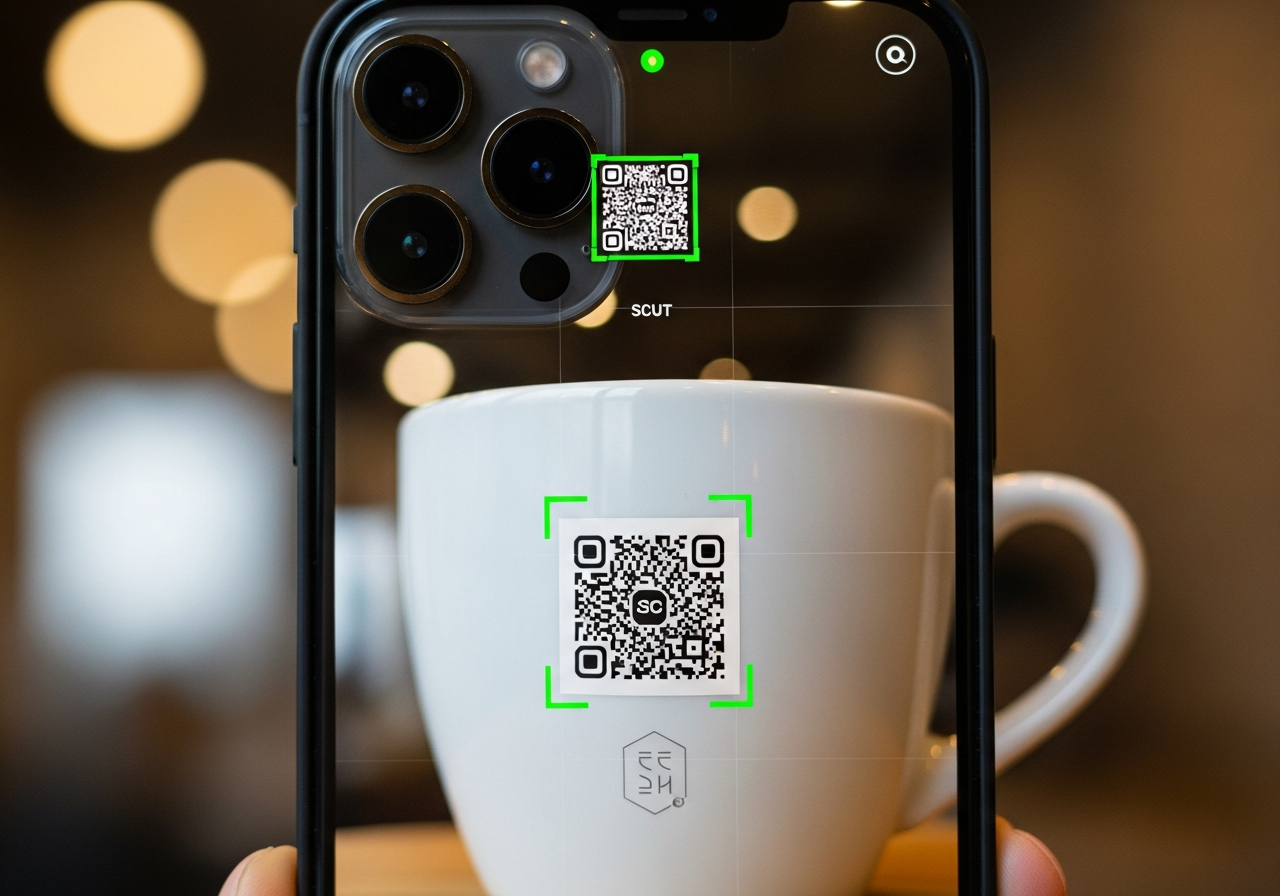
A QR code printed on a sticker or label can link to a web-based destination that holds all relevant information for that asset: maintenance manuals, inspection dates, safety data sheets, contact details, how-to videos, or compliance certificates. The important distinction is that a dynamic QR code doesn’t encode a fixed destination. It encodes a shortlink that redirects to wherever you point it, and you control that redirect from a dashboard. The sticker stays on the asset. The information behind it stays current.
Introducing Xcan It: the platform built for exactly this
Xcan It is a QR code management platform that lets organizations attach a printed QR label to any physical asset and then control what that label points to from a centralized dashboard. Change the destination, update the linked page, redirect to new documentation, all of it happens without touching the physical label. For teams managing dozens of assets or thousands, this changes the operational model entirely: one label per asset, one dashboard to manage them all, and no reprint cycle.
What information can live behind a QR code on a physical asset
The content you connect to a physical asset via QR can cover anything relevant to the people who interact with it. Common applications include:
- Maintenance logs and service history
- Safety data sheets and operating instructions
- Inspection checklists and compliance certificates
- How-to videos and training resources
- Contact directories and work order forms
- Warranty documentation and supplier details
The QR label becomes a doorway into a live, always-updated record rather than a static snapshot frozen at the moment the asset was commissioned.
Static QR codes won’t cut it: why dynamic matters for real-world asset management
The difference between static and dynamic QR codes
A static QR code permanently encodes a destination at the time of creation. Scan it and you go where it was programmed to go, regardless of whether that destination still exists or holds accurate information. A dynamic QR code works differently: it encodes a shortlink that redirects to a destination you control. The printed code never changes. The destination behind it can be updated at any time from a dashboard, in seconds, without touching the physical label.
What happens when you use static QR codes on physical assets
An organization prints static QR codes linking to their current maintenance documentation. Twelve months later, that documentation moves to a new system with a new URL. Every printed label now points to a broken page. The only fix is reprinting every label and replacing it physically across the entire asset inventory. For large inventories, that means significant costs in design, print, and labor, plus a period where workers are scanning codes that lead nowhere. This is the failure mode static codes create by design.
Why dynamic QR codes are generally the more practical choice for PP&E and infrastructure
Physical assets tend to have long lifespans. Buildings typically remain in service for 20 to 40 years; machinery often 5 to 15 years; public infrastructure longer still. The information associated with them will change many times over those periods: new maintenance protocols, updated safety standards, revised contact information, replacement documentation. For most asset management contexts, dynamic QR codes are the more practical format because they keep pace with that reality without generating ongoing reprint costs and operational disruption. Static codes are suited to truly fixed, permanent information, a description that applies to very little in active asset management. Note that dynamic codes do require internet connectivity to resolve, which is worth factoring into deployment in environments with limited or no network access.
Where this approach is already working: real-world use cases by sector
Manufacturing and industrial facilities
Consider a factory floor with 150 pieces of equipment, each carrying a QR label managed through a platform like Xcan It. A technician scans the code on a piece of production equipment, pulls up the current maintenance checklist and the last three inspection reports, and logs a new service record, all from a mobile device on the floor. When the equipment supplier releases an updated manual, the QR destination is redirected to the new version within minutes. No reprint, no delay, no window where workers are operating from outdated documentation.
Government and public-sector signage
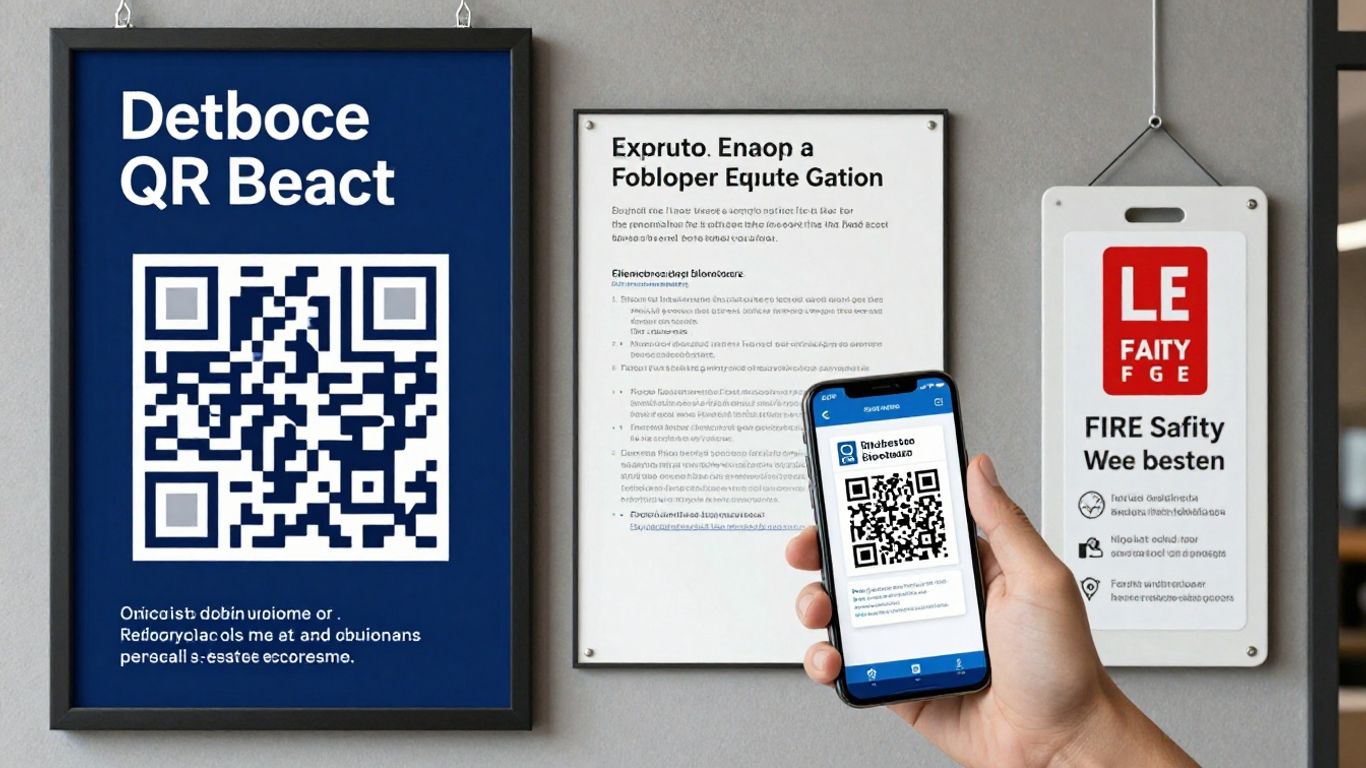
Municipal signage, public transport information points, park notices, and emergency contact boards all carry information that changes with policy updates, staffing changes, or seasonal schedules. Attaching dynamic QR codes to these physical information points lets public-sector teams push updates instantly from a central dashboard, reducing both the cost of reprinting and the risk of residents or visitors acting on outdated notices. For councils or government agencies managing hundreds of public-facing information points across a region, the potential shift from a quarterly printing cycle to a real-time update process can represent meaningful savings in both cost and compliance exposure.
Educational institutions and healthcare environments
Universities use QR-labeled signage and equipment across campuses to link students and staff to room booking systems, lab safety instructions, and updated protocols, all without reprinting every time policies change. Healthcare facilities attach QR codes to medical equipment for instant access to service records, calibration logs, and compliance documentation. In healthcare environments, asset information accuracy isn’t just an operational preference: it directly affects patient safety and regulatory compliance. A dynamic QR code linked to a live maintenance record is far more reliable than a printed label that may reflect protocols from two years ago.
Building your connected asset system: a practical rollout guide
The transition from static labels to dynamic QR codes doesn’t require a full asset management overhaul. A structured three-step rollout covers the essentials and can be scoped to a single facility or scaled across a national portfolio.
Step 1: Audit your asset inventory and identify information needs
Before any QR codes are created, get a clear picture of which physical assets carry information that changes regularly, which ones are accessed most frequently by staff, and which asset types carry the highest risk if their information is outdated. Start with high-traffic or high-risk assets: production machinery, safety equipment, public-facing signage, and shared tools used across teams. This audit also reveals which assets have no accessible information at all, a gap that dynamic QR codes can close immediately.
Step 2: Create and assign dynamic QR codes at the asset level
Using a platform like Xcan It, generate a unique dynamic QR code for each asset or logical asset group. Link each code to a relevant digital destination: a maintenance page, a documentation folder, a safety data sheet, or a custom landing page containing all information relevant to that asset. Apply durable QR labels to each asset. For environments that demand it, factory floors, outdoor signage, hospital corridors, look for labels rated for industrial conditions and extended outdoor exposure, and confirm durability specifications with your provider before deployment.
Step 3: Set permissions and update workflows for your team
Define who has access to update QR destinations and linked content. A role-based permission structure lets organizations assign update rights by team, department, or asset category. A facilities manager can update maintenance documentation for equipment in their area without accessing signage managed by the communications team. Governance stays clear, and updates happen without bottlenecks or the risk of one team accidentally overwriting another’s content. This structure is particularly important in enterprise and public-sector environments where accountability for asset information is clearly defined.
What scan data tells you that a spreadsheet never will
Understanding engagement with your physical assets through analytics
When a worker scans a QR label on a piece of equipment, that scan generates data: the time, the device type, and the frequency. Depending on platform configuration, approximate location data may also be available (typically derived from IP address, providing city or country-level resolution rather than precise coordinates). Over weeks and months, this data builds a picture that no static asset register can provide. Which assets get scanned most often, and why? Is a particular machine generating repeated documentation lookups, suggesting a training gap? Is a public information point going unscanned, suggesting it’s placed in the wrong location or carrying content that isn’t relevant to the people passing by?
Using scan analytics for smarter maintenance and safety decisions
Scan analytics give asset managers a real-time view of which physical assets are being engaged, when, and from where. Teams can identify assets that are consistently scanned before use, a safety signal worth noting and encouraging. They can spot assets where documentation access has dropped off sharply, which may indicate a compliance risk or a change in team behavior worth investigating. Scan frequency can serve as a practical proxy for asset criticality when scheduling audits and prioritizing maintenance resources, though it’s worth noting that frequency also reflects accessibility and team habits, context matters when interpreting the signal.
Connecting asset engagement data to lifecycle decisions
Physical asset lifecycle management has traditionally relied on fixed schedules and reactive maintenance. Adding QR scan data introduces a new signal: actual usage and engagement patterns from the people interacting with those assets every day. An asset that generates consistent, frequent scans is being actively used and monitored. One that hasn’t been scanned in three months either isn’t in active use or has a team that isn’t engaging with its documentation, both of which are worth knowing. That behavioral data feeds smarter decisions about when to service, replace, or retire tangible equipment and other physical investments.
How to choose the right platform to connect your physical assets to digital content
The features that matter most for asset-linked QR management
When evaluating platforms for this use case, the criteria that actually matter are specific. You need the ability to create and update dynamic QR codes at scale, a centralized dashboard for managing multiple assets and asset types, detailed scan analytics with filtering by date, device, and location, and role-based access controls for multi-department or multi-site teams. You also need support for durable physical labels designed to survive the environments your assets live in, which rules out most generic link management tools built for digital marketing campaigns.
Why Xcan It is built for this specific problem
Xcan It combines all of these capabilities in one platform, designed specifically for organizations managing real-world assets rather than digital campaigns. The centralized dashboard gives a live view of every QR code across an asset portfolio. Destinations can be updated quickly from the dashboard. Scan data is surfaced in real time and filterable by time, location, and device. And the integrated print-production service means teams can access QR labels engineered for factory floors, outdoor signage frames, hospital corridors, and campus infrastructure, not just optimized for a product mockup.
What to avoid when selecting a platform
The most common pitfalls are platforms that generate static QR codes only, tools that lack multi-user access controls, and solutions that don’t provide scan analytics at the individual QR code level. Generic URL shorteners and basic QR generators can create codes, but they treat each code as a one-time element rather than a permanent asset identifier. For physical asset management, you need a platform where each QR code is a long-lived infrastructure component, not a campaign asset with a short shelf life.
Putting it all together
Physical assets are long-lived by definition, manufacturing equipment, public signage, and campus infrastructure routinely remain in service for decades. The information attached to them cannot remain frozen for the same period and still be useful or safe. Dynamic QR labels solve this by separating the physical identifier from the digital destination: the label stays on the asset permanently, and the information it connects to stays current.
For businesses and public-sector teams managing complex asset inventories, this shift can eliminate reprint cycles, reduce compliance exposure, and generate a layer of operational scan data that traditional asset management methods don’t produce. The practical implementation is straightforward: audit your tangible property, assign a dynamic QR code to each asset, configure your update permissions, and apply durable labels built for the environment.
Xcan It makes that process practical at any scale. Whether you’re managing a single production facility or thousands of assets across a national infrastructure network, the model is consistent: print once, update forever, and track every scan. If your physical assets are carrying stale information today, the fix doesn’t require a reprint. It requires a smarter label. Start a free trial or book a demo to see how Xcan It works across your asset inventory.