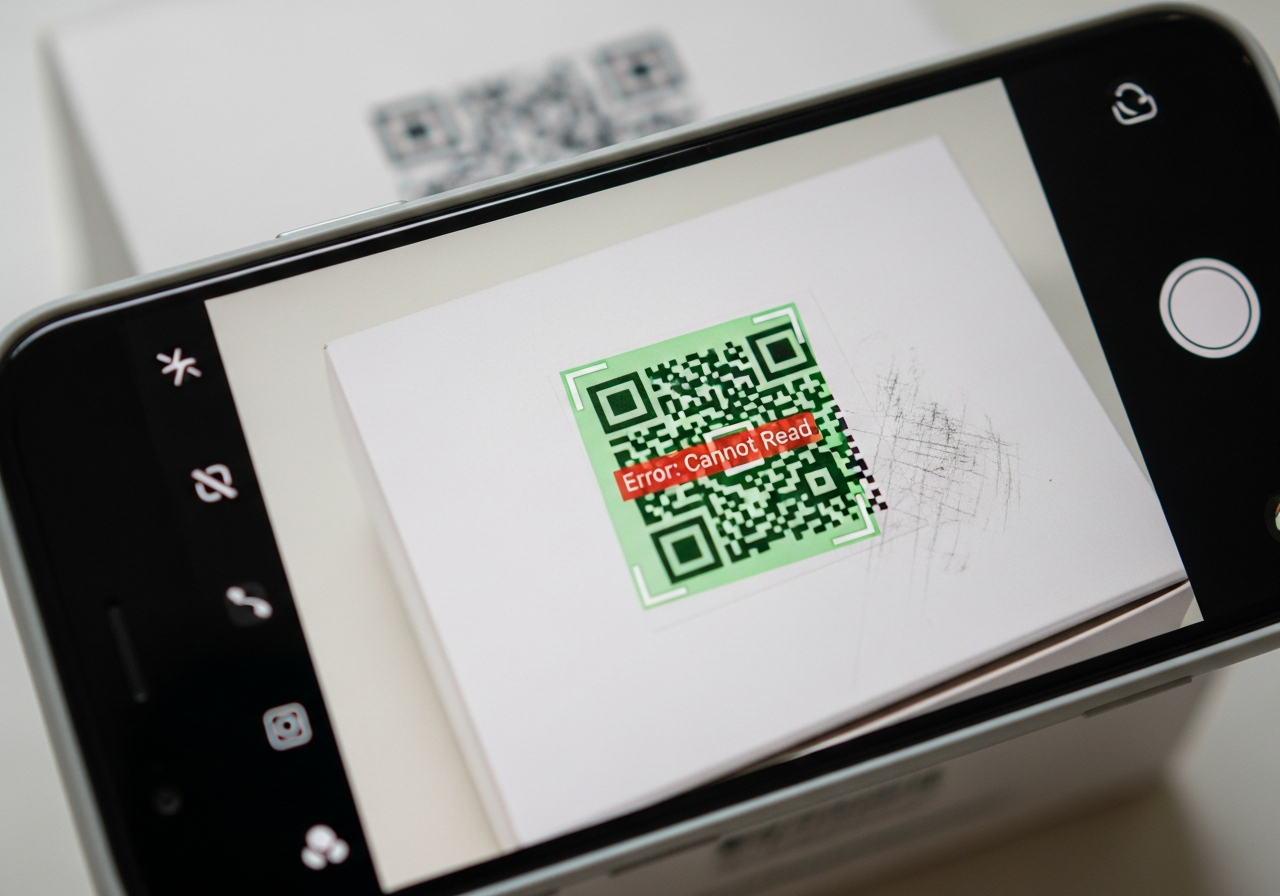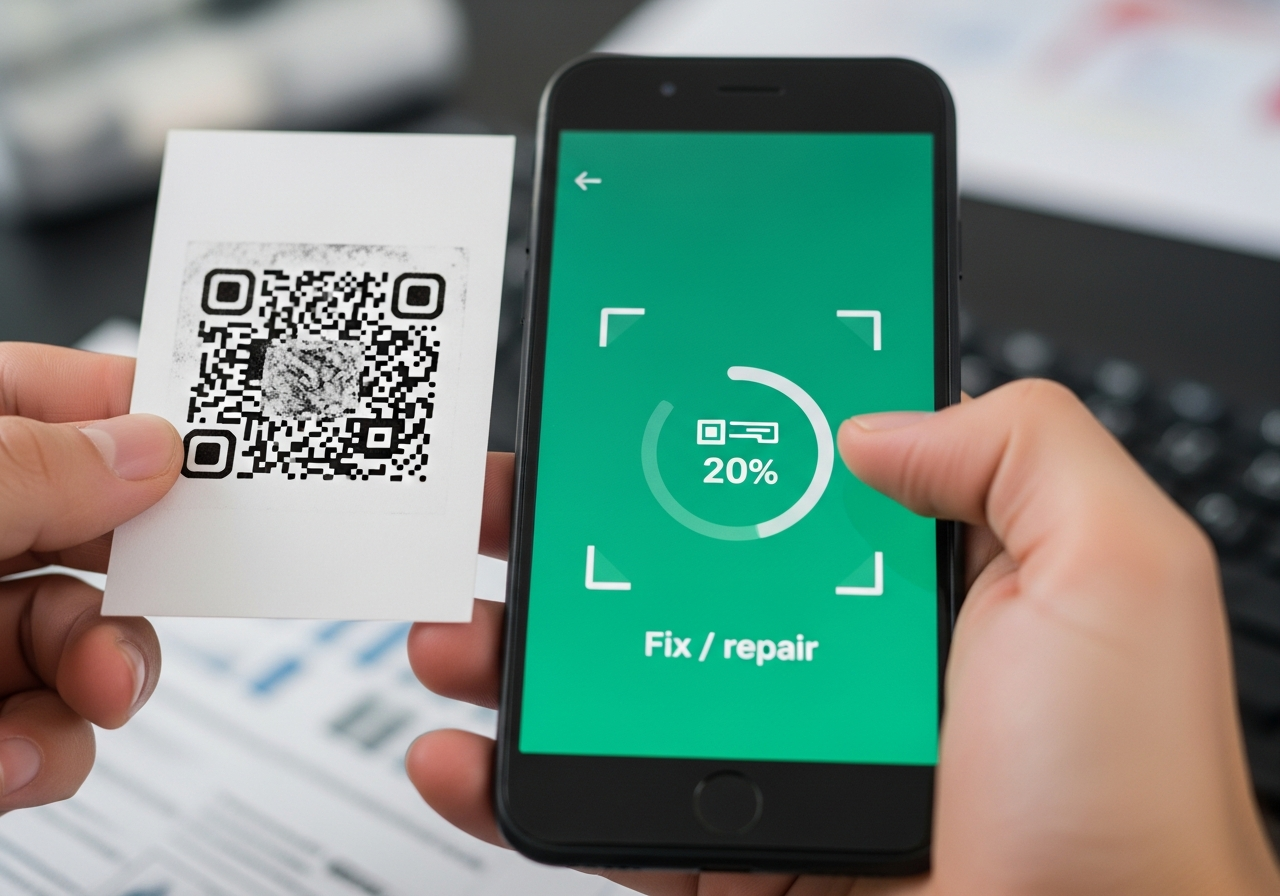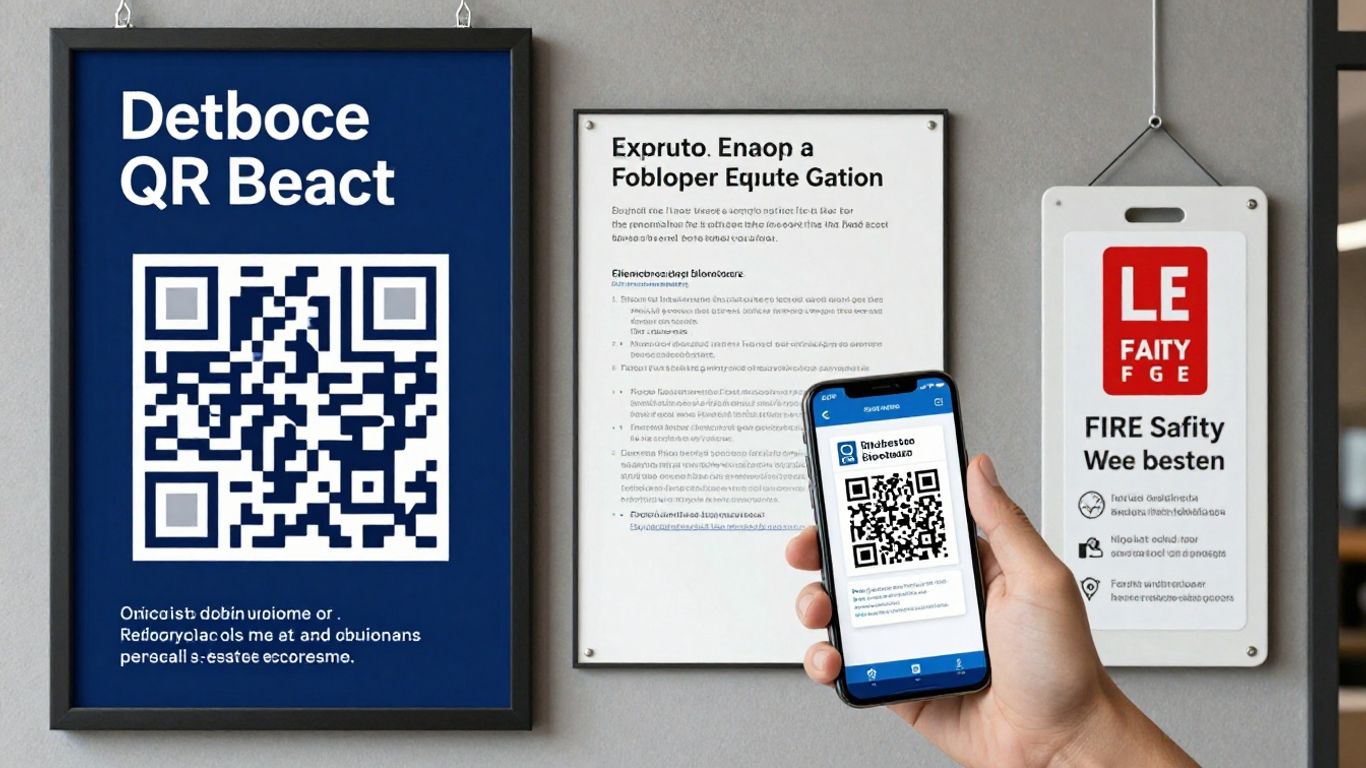

Picture this: a prospective student walks into your main building, scans the wayfinding QR code on the wall, and lands on an event page from two years ago. Meanwhile, in the library, the equipment label linking to the user guide returns a 404. Both codes are still physically there, still being scanned, still sending people nowhere useful. The only fix your team knows is to reprint, and reprinting costs money nobody budgeted for in January.
This is the gap that separates a proper QR code management platform from a basic generator. A generator creates a code. A management platform lets you control where that code points, permanently, without ever touching the physical asset again. For university campuses, where printed materials exist at enormous scale and outlast any single academic cycle, that distinction is everything.
If you’re asking what is the best QR code management tool for universities and colleges, this guide compares seven platforms against the operational reality of campus life: permanent physical assets, multiple departments with independent needs, compliance requirements, and budgets that vary wildly between institutions. Xcan It approaches this problem specifically from the physical environment side, a meaningful distinction when you’re managing lab equipment labels and building signage, not just digital campaigns.
Why most QR code tools fall short on university campuses
The printed materials problem nobody talks about
Universities print at a scale most organisations never reach. Orientation guides, lab equipment labels, library signage, accommodation handbooks, campus maps, and classroom resource posters all carry QR codes expected to remain functional for years, not weeks. Unlike a social media post or a digital banner, these materials can’t be updated with a click. When the destination changes and the code can’t follow, staff face a choice between reprinting at cost or leaving broken links in place.
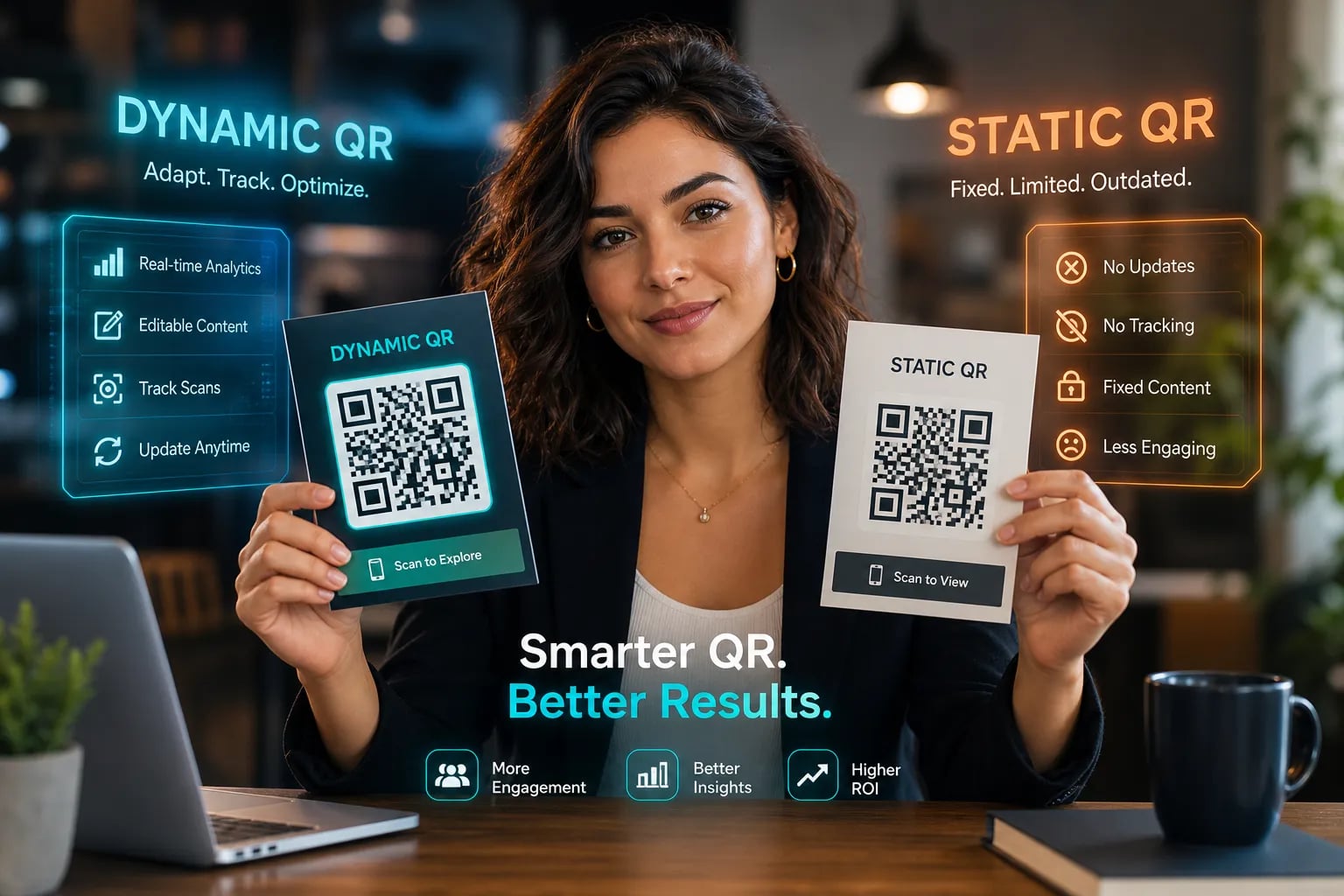
Static QR codes make this problem permanent. Every destination change requires a new code, which requires new print materials. Dynamic QR codes for universities aren’t a nice-to-have at institutional scale, they’re the baseline requirement that makes the whole system sustainable. Without them, the physical environment becomes a graveyard of outdated links. For an overview of education-focused QR solutions that address these exact challenges, see this guide to QR code solutions for education.
Multi-department chaos without a central dashboard
A university isn’t a single team operating under a single QR code strategy. IT, student services, the registrar, marketing, estates, facilities, and individual faculties all create and deploy codes independently, with no visibility into what anyone else is doing. The result is duplicate codes pointing to the same content, inconsistent branding across departments, and no way to audit which codes are live, broken, or pointing somewhere they shouldn’t.
Centralised campus QR code management with role-based access isn’t a premium feature for large research universities. It’s the structural requirement that allows any institution to maintain coherent, auditable control over its physical-to-digital connections.
Scale and longevity requirements
Campus QR codes are not campaign assets with a three-month lifespan. Some are printed into permanent building signage or bonded to equipment designed to last a decade. These codes need to work reliably for years, which means the platform behind them needs to be equally durable. Artificial scan limits that penalise high-traffic codes, missing audit logs, and vendors with uncertain long-term viability all become serious operational risks when the codes are embedded in physical infrastructure that can’t be quickly replaced.
Choosing the best QR code management tool for universities and colleges
Dynamic editing and real-time destination updates
Any platform worth considering must allow staff to update QR code destinations after materials have been printed and deployed. The key questions to ask are: how fast do updates propagate, can redirects be scheduled in advance, and does the original printed code ever need to be replaced? Some platforms charge extra for dynamic editing as an add-on to an otherwise static product. That’s a trap. Dynamic capability needs to be a core feature, not an upgrade.
Analytics depth and reporting access
Meaningful QR code analytics for colleges goes beyond a raw scan count. Campus IT and communications teams need unique scans separated from repeat visits, device type breakdowns, geographic or building-level location data, time-of-day patterns, and trend reports that span full academic cycles. Equally important is how that data is presented: dashboards that non-technical staff in student services or faculty comms can read without training are far more useful than raw CSV exports that only the data team can interpret. For a practical primer on what analytics typically looks like in QR platforms, see this article on QR code analytics.
User roles, permissions, and multi-site management
Universities need hierarchical access structures. Central IT admins need full visibility and control. Departmental editors need the ability to update their own codes without touching anyone else’s. Faculty or communications staff may need read-only access to view scan performance. Platforms that offer only flat admin access create bottlenecks immediately, every destination update becomes a ticket to the IT team rather than a 30-second task for the person who knows what the link should say.
Integrations, compliance, and pricing transparency
LMS-integrated QR code tool compatibility with Canvas or Blackboard should be confirmed directly with vendors, as support varies by plan and configuration. SSO via SAML 2.0, Microsoft Azure AD, or Google OAuth is an IT procurement requirement, not an optional extra. FERPA-aligned audit controls matter for US institutions; GDPR-compliant data handling and documented sub-processor management matter for UK and EU campuses. Pricing transparency is also non-negotiable: platforms that require a custom quote for any volume above 250 codes make budget planning impossible.
Xcan It: built for physical campuses, not just digital campaigns
The create, connect, control model for campus environments
Xcan It is built around a three-part approach that maps directly to how universities actually use QR codes in the physical world. You create a code once, connect it to any destination, and then control that destination indefinitely without ever touching the printed asset. In practice, this means a facilities team can update the safety briefing link on 200 lab equipment labels across multiple buildings in minutes. The sticker printed two years ago still works because Xcan It manages the redirect layer, not the physical code.
This is the core distinction that separates Xcan It from tools designed primarily for digital campaigns. Campaign tools assume the code will be retired when the campaign ends. Xcan It assumes the code will outlive multiple content cycles, exactly the assumption that holds true on a university campus.
Campus-specific use cases Xcan It handles well
Three scenarios define most university QR deployments, and each involves printed assets that can’t be reprinted on demand:
- Wayfinding and building signage linking to current room booking systems, event listings, or campus maps that update each term
- Library and lab equipment labels linking to maintenance logs, user guides, or safety documentation that changes with each equipment update
- Printed student handbooks and orientation packs referencing pages that are refreshed every academic year without the physical document changing
Each of these is a permanent physical asset pointing to dynamic digital content. Xcan It’s infrastructure handles that relationship reliably. Its support for bulk code production in multiple output formats, labels, PDFs, PNGs, and signage-ready files, means campus print teams don’t need to adapt their existing workflows to accommodate it.
Centralised dashboard and multi-department scale
From a single dashboard, IT admins can see all active codes across the institution, update destinations, monitor scan analytics at department level, and maintain audit trails. Branded QR code design is built in, so codes maintain institutional identity across every printed material rather than carrying generic styling from a third-party generator. For university IT procurement teams evaluating what is the best QR code management tool for universities and colleges, the combination of centralised control, physical asset focus, and bulk production capability makes Xcan It the most directly relevant platform on this list. For a business-focused framework that complements this approach, see Choosing a QR Code Management Platform for Business.
QRTRAC and Uniqode: enterprise analytics with added complexity
QRTRAC: purpose-built for higher ed on paper
QRTRAC is specifically marketed to university systems and makes a genuine case for itself at enterprise scale. It offers dynamic destination updates, a multi-department analytics dashboard, audit logs, FERPA-compliant data handling, and integration with student information systems and learning management platforms. Branded QR codes for education are supported, and the platform understands the institutional context in a way that generic tools don’t. See QRTRAC’s dedicated university offering for full details: QRTRAC for universities.
The trade-off is complexity and cost. QRTRAC is an enterprise-grade system with onboarding demands, procurement timelines, and pricing structures suited to large research universities with dedicated IT procurement teams. Mid-size institutions without that resource often find the implementation overhead disproportionate to their actual needs. The platform rewards institutions that have the infrastructure to use it fully, smaller operations may find that threshold difficult to reach.
Uniqode: strong compliance credentials, steeper learning curve
Uniqode holds GDPR and SOC 2 certifications, delivers deep analytics including location and device data, supports SAML SSO, and integrates with Google Analytics and CRM platforms. For organisations with mature digital operations and a technical team comfortable with enterprise software, it performs reliably. The compliance documentation is solid, which helps during IT procurement reviews.
The challenge at university scale is pricing. The Core plan starts at approximately £49 per month for 250 dynamic codes and one user with 90 days of analytics. A mid-size university managing codes across multiple faculties and departments will outgrow standard tiers quickly and move into enterprise pricing territory, which requires a custom quote. The learning curve is also steeper than alternatives, a real consideration when departmental editors in student services or facilities aren’t technical users.
Beaconstac, Flowcode, and the mid-tier contenders
Beaconstac: strong for marketing-led campuses
Beaconstac delivers detailed scan analytics, location-based insights, and CRM integrations that make it a natural fit for university marketing teams running recruitment campaigns, open-day events, or alumni engagement programmes. Its QR code analytics capabilities are useful in those contexts, and the platform is clearly designed around campaign workflows, it excels when the QR code has a defined start and end date.
That campaign orientation is also its ceiling for campus-wide use. Lab signage, equipment labels, and building directories don’t have campaign lifespans, and Beaconstac’s architecture isn’t engineered for long-term physical asset management at institutional scale. Treat it as a capable departmental tool for marketing teams rather than the backbone of an institution-wide QR code platform for higher education.
Flowcode: clean UX, limited at institutional depth
Flowcode offers comprehensive scan analytics, geographic and device data, and marketing platform integrations in an interface that non-technical staff can navigate without significant training. For specific departments running defined programmes, admissions events or alumni communications, it works well. The clean experience lowers the barrier to adoption for teams that don’t live in analytics dashboards.
At institution-wide scale, the gaps become visible. Centralised control across multiple faculties, hierarchical role management, and the kind of audit trail that IT procurement teams require aren’t strengths of the platform. Flowcode is better positioned as a departmental tool than as an infrastructure-level solution for the full campus.
ME-QR: accessible entry point worth knowing
ME-QR provides scan tracking including location, time, and device data, and supports dynamic QR codes and bulk creation even on its free plan. For smaller departments running pilot programmes or testing QR code adoption before committing to an institution-wide platform, it’s a credible starting point. API integrations are available for organisations that need to connect scan data to other systems.
Where ME-QR falls short is depth. Team management is limited, audit capabilities are light, and the compliance documentation that FERPA or GDPR-conscious IT procurement teams require isn’t a documented strength. It also lacks the QR code visitor management for schools and campuses that larger institutions often need for access control and event check-in; academic work on attendance monitoring and fraud mitigation using dynamic QR codes can help frame those requirements for procurement teams (fraud mitigation in attendance monitoring systems). Use it to test concepts; don’t use it to run permanent infrastructure.
Budget-friendly options: QR Code Generator and QR Code Chimp
QR Code Generator (TQRCG): practical functionality at lower cost
TQRCG performs well as a balanced mid-market tool with dynamic editing, analytics, and brand-friendly features. Its Core plan is priced similarly to Uniqode, around £49 per month for 250 dynamic codes and one user with 90 days of analytics, but with a shallower enterprise feature set that is actually easier to deploy without a dedicated IT team. For smaller colleges or single departments at larger universities that need reliable dynamic QR functionality without enterprise complexity, it’s a credible starting point.
Institutions considering TQRCG should verify data retention policies and compliance documentation before committing. The platform performs well on features and price; the due diligence question is whether its compliance posture meets the specific requirements of your IT procurement process and data governance team.
QR Code Chimp: high code volume at entry-level pricing
QR Code Chimp’s Ultima plan offers 900 dynamic QR codes and unlimited monthly scans at approximately £35 per month, which looks attractive for volume-heavy campuses trying to manage large numbers of codes without a large budget. For a department printing a high volume of asset labels or resource guides, the per-code economics are strong.
The limitations are real, however. Team management is restricted, enterprise-grade audit logs are absent, and compliance documentation for FERPA or GDPR-conscious IT teams isn’t a documented feature of the platform. Position QR Code Chimp as a secondary or departmental tool, not the institutional infrastructure your campus runs on long-term.
What to verify on compliance, security, and campus data privacy
FERPA and GDPR requirements in practice
Before any contract is signed, campus IT procurement teams need specific documentation in writing, not assurances in a sales call. For US institutions, that means FERPA-aligned access controls, audit logs showing which accounts accessed which records and when, and a Data Processing Agreement that explicitly defines the vendor’s role and data handling obligations. The vendor should sign as a school official, agree to data minimisation principles, and commit to breach notification timelines that align with institutional policy.
For UK and EU campuses, GDPR-compliant data handling documentation, sub-processor disclosures, and data retention and deletion controls are the minimum requirements. Vendors who present compliance as a core design principle, with SOC 2 certification or equivalent, are substantially easier to work with during procurement and during incident reviews than those who treat it as a checkbox exercise. Ask for documentation upfront; the quality of the response tells you a great deal about how the vendor operates.
SSO, authentication, and IT infrastructure fit
Universities manage identity through systems like Microsoft Azure AD, Shibboleth, or Google OAuth. A QR code management platform that doesn’t support SAML 2.0 or equivalent SSO will create friction at onboarding and become a persistent IT support burden as staff turnover occurs across departments. MFA for admin accounts is a minimum expectation, not a differentiator. Any platform presenting MFA as a premium feature is behind where university IT security standards sit in 2026.
LMS compatibility with Canvas or Blackboard should be confirmed directly with vendors, as support varies by plan and implementation. Don’t rely on marketing pages, ask your shortlisted vendors for specific confirmation of how integration works at your institution’s configuration, and verify that it functions on the plan tier you’re actually considering rather than an enterprise tier that requires separate procurement. For practical guidance on LMS integration approaches, review resources that discuss integration patterns and vendor compatibility.
How to shortlist two or three platforms and run a 30-day pilot
Building your shortlist based on your campus’s actual constraints
The shortlisting process should start with three variables specific to your institution, not a generic feature comparison. Start with the ratio of permanent physical assets to campaign-based QR use, a university where 70% of QR codes live on printed signage and equipment labels has fundamentally different needs than one primarily running digital recruitment campaigns. Then map how many departments need independent access and at what level of autonomy. Finally, assess your IT team’s realistic capacity for managing onboarding across multiple user types.
A university dominated by physical asset use cases should prioritise Xcan It and QRTRAC at the top of the shortlist, with TQRCG as a budget-conscious alternative. A campus focused primarily on marketing and recruitment campaigns might reasonably prioritize Beaconstac or Uniqode. Map the tools to your actual use case distribution rather than defaulting to the most feature-rich option on the market. For a quick comparison of market providers, see this piece comparing leading dynamic QR code platforms.
Running a meaningful 30-day pilot before committing
A useful pilot starts with one high-traffic, real-world use case: a printed campus map in a high-footfall building, equipment labels across one faculty’s lab, or the printed materials from orientation week. Involve at least two user types, such as an IT admin and a departmental editor, and track three specific metrics throughout the pilot: total scan volume, how often destinations are updated, and how long it takes from identifying that a link needs changing to confirming the update is live. Those three numbers tell you more than any demo environment will.
Use the pilot window to push compliance documentation requests through your IT procurement process in parallel. Most platforms offer free trials, and the physical asset management approach that Xcan It is built around is best evaluated by running it against real printed materials on your campus. Don’t commit to institution-wide deployment before a structured pilot delivers actual operational data. The 30 days you spend testing will save months of remediation if the wrong platform gets rolled out at scale. If you want a short list of accessible generators to run quick pilots with, consider consulting a roundup of dynamic options such as 5 Dynamic QR Code Generators UK Businesses Should Consider in 2023.
What is the best QR code management tool for universities and colleges? Choose based on campus reality
The answer depends less on feature lists and more on whether the platform was designed for the physical world or the digital one. Most campuses are trapped in a reprint cycle because their QR platform was built for online campaigns, not for permanent assets in buildings that were printed once and need to work for years.
Xcan It addresses that problem directly, engineered from the ground up for physical environments where reprinting is costly, slow, or impractical. QRTRAC serves large research universities well when enterprise analytics and student information system integration are the primary requirements. Uniqode delivers strong compliance credentials for institutions with mature digital operations. Mid-tier tools like TQRCG or Beaconstac suit specific departmental contexts where a full enterprise platform is overkill.
Start with the criteria framework in section two. Map your campus’s actual use cases against it honestly, prioritising physical asset management, multi-department access, and compliance requirements in that order. Then choose one or two platforms and run a real pilot on a real use case before committing to anything institution-wide. The data from that pilot will make the final decision straightforward.
Consider starting your evaluation with Xcan It at xcancreate.com, test it against your most pressing physical campus use case and let the results guide the rest of your decision.