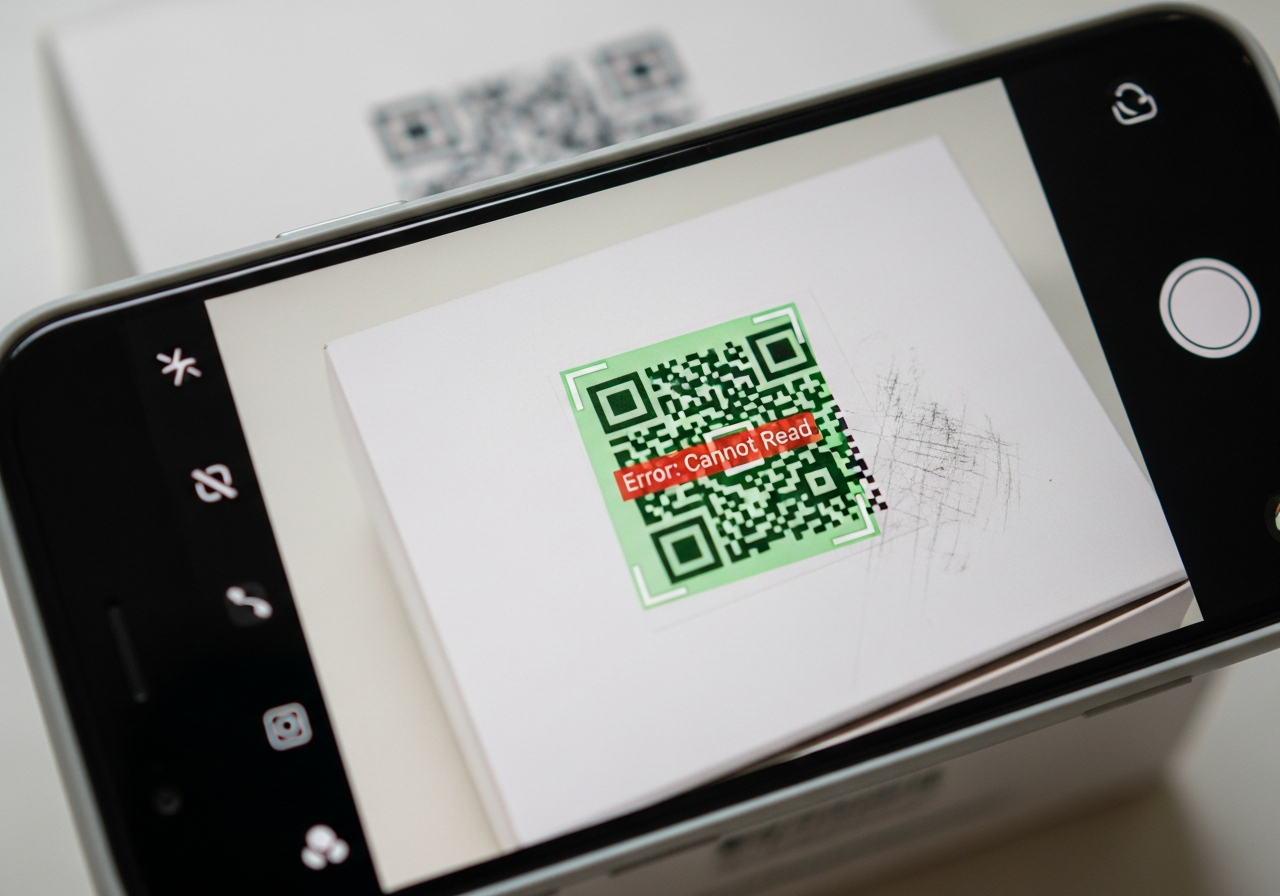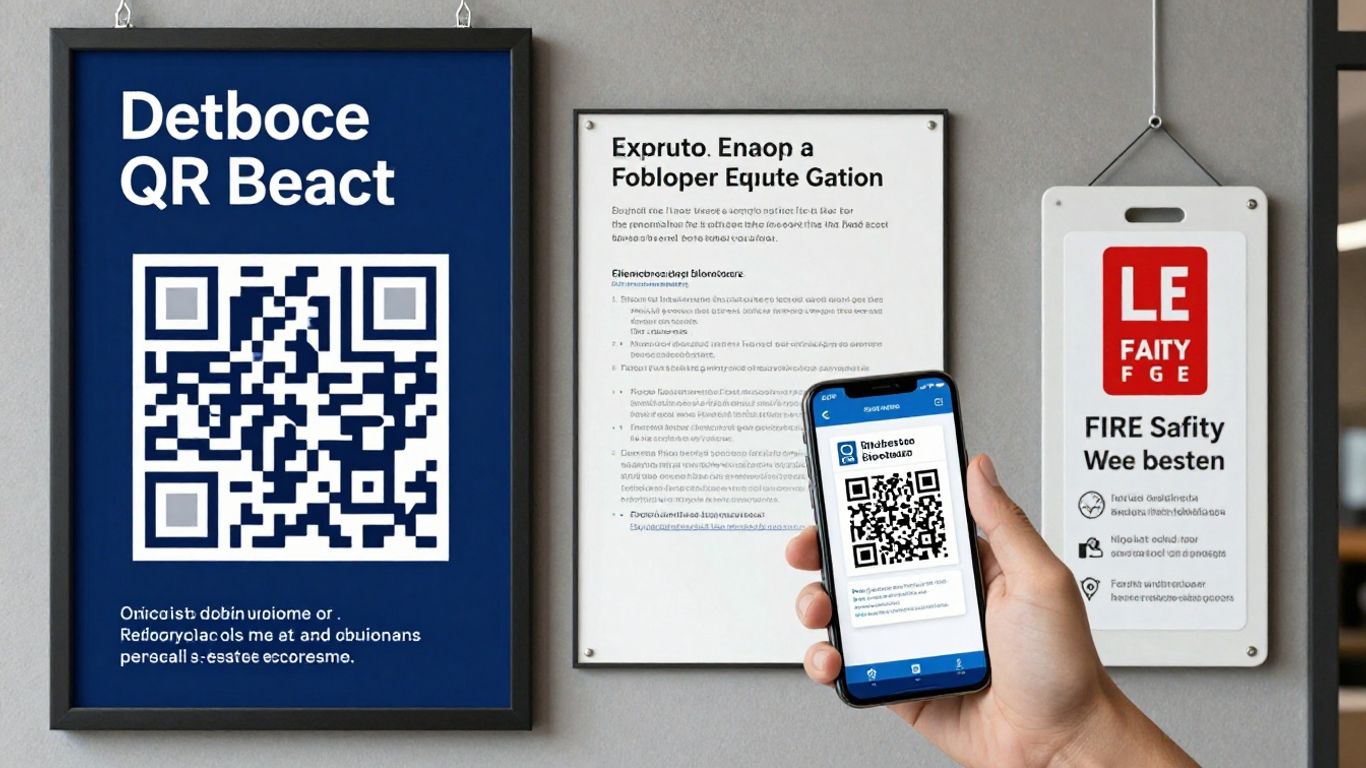

A new term starts. The welcome posters go up. A QR code on each one links to the updated timetable. Three weeks later, that timetable page is archived. Every scan returns a 404 error. Students shrug. Parents stop trusting the code is ever worth scanning. The poster stays on the wall for another six months, quietly broken.
This scenario is familiar to many schools. The problem isn’t the QR code itself. It’s that most printed QR codes encode a final destination URL directly into their pattern. Once the code leaves the printer, that destination is locked. Change the page, move the document, or restructure the school website, and the printed code becomes useless overnight.
This article walks through seven practical ways that demonstrate how can schools use qr codes on printed materials without reprinting them. These methods effectively ensure updated access for students and parents. By exploring these strategies, educators can optimise their resources while keeping printed materials relevant.
Why printed QR codes go dead in schools
Furthermore, understanding how can schools use qr codes on printed materials without reprinting them not only enhances functionality but also promotes sustainability in educational environments.
How can schools use QR codes on printed materials without reprinting them
A deeper exploration of how can schools use qr codes on printed materials without reprinting them reveals significant benefits for both educational institutions and their stakeholders.
Static vs. dynamic: what actually gets encoded into a QR code
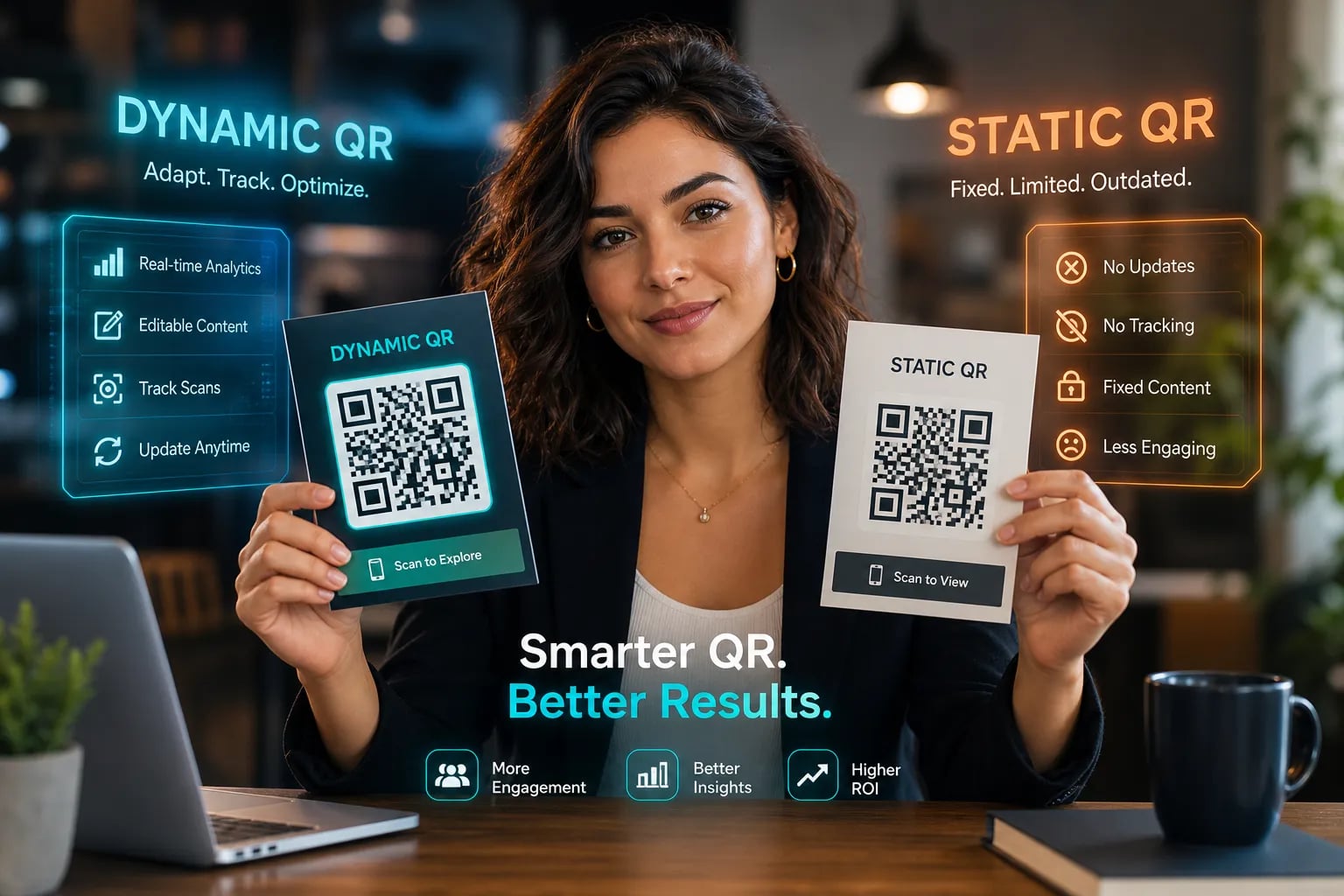
A static QR code encodes the full destination URL directly into its black-and-white pattern. The code is essentially a visual representation of that URL, nothing more. Once you print it, the only way to point it somewhere new is to print a new code. Think of it like printing a full postal address on a sign: if the building moves, the sign is wrong.
A dynamic QR code works differently. Instead of encoding the final destination, it encodes a short redirect URL hosted on a management platform. When someone scans the code, their device visits the short URL, and the platform instantly forwards them to the current destination. You can change that destination from a dashboard at any time. The printed code stays exactly the same; only the forwarding rule changes. It’s the difference between printing a postal address and printing a door number that leads to a room you can rearrange whenever you like. For a concise overview of the technology, see this article on dynamic QR codes.
The real cost for school operations
Reprinting a poster sounds like a minor inconvenience. In practice, it involves a member of staff noticing the dead link, raising the issue, sourcing the original design file, updating it, sending it to print, waiting for the job to complete, and physically replacing the old material. Multiply that administrative burden across dozens of codes and several departments, and the accumulated staff time and print costs become a genuine operational drag.
This highlights how can schools use qr codes on printed materials without reprinting them, thereby reducing unnecessary administrative burdens.
There is also a sustainability consideration. Schools increasingly look for ways to reduce unnecessary paper waste and environmental impact. Avoidable reprints cut against those efforts in a visible, easily preventable way. Every method in this article eliminates that cycle by separating the printed object from the digital destination it connects to.
Ultimately, knowing how can schools use qr codes on printed materials without reprinting them enables schools to adapt swiftly to changing circumstances.
Seven ways schools can use QR codes on printed materials without reprinting them
By leveraging these strategies, schools can effectively answer the question of how can schools use qr codes on printed materials without reprinting them.
1. A dedicated QR code management platform
A QR management platform generates dynamic codes tied to short redirect URLs that the platform hosts on your behalf. Staff log into a central dashboard and update the destination at any time. The printed code never changes; the platform handles the forwarding silently in the background. This is the most complete solution available and the one that scales best across a whole school.
This highlights how can schools use qr codes on printed materials without reprinting them, showcasing innovative solutions for educational settings.
Xcan It is designed specifically for physical environments, printed materials, campus signage, equipment labels, and facility notices. Each code is assigned a clear owner, a tracked destination, and a scan history, making it straightforward to manage science lab notices, fire safety signage, library displays, and classroom resource sheets from a single dashboard. When a resource page moves, one URL update covers every physical location where that code appears.
Key features to look for in any management platform include:
- Real-time destination updates without reprinting
- Scan analytics covering timestamps, device type, and approximate location (note: identifying individual scanners requires explicit account-linking and carries UK GDPR obligations, see the privacy section below)
- Branded QR design for consistent school identity
- Multi-user access so different departments manage their own codes independently
For schools with more than a handful of printed codes, a dedicated platform like Xcan It eliminates the admin burden that comes with tracking individual shortlinks across a spreadsheet.
2. Shortlink redirects
Instead of encoding the final page URL into the QR code, you encode a shortlink created through a service like Bitly, Short.io, or a similar redirect tool. When the content behind the code changes, you log into the shortlink dashboard and point the short URL somewhere new. The printed code remains valid indefinitely.
The basic workflow is straightforward: create a shortlink pointing to your initial destination, generate a QR code that encodes that shortlink, print it, and update the shortlink destination in the dashboard whenever content changes. For schools managing a small number of codes with staff already familiar with tools like Bitly, this is a low-friction starting point that requires no significant new software investment. Bear in mind that free-tier plans on most shortlink services impose redirect limits, and platform terms can change, it’s worth reviewing those constraints before committing.
The limitations are real, though. Free tiers on most shortlink services offer limited or no analytics. There’s no centralised view when you’re managing dozens of codes across different departments. And shortlink providers occasionally restructure their pricing or retire services, leaving you dependent on a platform with no guarantee of long-term stability. Use this method for a handful of codes where simplicity matters more than reporting.
3. A custom school-branded shortlink domain
Utilising a custom domain illustrates how can schools use qr codes on printed materials without reprinting them while maintaining brand integrity.
A variation on the shortlink approach worth separating out: using a custom domain your school controls, such as qr.schoolname.ac.uk, as the base for all your redirect URLs. Services like Short.io support custom domains, and your IT team can configure one that reflects your school’s identity rather than a third-party brand.
This matters more than it sounds. A code linking to qr.schoolname.ac.uk/events signals legitimacy in a way that a generic third-party shortlink domain does not, and a familiar URL is likely to feel more trustworthy to students and parents scanning it for the first time. It also means that if you ever switch redirect providers, your printed codes remain valid as long as you keep the domain and redirect rules in place.
A custom shortlink domain pairs naturally with an editable landing page strategy. The shortlink handles the redirect; the landing page holds the content that changes over time.
4. An editable landing page as a permanent QR target
When employing this strategy, schools will see how can schools use qr codes on printed materials without reprinting them effectively. Rather than pointing the QR code to a specific document or page, point it to a single landing page that a staff member can update freely whenever the content changes.
Rather than pointing the QR code to a specific document or page, point it to a single landing page that a staff member can update freely whenever the content changes. The QR code encodes the landing page URL. That URL never changes. Only the content on the page does.
Tools like Google Sites, a simple WordPress page, or a platform-hosted landing page builder work well here. Staff edit the page content using a standard web editor: swapping document links, updating event schedules, adding new videos, or changing contact information. No QR code involvement is needed after the initial setup. This method is particularly effective for classroom resource hubs, library catalogue pages, and parent communication boards where content rotates regularly throughout the year.
One critical point: the landing page URL must be permanent. Avoid using personal Google Drive sharing links, temporary file URLs, or anything that could expire or change when a staff member leaves. If the URL changes, every printed code pointing to it breaks. Set the page up on a stable, school-managed domain and treat it as infrastructure, not a one-off document.
5. Your school’s VLE or LMS as the QR target
This method demonstrates how can schools use qr codes on printed materials without reprinting them, fostering a seamless learning experience.
Most UK schools already operate a virtual learning environment or learning management system. These systems generate stable URLs for course pages, resource libraries, and announcement boards that staff regularly update as standard practice.
Pointing QR codes to specific VLE pages rather than external documents means the destination is maintained as part of normal teaching workflows. When a teacher updates the course materials page, the QR code on the printed handout automatically connects to the latest version. No separate redirect management is needed.
This works especially well for classroom resources, department hubs, and curriculum documents where the VLE page already exists and is regularly maintained. For schools already invested in these platforms, it’s often the simplest route to keeping printed codes accurate with no additional tooling required.
6. Shared cloud folders with stable, governed URLs
This approach is another clear example of how can schools use qr codes on printed materials without reprinting them. A shared Google Drive folder, SharePoint library, or OneDrive folder can serve as a practical QR target, provided the folder URL is treated as permanent.
A shared Google Drive folder, SharePoint library, or OneDrive folder can serve as a practical QR target, provided the folder URL is treated as permanent and its access permissions are maintained carefully. Staff add, remove, or replace files within the folder without the folder URL changing. The printed QR code continues to deliver whatever is current in that folder.
Before using this approach, verify that your chosen platform’s folder URLs genuinely remain stable across permission changes and account reorganisations, some platforms regenerate links when sharing settings are modified. Once confirmed, this approach works for collections of resources where the set of documents shifts over time: parent newsletters, term calendars, policy documents, or department handbooks. Treat the folder URL as a piece of infrastructure that should never be modified after printing begins.
7. Sticker swaps: the physical fallback
For laminated materials, hardcoded wall signage, or situations where no digital management tool is available, a physical sticker printed with a new QR code can be applied directly over the original. This method has a specific use case: permanent or semi-permanent signs where one or two destination changes are expected over many years.
Even in low-tech situations, understanding how can schools use qr codes on printed materials without reprinting them remains critical.
To do it properly: print the replacement code at the correct size and contrast on white label stock. The sticker must fully cover the original code, as partial coverage causes scan failures. Label the back of the sign or asset with the date of the swap and the new destination URL for record-keeping purposes. Be clear-eyed about the limits of this method.
Print design rules that keep school QR codes scannable
Size and distance: the 10:1 rule
For every 10 cm of expected scanning distance, the QR code should be at least 1 cm wide. A poster scanned from arm’s length (roughly 50 cm) needs a code at least 5 cm square. Handouts and flyers used at close range need a minimum of 2 cm x 2 cm. Corridor posters warrant 4 to 6 cm. Codes printed below these thresholds are likely to fail on a range of devices, particularly older camera hardware, test across multiple devices before committing to a full print run. For more detailed guidance on sizing and distance, see this practical QR code size and distance guide.
Laminated materials require extra attention. Lamination creates surface glare that affects scanning, particularly under overhead lighting. Increase the code size by 20 to 30 percent compared to your standard size, and test on multiple devices before committing to a full print run. A code that scans perfectly on a print preview can fail once the lamination goes on.
Contrast, quiet zones, and placement
Dark modules on a light background is always the most reliable combination. Avoid light-on-dark, gradient fills, or patterned backgrounds behind the code. A minimum contrast ratio of 4:1 between the code modules and the background is the technical threshold; black on white remains the gold standard for reliability across lighting conditions and device cameras.
The quiet zone, the white border surrounding the code, should be at least one eighth of the code’s total side length. Never run the code edge-to-edge to a coloured border or printed element. For placement on a poster, position the code in the bottom third at eye level, away from folds, staple points, and edges where the pattern can be physically distorted. Always test on at least two different smartphones before approving a full print run. For a broader set of print best practices, see these QR code printing guidelines.
Cost and privacy tradeoffs: choosing the right method
Ultimately, considering how can schools use qr codes on printed materials without reprinting them leads to better operational decisions.
Comparing the approaches on cost, control, and effort
Free or low-cost methods, shortlinks, editable landing pages, and VLE pages, work well when you’re managing a small number of codes and already have the tools in place. The setup investment is low, and for a handful of codes updated a few times a year, they’re entirely sufficient. The cost scales with complexity: when codes number in the dozens or hundreds across multiple departments, the admin overhead of managing individual shortlinks across a spreadsheet becomes significant.
Sticker swaps appear to have no software cost, but when staff time is factored in for sourcing, printing, applying, and recording each swap, the hidden costs can mount quickly per update. QR management platforms like Xcan It carry a subscription cost, but that cost is offset by eliminated reprint spend, reduced admin time, and scan analytics that give your team visibility into which printed materials are actually working. For schools managing communications at scale, the platform investment can pay for itself over time.
GDPR and data privacy considerations for UK schools
In summary, knowledge of how can schools use qr codes on printed materials without reprinting them is vital for compliance and efficient resource management.
Dynamic QR codes collect scan data, including device type, approximate location, and timestamps. For UK schools, this data falls within the scope of UK GDPR. If scan analytics are collected as genuinely anonymised aggregates, with no full IP addresses, no cookies, and no individual identification, the compliance obligations are straightforward. If analytics link scans to identifiable individuals, full UK GDPR obligations apply, including lawful basis, transparency notices, and data minimisation.
Before deploying any trackable QR code in a school environment, confirm three things with your platform provider: where scan data is stored (UK or EU server locations are preferable for UK schools), what data is retained and for how long, and whether a Data Processing Agreement is available for your school to sign. For platforms used in contexts where under-18s may be scanning, verify that the provider’s data practices align with ICO guidance on children’s data. For further reading on compliance and tracking practices, see this article on GDPR-compliant QR code tracking. Xcan It is designed with UK GDPR considerations in mind; contact the team directly to request a Data Processing Agreement and confirm current data residency arrangements before deployment.
Rollout checklist: from first print to live scan tracking
Before you print: five decisions to confirm
- Which method fits your school’s scale and your team’s technical comfort level
- Who owns each QR code and which staff member is responsible for keeping each destination current
- What the QR destination will be at launch and what conditions would trigger an update
- Whether scan analytics are needed (if yes, use a management platform or a shortlink with tracking enabled)
- A confirmed test scan on at least two devices showing the code resolves correctly before printing begins
Deploying and maintaining your QR codes
Label each physical asset with a record of its QR destination and the platform or method managing it. A simple shared spreadsheet works for small schools; a management platform like Xcan It provides this automatically at any scale. As a practical starting point, set a regular review schedule, quarterly works well for most schools, to confirm that all active code destinations are still live and relevant, and assign a named staff member to run each review.
Tracking how can schools use qr codes on printed materials without reprinting them can significantly enhance engagement strategies.
Use scan data to inform future print decisions. Codes that generate consistent engagement tell you which printed materials students and parents are actually using. Codes with near-zero scans, despite prominent placement, suggest the material itself may need rethinking rather than just reprinting. When a destination needs updating, make the change in the dashboard before the old page goes offline. A brief overlap window, where both old and new destinations are live simultaneously, prevents dead-scan gaps during the transition.
Every dead QR code is a missed connection
A broken QR code doesn’t just fail to deliver information. It signals to the person who scanned it that the school’s communications aren’t being maintained. That’s a small erosion of trust each time it happens, and it accumulates. The good news is that every method covered here prevents it, and the right choice depends almost entirely on how many codes your school manages and how often destinations change.
For one or two codes updated once a year, an editable landing page or a shortlink is entirely sufficient. For schools managing QR codes across departments and multiple terms, a dedicated QR management platform solves this issue permanently. That’s how schools can use QR codes on printed materials without reprinting them: by separating the physical code from the digital destination and managing the connection centrally.
This summary reinforces how can schools use qr codes on printed materials without reprinting them, ensuring all stakeholders benefit from an updated connection.
If your school already has more than a handful of QR codes in use across printed materials, the smartest move is to centralise them. Xcan It is purpose-built for exactly this environment. For practical, step-by-step setup advice, see our guide How to Keep Printed QR Codes Live Without Reprinting. A free trial is available so your team can explore the dashboard before making any commitment, start there, review your existing codes, and get every physical-to-digital connection in your school under proper management.
Therefore, it’s essential for every school to understand how can schools use qr codes on printed materials without reprinting them to ensure effective communication.
To ensure effective communication, it is essential for every school to understand how can schools use qr codes on printed materials without reprinting them.
Thus, the conclusion remains clear: how can schools use qr codes on printed materials without reprinting them is a critical question for educational success.