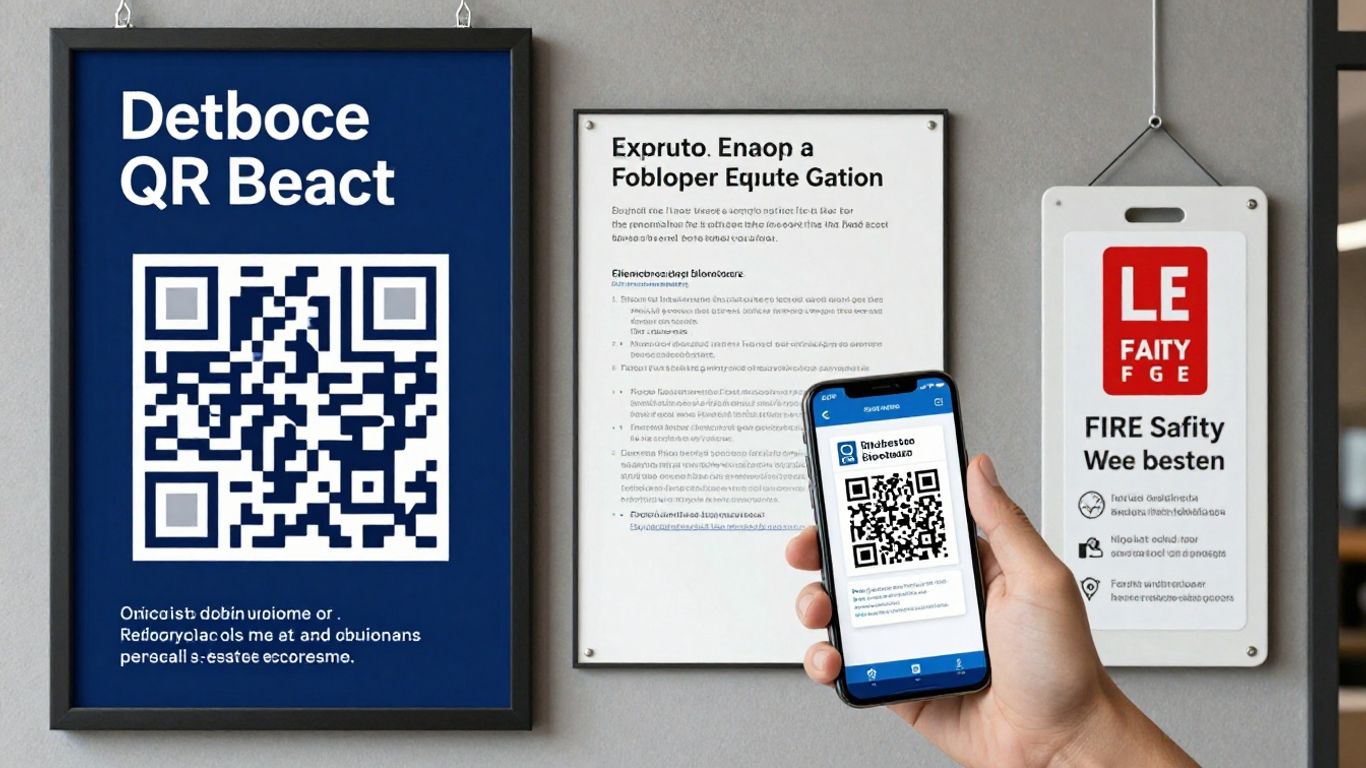
Dynamic QR Codes for Food Safety & Consumer Protection

When Packaging Needs to Speak Back

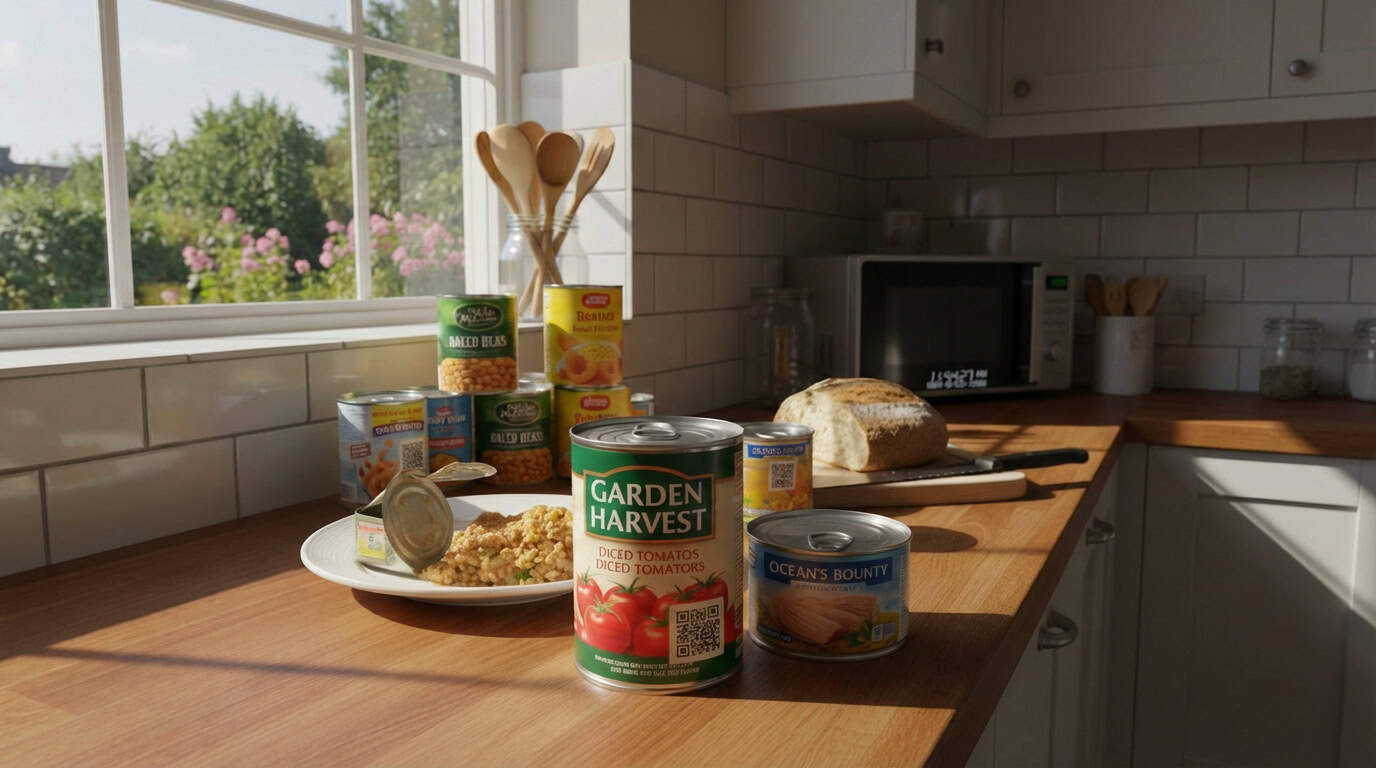
Dynamic QR code on food packaging enabling real-time consumer safety updates

Food safety relies on speed, clarity, and trust.

Yet when a food product is recalled today, the communication rarely reaches the one place it matters most — the product itself. Notices are issued through websites, retailers, and media outlets, while the item in a cupboard or kitchen remains unchanged and silent.

Dynamic QR codes solve this disconnect by allowing packaging to deliver real-time safety information, even after products have been manufactured, distributed, and sold.

The challenge with traditional food recalls

Food recalls are not rare, but the systems used to communicate them are still largely indirect.

Most rely on:

  • Press releases and news coverage
  • Retailer notices and website updates
  • Batch numbers that are difficult for consumers to identify

In practice, this creates gaps:

  • Consumers may never see the recall notice
  • Products may be stored for months before use
  • There is no immediate way to confirm whether a specific item is affected

Static packaging cannot adapt when circumstances change. Once printed, the information is fixed — even when safety guidance is not.

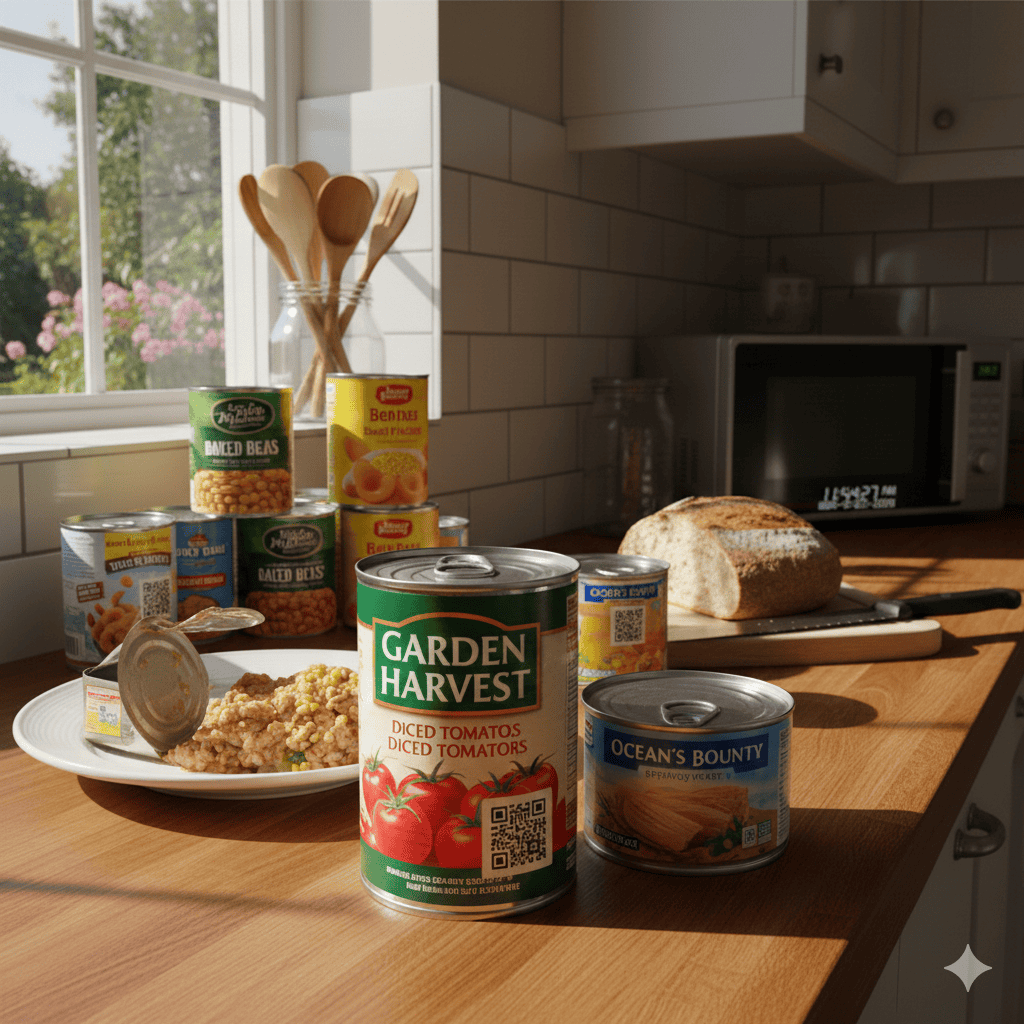
QR code on food packaging to check product safety information

How dynamic QR codes improve consumer safety

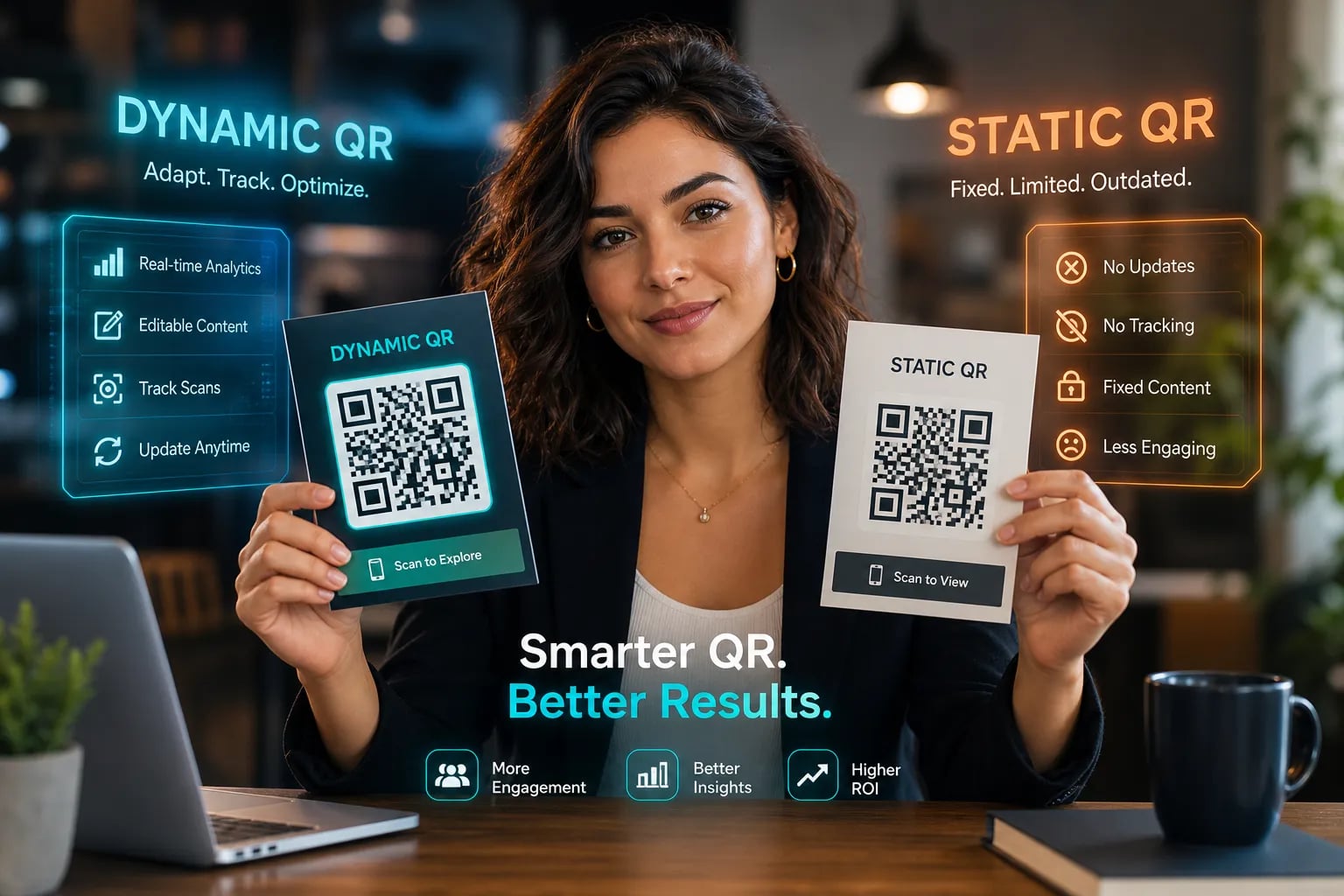
A dynamic QR code looks the same as a standard QR code, but behaves very differently.

Instead of pointing to a fixed destination, a dynamic QR code can be updated at any time. The printed code remains the same, while the information it delivers can change instantly.

This allows food packaging to act as a live communication channel, not a static label.

Dynamic QR codes allow Food manufacturers to update product or safety information without reprinting.

A practical use case: batch-level safety updates

Each tin includes a dynamic QR code linked to product information such as:

  • Nutritional values
  • Allergen declarations
  • Recycling instructions

Under normal conditions, the QR code supports transparency and compliance.

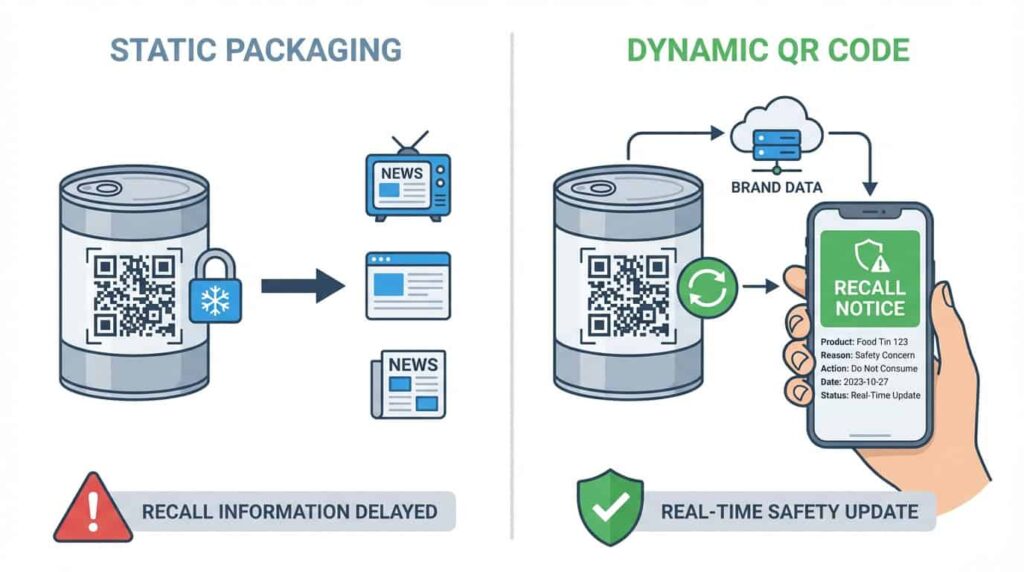
If a quality or safety issue is later identified — for example contamination, incorrect allergen labelling, or a packaging fault — the same QR code can be immediately redirected to a safety notice.

Diagram comparing static packaging with dynamic QR codes for real-time food recall updates

That notice can clearly state:

  • That the product has been recalled
  • Whether it is safe to consume
  • What action the consumer should take

The consumer does not need to search online or check batch numbers elsewhere. The information is delivered directly from the product they are holding.

Benefits for consumers, brands, and regulators

Consumers

  • Immediate, reliable information
  • Reduced uncertainty and anxiety
  • Clear guidance without additional steps

Food brands

  • Faster and more targeted recall communication
  • Direct contact with end consumers
  • Improved trust through transparency

Compliance and regulatory teams

  • Clear audit trails
  • Verifiable communication methods
  • Reduced reliance on indirect recall channels

Dynamic QR codes do not replace existing recall procedures — they strengthen them by closing the communication gap between brands and consumers.

Why static QR codes are not sufficient

Static QR codes are limited by design. Once printed, their destination cannot change.

For marketing campaigns, this may be acceptable.
For consumer safety, it is not.

Safety information must be able to evolve. Packaging that cannot be updated becomes a liability when conditions change.

Dynamic QR codes provide the flexibility required for real-world food safety scenarios.

Consumer scanning a QR code on food packaging to check product safety information

How Xcan It supports this use case

Xcan It enables brands to deploy and manage dynamic QR codes designed for long-lived, physical products.

Using Xcan It, food manufacturers and packaging teams can:

  • Update safety information in real time
  • Manage batch-level QR code destinations
  • Maintain consistent communication across the product lifecycle

This approach allows packaging to remain accurate, relevant, and responsive — even after products reach consumers’ homes.

Who this use case is for

  • Food manufacturers
  • Packaging and labelling teams
  • Quality assurance and compliance professionals
  • Sustainability and consumer trust teams

Closing perspective

When a consumer scans a product, they are asking a simple question:

Is this safe?

Dynamic QR codes ensure that the answer can be delivered clearly, instantly, and directly — from the product itself.

FAQs

A dynamic QR code is a QR code whose destination can be updated after it has been printed. The QR code itself never changes, but the information it points to can be edited in real time. This makes dynamic QR codes suitable for long-lived products and situations where information may need to change, such as safety updates or recalls.

Standard (static) QR codes point to a fixed destination and cannot be changed once printed. If the information becomes outdated, the QR code remains incorrect. Dynamic QR codes allow brands to update the destination at any time, ensuring the information delivered to consumers is always current.

Yes. Dynamic QR codes can be redirected instantly to a recall or safety notice if a product issue is identified. This allows consumers to scan the product they already own and receive clear, up-to-date instructions without needing to search online or rely on external announcements.

No. Dynamic QR codes are scanned using a standard smartphone camera, just like any other QR code. There is no need for a dedicated app, which makes them accessible to a wide range of consumers.

Yes. Dynamic QR codes can be assigned and managed by batch, product type, or production run. This allows brands to update safety information only for affected items, rather than issuing broad or unclear recall notices.

Dynamic QR codes are well suited to regulated industries because they support traceable updates, clear communication, and auditability. They do not replace existing compliance processes, but they provide an additional, reliable channel for delivering accurate information directly to consumers.

Related Posts

How to buy a professional QR code platform for your business

How to buy a professional QR code platform for your business

Key Takeaways Transitioning from basic QR tools to a professional platform improves campaign reliability, centralises management, and provides measurable data for UK businesses. Professional platforms provide dynamic redirect infrastructure, allowing you to update destination links without needing to reprint physical

Read More »
Scroll to Top