
QR Code Management Platform Built for Dynamic QR Codes
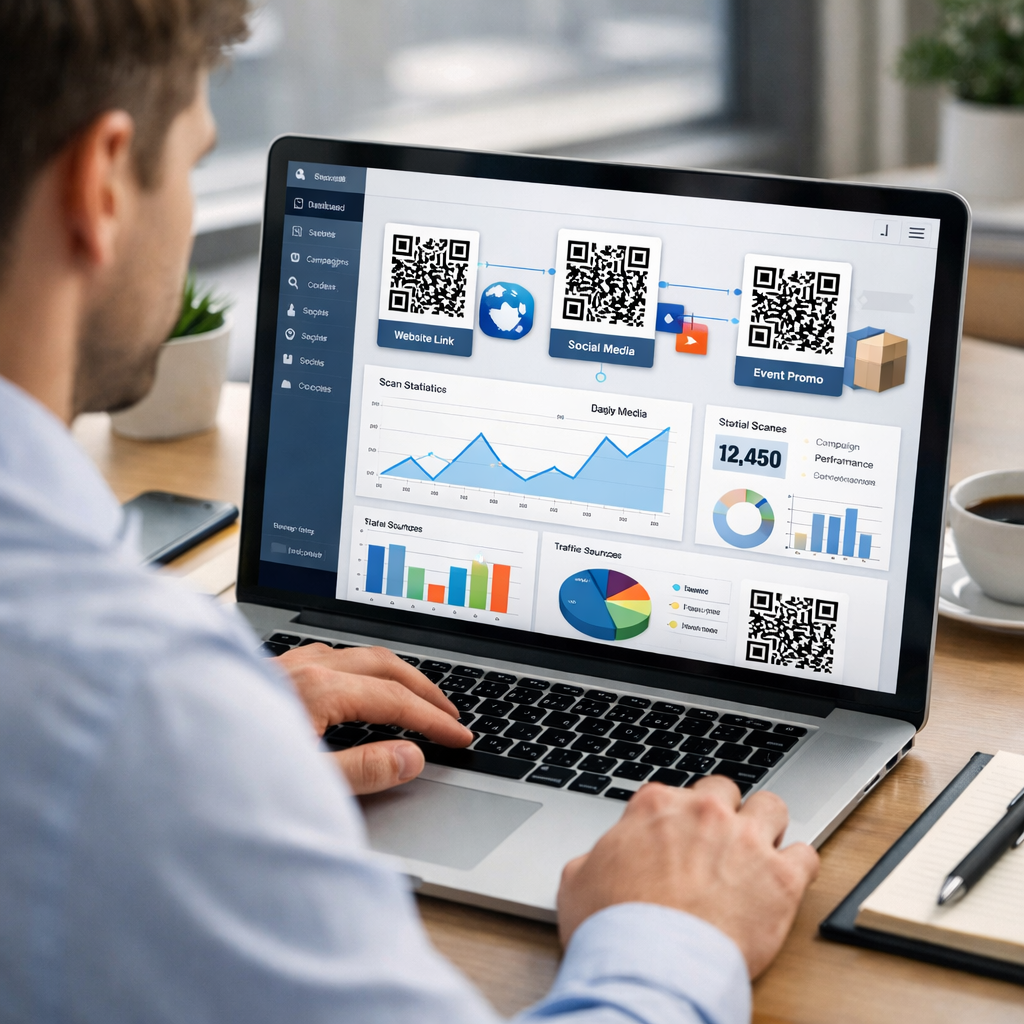
A QR code management platform built for dynamic QR codes should do far more than generate a code image. It should give businesses a working control layer behind every scan: editable destinations, structured asset management, scan analytics, team permissions, and the ability to keep physical QR assets useful long after they are printed.
That matters for businesses in London, Greater London, and across the United Kingdom because QR codes now sit on menus, posters, packaging, property boards, review cards, labels, event signage, retail displays, and internal operational assets. A dynamic-first platform turns those touchpoints into measurable, updateable, reusable business infrastructure rather than one-off graphics that become outdated the moment conditions change.
💡 Short answer
A dynamic QR management platform gives businesses control after the code has been created. That means you can print first, change the destination later, track scans, organise codes by branch or campaign, manage users, and keep QR-driven journeys live without reprinting every time something changes. In plain English: dynamic QR codes are only powerful when the platform behind them is built to manage change, not just produce an image.
Quick facts: why dynamic-first QR management matters
- Core benefit: dynamic QR codes let businesses change destinations without changing the printed code.
- Commercial value: scan tracking turns physical touchpoints into measurable engagement channels.
- Operational value: teams can manage codes by branch, campaign, product, asset, or department instead of losing control over scattered files.
- Scaling advantage: dynamic-first platforms support bulk rollout, team permissions, and structured management as QR usage grows.
- Long-term upside: physical media stays useful longer because destinations can evolve without reprinting the code itself.
Complete guide: what a QR code management platform built for dynamic QR codes should actually do
1) Dynamic QR codes change the platform requirement completely
Static QR codes are simple. They point straight to one fixed destination. If that destination changes, the printed asset is effectively broken. That makes static codes fine for basic, unchanging uses, but weak for live business environments where campaigns, offers, files, product pages, listings, menus, or internal documents change over time.
Dynamic QR codes solve that by putting a management layer between the code and the final destination. That sounds technical, but the business result is straightforward: the code stays the same, the destination can change. Once that becomes the core workflow, the business no longer needs a generator. It needs a management platform built around change, visibility, and control.
2) How a dynamic QR management platform works in practice
At its best, a dynamic QR platform works like a controlled routing and analytics layer for physical-to-digital journeys.
- Step 1: the business creates a dynamic QR code inside the platform.
- Step 2: the platform assigns a managed destination or redirect route behind that code.
- Step 3: the QR code is printed or deployed on packaging, posters, menus, labels, boards, or digital displays.
- Step 4: users scan the same visible QR code, but the business can update where that scan goes later.
- Step 5: the platform records scan activity so teams can review engagement and compare asset performance.
- Step 6: admins or permitted users can edit the destination, archive the code, repurpose it, or compare performance over time.
This is why dynamic QR infrastructure matters more than the code image itself. The image is just the access point. The platform is where the real business value sits.
For a practical introduction to editable post-print workflows, see Print Now, Link Later. If you want to try the workflow directly, see Start for Free: Create Dynamic QR Codes.
3) What makes a platform genuinely built for dynamic QR codes
A lot of tools claim to support dynamic QR codes, but many still behave like lightweight generators with a redirect feature added on top. A platform genuinely built for dynamic QR use should be designed around management, not just creation.
That usually means:
- Dynamic destination editing without replacing the visible code.
- QR library organisation so businesses can find and manage live assets properly.
- Scan analytics that help with decision-making, not just vanity numbers.
- User and branch management for teams, franchises, agencies, or multi-site operations.
- Bulk workflow support when codes need to be rolled out at scale.
- Branding controls that preserve scan reliability while supporting visual consistency.
- Operational governance so businesses know who owns which assets and who can change them.
If the platform cannot handle those things well, it is not really built for dynamic QR codes. It is just dynamic in name.
4) Why businesses benefit more from dynamic-first management than from code generation alone
The business upside comes from what happens after launch. That is the real dividing line.
- Less waste: keep printed assets live even when content, offers, or landing pages change.
- More agility: update destinations quickly during campaigns, launches, events, or operational changes.
- Better attribution: compare which placements, formats, or venues actually generate scans.
- Clearer ownership: centralise QR assets instead of scattering them across designers, marketers, and branch staff.
- Longer asset lifespan: posters, labels, menus, packaging, and review cards stay useful for longer.
- Better customer journeys: route users into more relevant, more current destinations instead of outdated pages.
That is why the strongest dynamic QR business case is not about novelty. It is about making physical media flexible enough to behave more like software.
5) Why scan tracking matters just as much as dynamic editing
A dynamic platform without useful scan tracking is only doing half the job. Businesses need more than editable links. They need evidence that tells them whether the asset is actually performing.
Good scan tracking helps answer questions like:
- Which poster, review card, menu, package, board, shelf sign, or label actually drives engagement?
- Which branch or venue generates the most scans?
- Which campaign placement deserves more budget or more visibility?
- Which printed assets look good but fail commercially?
- Which QR journeys should be improved because people scan but do not convert?
For London businesses, that matters because real-world scan environments vary heavily. A code on a Camden retail window behaves differently from one on Soho takeaway packaging or a kiosk display in Westfield London. A strong platform makes those differences visible instead of leaving the business to guess.
6) The hidden issue most businesses miss: management at scale
Plenty of businesses start small with QR codes, then gradually spread them across different functions. Marketing uses them for campaigns. Operations uses them for instructions. Property teams use them for listings. Hospitality teams use them for menus and reviews. Support teams use them for guides. Suddenly there are dozens, then hundreds, then thousands of live codes.
This is where a proper platform matters most. Businesses need:
- Folders, tags, or structured naming so codes do not become impossible to find.
- Role-based access so only the right users can change live destinations.
- Branch or user prefixes so ownership stays clear.
- Bulk creation and editing options for larger rollouts.
Without that, dynamic QR codes become a management mess. The technology is flexible, but the operation is chaotic. The right platform prevents QR sprawl.
7) Local examples: how London and Greater London businesses benefit
Dynamic QR codes are especially useful in London because environments are busy, campaigns move quickly, and physical customer touchpoints are often expensive to replace.
- Soho hospitality: a café group can keep the same table QR codes while changing menus, booking flows, loyalty offers, or review prompts by site.
- Camden retail: a retailer can use separate dynamic codes for the window, till point, product tags, and care inserts, then compare which format drives the strongest engagement.
- Shoreditch events: one poster QR can move from teaser content to registration to live updates to post-event recap without replacing the print run.
- Westfield London kiosks: product demo codes, support codes, and offer codes can be managed centrally while still tracking performance separately.
- Greater London estate agents: property boards can point to live listings, then be updated to valuation pages, office landing pages, or new stock without replacing the boards.
- UK facilities teams: equipment labels can point to current manuals, safety procedures, or compliance documents that change over time.
In every case, the visible benefit is convenience. The deeper benefit is control, reuse, and measurable engagement.
8) Advanced use cases where dynamic-first platforms create a real edge
- Multi-branch hospitality: one brand template across all locations, but separate tracked codes for each venue, table zone, or campaign.
- Retail merchandising: compare scans from shelf-edge labels, fitting room prompts, receipts, and window campaigns to see which placements actually earn attention.
- Smart packaging: route buyers to setup, provenance, recipes, support, warranty, cross-sell, or seasonal content without changing the packaging design.
- Property and development marketing: manage hundreds of location-specific QR assets while comparing engagement by office, postcode, or property type.
- Events and entertainment: keep one physical asset live through different campaign phases, from awareness to booking to recap.
- Facilities and compliance: print first, link later, and update documentation behind the same physical label as procedures evolve.
- Product identity and future-proofing: businesses planning for richer product information should watch GS1 Digital Link, because QR codes are increasingly being treated as long-term product infrastructure rather than one-off campaign devices.
The pattern is clear: the more persistent the physical asset, the more valuable dynamic QR management becomes.
9) Dedicated examples section: what dynamic-first management looks like in practice
Example A — the London café chain: the business uses one dashboard to manage menu QR codes, review prompts, loyalty signups, and seasonal offers across multiple sites. Each location keeps its own tracked codes, but head office still controls brand consistency and reporting.
Example B — the Camden fashion retailer: the team prints dynamic QR codes on care inserts, window displays, and receipts. The destination changes by season, but the physical assets stay useful. Scan data shows that care cards drive better post-purchase engagement than receipt links.
Example C — the Greater London property agency: offices deploy QR codes across boards, brochures, and windows. Listings change, but the boards do not need replacing. The agency compares scan volume by office and property type to refine board strategy.
Example D — the UK food brand: packaging QR codes initially point to recipe content, then shift to a campaign offer, then later to product education. The packaging stays the same while the digital journey evolves.
Example E — the facilities rollout: a business prints asset labels before all documentation is finalised. Dynamic QR codes make that possible, because the links can be assigned and updated later without replacing the physical labels.
10) YouTube video example (one)
This video is the best fit for the topic because it shows the core business workflow behind a dynamic-first platform: create the QR code now, keep control of it later, and manage the asset as something editable rather than fixed.
11) Quote: Mark Hickman, Co-founder, Xcan It
“A dynamic QR code is only as useful as the system managing it. Businesses do not just need a code that scans. They need a platform that lets them update destinations, track outcomes, organise assets, and keep physical touchpoints commercially useful long after they go live.”
— Mark Hickman, Co-founder, Xcan It
12) Investigative findings: what stood out while researching this topic
Looking across recent material on QR trends, dynamic redirect infrastructure, analytics, and standards, one shift stands out: dynamic QR codes are being treated less like marketing add-ons and more like business infrastructure.
What stood out most:
- The best recent QR analysis is infrastructure-led. The stronger material focuses on centralised governance, dynamic redirect systems, analytics, and long-term asset control rather than just “how to make a code”.
- Scan tracking is becoming operational, not cosmetic. More guidance is focused on attribution, asset performance, and decision-making rather than vanity metrics.
- Standards are pushing QR beyond campaign use. Product-linked QR systems and GS1 Digital Link make dynamic management more relevant for packaging and product information.
- Security now belongs in platform choice. Businesses using public QR codes should think about trust, misuse risk, and governance, not just convenience.
- The strongest long-term model is reuse. The big win is not just making a QR code dynamic. It is making physical media flexible enough to stay useful while business conditions change.
Fresh reading related to this topic:
- External source: QR Code Trends 2026: Enterprise Infrastructure Guide — useful for understanding the shift from campaign tool to persistent business infrastructure.
- External source: Enterprise QR Code Shortener: Dynamic Redirect Systems & Platform Architecture — useful for understanding the technical and operational logic behind dynamic QR routing.
- External source: GS1 UK: GS1 Digital Link — useful for businesses thinking about future-facing product and packaging workflows.
- External source: DENSO WAVE: Error Correction Feature — useful background on why QR reliability depends on technical structure under the visual design.
- External source: FBI alert on QR-code fraud schemes — useful reminder that governance and trust belong in public QR strategy.
- Internal Xcan It reading: Print Now, Link Later — useful for understanding how dynamic QR workflows keep physical assets flexible after launch.
13) Practical checklist: how to judge whether a platform is really built for dynamic QR codes
If you are comparing platforms, check in this order:
- Can I change destinations after printing?
- Can I track scans in a way that supports real decisions?
- Can multiple users, branches, or departments manage codes safely?
- Can I organise a growing QR library without losing control?
- Can I reuse physical assets instead of reprinting every time content changes?
- Can I keep branding strong without damaging scan reliability?
- Can the platform support future packaging, compliance, or product-information use cases?
The best rule is simple: if the platform only helps you make a QR code, it is not built for dynamic QR codes in the way a business actually needs.
Conclusion: dynamic QR codes are only as strong as the platform managing them
A QR code management platform built for dynamic QR codes should give businesses more than creation tools. It should provide a real operating layer for physical-to-digital engagement: editable destinations, structured management, scan analytics, user control, and the ability to keep printed assets commercially useful long after launch.
That matters because the business value of dynamic QR codes is not the code itself. It is the flexibility behind it. When a platform is built properly, businesses can update journeys faster, track engagement more clearly, reduce waste, improve attribution, and use physical media more strategically.
For businesses across London, Greater London, and the wider UK, the opportunity is practical and measurable. Dynamic QR platforms can turn menus, packaging, posters, boards, labels, and displays into controlled, trackable, reusable business assets instead of static graphics that go out of date too quickly.
FAQs
What is a QR code management platform built for dynamic QR codes?−
It is a platform designed to create, update, organise, and track dynamic QR codes at scale. The key difference is that it keeps giving businesses control after the QR code has already been deployed.
Why are dynamic QR codes better for business use?+
Because they let businesses change destinations without replacing the visible QR code. That reduces reprint waste, improves flexibility, and makes live campaigns easier to manage.
What features should I look for in a dynamic QR platform?+
Look for dynamic redirect control, useful analytics, code organisation, user permissions, branded styling, export options, and clear ownership over live QR assets.
How can London businesses use dynamic QR platforms more effectively?+
Use separate dynamic codes for different physical placements, test them in real environments, and compare scans by branch, venue, campaign, poster, packaging format, or window display.
Can dynamic QR codes help with more than marketing?+
Yes. They are useful for operations, facilities, compliance, product information, support journeys, property marketing, and any workflow where physical assets need to stay live while the destination changes.
Talk to an Xcan It Specialist
Need a QR code management platform built for dynamic QR codes? We’ll help you set up editable destinations, branded rollouts, scan tracking, and practical workflows that stay useful across London, Greater London, and UK-wide campaigns.