
Operating QR Codes as Digital Infrastructure
Introduction
QR codes are now widely used as interfaces between physical environments and digital information. They appear on packaging, signage, marketing materials, equipment labels, and property displays, allowing users to access online resources instantly using a smartphone camera.
In many cases, these QR codes remain in circulation long after they are printed. A code placed on packaging, signage, or infrastructure may be scanned months or even years after deployment. If the linked digital resource becomes unavailable or outdated, the connection between the physical asset and the digital content breaks.
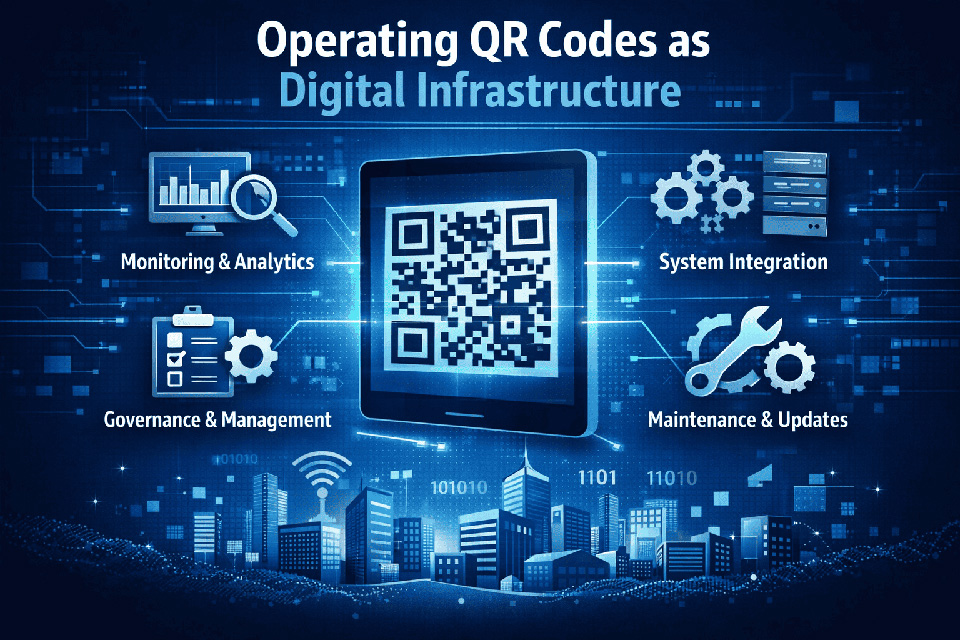
For this reason, organizations increasingly benefit from treating QR codes as elements of digital infrastructure rather than disposable graphics. Managing QR codes as infrastructure focuses on reliability, lifecycle management, governance, and long-term maintenance of physical-to-digital connections.
QR Codes as Physical–Digital Interfaces
A QR code functions as a bridge between the physical world and digital systems.
When scanned, a QR code transfers the user from a physical object to an online resource such as:
- a webpage
- product documentation
- property listing details
- digital menus
- event information
This makes QR codes an access point into digital systems embedded within physical environments.
As organizations deploy QR codes across more assets and locations, these codes effectively become part of the organization’s digital interface layer.
Characteristics of Infrastructure Systems
Infrastructure systems typically share several characteristics:
- they operate continuously
- they connect different environments
- they require monitoring and maintenance
- failures can affect large numbers of users
QR code deployments increasingly share these characteristics.
For example:
- packaging QR codes may remain active for years
- property signage QR codes may be reused across multiple listings
- marketing posters may circulate across large geographic areas
- public infrastructure signage may link to continuously updated information
In these situations, the QR code becomes a long-term connection point between the physical and digital environments.
Reliability and Link Integrity
One of the most important aspects of infrastructure is reliability.
If a QR code leads to a broken link, outdated page, or unavailable resource, the physical asset loses its ability to deliver useful information.
This can result in:
reduced user trust
lost engagement
inaccessible documentation
operational inefficiencies
Maintaining link integrity therefore becomes a key responsibility when managing QR deployments.
Organizations often address this by implementing systems that allow QR destinations to be updated without replacing the printed code.
Monitoring QR Deployments
Infrastructure systems require monitoring to ensure they continue to operate correctly.
QR code deployments can be monitored using scan analytics and usage metrics. Monitoring provides insights such as:
- how often QR codes are scanned
- when scans occur
- where scans originate
- which assets receive the most engagement
These insights help organizations understand how physical assets interact with digital systems.
For example, marketing teams may evaluate the effectiveness of printed campaigns, while operational teams may monitor usage of QR-enabled documentation or signage.
Governance and Asset Management
As the number of deployed QR codes increases, governance becomes important.
Organizations may implement governance practices such as:
- maintaining inventories of active QR codes
- assigning QR codes to specific assets or campaigns
- documenting deployment locations
- controlling administrative permissions for editing QR destinations
Without governance, large QR deployments can become difficult to track, especially when codes remain in circulation across multiple campaigns or locations.
Integration with Digital Systems
Modern QR deployments are often integrated with other digital systems.
Examples include:
- marketing platforms
- property management systems
- product information databases
- customer engagement tools
Through these integrations, QR codes act as entry points into larger digital workflows. This allows organizations to connect physical assets directly to operational systems and digital services.
Infrastructure Thinking for QR Codes
Treating QR codes as infrastructure encourages organizations to take a long-term view of deployment and maintenance.
This approach includes:
- planning QR code usage before printing
- tracking where QR codes are deployed
- monitoring usage and performance
- updating destinations when digital content changes
- retiring QR codes when assets are removed
By applying infrastructure thinking, organizations can ensure that QR-enabled assets remain reliable and useful throughout their lifespan.
Conclusion
QR codes increasingly serve as persistent interfaces connecting physical environments with digital systems. As their use expands across packaging, signage, marketing, and infrastructure, organizations benefit from managing QR deployments as maintained system components.
Treating QR codes as digital infrastructure improves reliability, supports long-term usability of printed assets, and ensures that users consistently reach relevant digital information when scanning a code.
Frequently Asked Questions
Operating QR codes as digital infrastructure means managing them as long-term operational assets rather than temporary marketing tools. This involves maintaining reliable links, monitoring usage, updating destinations when digital content changes, and ensuring QR codes remain functional across the lifespan of the physical assets they are attached to.
Many QR codes remain in circulation for extended periods on packaging, signage, or printed materials. If the linked content changes or becomes unavailable, users may encounter broken links or outdated information. Managing QR codes after printing ensures that physical assets continue to connect users to relevant digital content.
Organisations often manage QR deployments through centralised dashboards or management platforms. These systems allow administrators to create, edit, monitor, and update QR codes while maintaining an inventory of where codes are deployed and what digital destinations they link to.
Monitoring helps organisations understand how QR-enabled assets are used. Scan analytics can provide insights such as the number of scans, time of day, approximate location, and device type. This information helps teams measure engagement and identify whether QR codes are functioning as expected.
Organisations typically implement governance practices such as maintaining QR code inventories, documenting deployment locations, monitoring usage, and updating destinations when digital content changes. These practices help ensure QR-enabled assets continue to deliver accurate information throughout their lifecycle.
Yes. When QR codes are managed through a redirect system, administrators can update the destination URL associated with the code. This allows organizations to repurpose printed QR codes for new campaigns, properties, or information without needing to replace the physical code.