
How to Read QR Code from Image Online
Reading a QR code from an image online is one of the fastest ways to check what is inside a saved QR code without needing to scan a printed version with a second device. Instead of pointing a phone camera at a physical label or poster, you upload a screenshot, artwork file, exported PDF image, saved photo, or downloaded graphic into a browser-based QR reader. The system detects the code pattern, decodes the data, and reveals the destination or information inside.
That sounds simple, but it matters much more in 2026 than it did a few years ago. Businesses across London, Greater London, and the wider United Kingdom increasingly use QR codes inside packaging artwork, ecommerce inserts, email creative, PDFs, event assets, retail displays, warehouse labels, and service documentation. Being able to read a QR code from an image online helps teams validate links before launch, test customer journeys before print, and connect top-funnel content to dynamic QR tools, QR tracking pages, and product workflows that turn a basic scan into a measurable business asset.
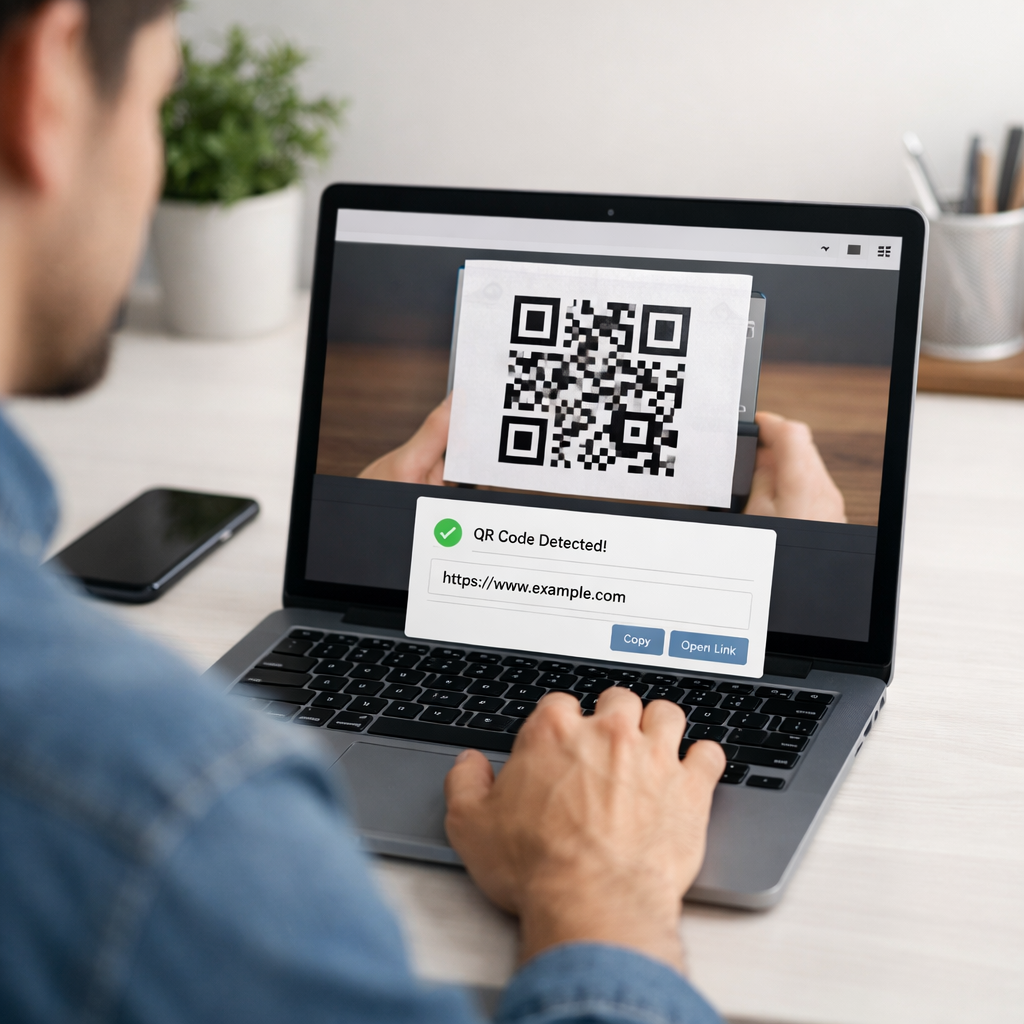
💡 Short answer
You can read a QR code from an image online by uploading the screenshot, saved photo, or exported design file into a browser-based QR code reader. The tool detects the QR pattern inside the image, decodes the stored information, and shows the link, text, contact data, or destination hidden inside the code. For businesses, this is more than a convenience. It is a fast way to validate print assets, check live QR destinations before launch, and make sure dynamic QR campaigns, tracking pages, and product journeys work before real users ever scan them.
Quick facts: reading QR codes from images online
- Core action: upload a screenshot, saved image, or design export into an online QR reader and decode the content instantly.
- Why it matters: businesses can test QR destinations before print, before launch, and before customer exposure.
- Best business use: QA for packaging, PDFs, retail creative, labels, direct mail, event signage, and service documentation.
- Commercial upside: fewer broken links, better launch discipline, stronger scan journeys, and cleaner handoff into dynamic QR tracking.
- Top-funnel role: this topic pulls in informational traffic and then pushes visitors toward editable QR tools, tracking pages, and product workflows.
Complete guide: how to read a QR code from an image online and why businesses care
1) What it means to read a QR code from an image online
Most people think of QR scanning as a camera action. You point a phone at a code, the device recognises the pattern, and the destination opens. Reading a QR code from an image online works differently. Instead of scanning a live object, you upload a stored image file that already contains the code. That image might be a screenshot from a presentation, a JPEG from a designer, a product insert exported from packaging artwork, a photograph taken earlier, or a QR code embedded in a PDF.
Once uploaded, the browser-based reader analyses the image, identifies the QR code’s position, and decodes the information inside. Depending on the code type, that might reveal a URL, plain text, an email action, a Wi-Fi credential, a contact card, a payment reference, or some other encoded payload. For individual users, that is convenient. For businesses, it is a quality-control step that should happen far more often than it does.
2) Why this topic matters more in 2026
QR codes now live everywhere, not just on printed leaflets. Teams see them in marketing decks, design proofs, ecommerce packaging files, social media screenshots, event assets, internal documentation, and exported creative from agencies or printers. That changes the workflow. You no longer want to wait for a physical proof to know whether the QR destination is correct.
Current browser-based QR tools increasingly support uploading images directly, which makes online decoding faster and more practical during planning and review. That matters because modern businesses want a pre-launch QA layer before anything goes public. If a QR code appears in 10,000 printed inserts or a London retail display campaign, finding out after release that the code points to the wrong page is a stupidly expensive mistake.
3) How the process works in plain English
The workflow is straightforward:
- Step 1: save the QR code image, screenshot, photo, or artwork export
- Step 2: upload it into an online QR reader
- Step 3: the system detects the square marker pattern and isolates the code
- Step 4: the encoded data is decoded into readable information
- Step 5: the user checks whether the destination or data is correct
That is the technical side. The business side is what comes next. Once the code has been validated, the team can decide whether the destination should stay fixed or whether the campaign needs to move into a more flexible setup using dynamic QR workflows and editable redirect logic.
4) Why this is useful for businesses, not just end users
At face value, “read QR code from image online” sounds like a simple utility query. That is exactly why it works well as a top-funnel page. The search intent is broad and useful. It attracts users who are trying to solve a real problem right now. But many of those users are not just casual scanners. They are marketers, operations teams, ecommerce brands, event organisers, warehouse managers, designers, and agencies checking whether a QR asset is correct before it goes live.
That creates a natural path from informational intent into product intent. A visitor arrives wanting to decode one QR image. Then they realise they also need:
- editable QR destinations so they do not have to reprint later
- scan tracking so they can measure engagement and ROI
- central QR management so teams are not guessing which code points where
- safer launch workflows so campaign and packaging mistakes are caught earlier
That is the commercial bridge. A utility action becomes a product discovery path.
5) Benefits for businesses before launch
Reading a QR code from an image online is one of the easiest ways to improve launch discipline. Common benefits include:
- pre-print verification: check the QR destination inside artwork before the file goes to print
- agency QA: validate that campaign creatives, inserts, and digital assets contain the right codes
- fewer broken journeys: catch wrong destinations, test links, and bad exports before customers ever see them
- faster sign-off: teams can review QR assets from a shared file instead of waiting for physical proofs
- better coordination: marketing, design, print, and ecommerce teams can all confirm the same asset
This is especially valuable when QR codes are embedded in packaging or distributed materials. Once a code is printed at scale, the cost of being wrong jumps quickly.
6) Benefits after launch: where this becomes a growth topic
Once you move beyond simple decoding, the real upside comes from connecting the QR image check to a live tracking system. A QR code that merely scans is not the end goal. A QR code that can be updated, measured, and improved is much more useful.
That is why this top-funnel page should lead users toward:
- dynamic QR tools that let businesses change the destination later without reprinting
- QR tracking pages that show scan behaviour over time
- SaaS and product workflows that turn one-off codes into managed assets
If a business is uploading QR images to test campaign or packaging assets today, it is a short jump to needing editable, trackable QR code tools tomorrow.
7) How businesses in London and Greater London use this in real life
London businesses tend to move fast, work across multiple environments, and rely on distributed teams. That makes image-based QR testing more useful than it sounds.
- Camden ecommerce brand: the team checks QR codes embedded in packaging artwork before a seasonal insert run goes to print
- Canary Wharf marketing agency: campaign managers validate poster and brochure QR assets from shared design exports before client approval
- Park Royal wholesaler: operations staff test warehouse label images before printing large batches for stock locations
- Croydon field service firm: supervisors verify that QR labels in PDF manuals open the correct setup and maintenance pages
- Westfield retail environment: brand teams confirm that display codes and promotional graphics route shoppers into the intended landing pages
These are ordinary use cases, which is exactly the point. This is not edge-case behaviour. It is now part of sensible operational practice.
8) Driving engagement and tracking scans
This is where the page shifts from utility to strategy. Reading a QR code from an image online tells you what the code does today. But a business also needs to know what happens when real people scan it tomorrow.
That is why scan tracking matters. Once a code is live on packaging, retail signage, labels, inserts, mailers, event assets, or service documents, the business should be able to answer questions like:
- which assets drive the most scans?
- which branches or locations generate the most engagement?
- which product lines drive stronger post-purchase scans?
- which campaigns deserve more spend because the physical-to-digital journey is actually being used?
That is the reason this page should funnel naturally into dynamic QR workflows and product-led QR creation. Reading a code from an image is the first step. Measuring what happens after the real-world scan is the more valuable step.
9) Investigative view: what current tooling and guidance are pointing to
Current browser-based QR readers now make image upload a normal part of the experience, not a secondary feature. That is a signal in itself. The market increasingly expects users to decode saved QR screenshots and pictures directly from the web, not only through live camera scanning. At the same time, recent dynamic-QR guidance keeps pushing the same bigger message: validation is useful, but editable destinations and scan analytics are where the long-term value sits.
That pattern matters commercially. It means businesses should stop treating QR codes as one-off graphics and start treating them as managed links with a testing layer at the front and a measurement layer at the back. Top-funnel utility content like this works because it solves an immediate problem while also introducing the more valuable idea that QR workflows can be improved, tracked, and scaled.
10) Advanced use cases that go beyond simple decoding
- bulk creative QA: agencies and in-house teams check multiple campaign assets before sign-off
- packaging workflow checks: brands verify product insert and box artwork before print approval
- event asset validation: exhibitors confirm stand graphics, brochures, and digital signage codes before deployment
- warehouse label testing: operations teams check QR code location labels from image exports before batch printing
- compliance and service documents: teams test QR codes in PDF manuals to ensure the right forms or service pages open
- tracking setup verification: marketers confirm that dynamic codes point to the right campaigns and analytics-ready destinations
Each of these use cases starts with “read a QR from an image” and ends with “manage QR codes more professionally”. That is exactly why this is a good TOF page.
11) Dedicated examples section: what strong implementation looks like
Example A — London subscription brand: before approving a large insert run, the team uploads the artwork export into an online QR reader to check the code. After validation, they switch the live destination later using a dynamic QR tool to promote seasonal bundles without reprinting.
Example B — Greater London agency workflow: a creative team receives final poster artwork from design, reads the QR code directly from the image file, and confirms that the destination and tracking parameters match the campaign brief before client sign-off.
Example C — Park Royal distribution business: warehouse supervisors test QR location labels from image proofs first, then connect the live codes to support pages and stock references that can be updated later if procedures change.
Example D — Croydon service operation: a field team checks QR codes embedded in a PDF guide before the manual is distributed, making sure every asset routes engineers to the correct parts information and current instructions.
Example E — West London retail rollout: a brand tests window-display QR graphics from screenshots before launch, then tracks which branch displays drive more scans once the campaign goes live.
12) YouTube video example (one)
This video is a useful companion because it shows practical ways to scan a QR code from an image already saved on a phone, including screenshots and website-based methods:
13) Quote section: Mark Hickman, Co-founder
“If a business can only test a QR code after it has been printed or published, it is leaving too much to chance. Reading QR codes from image files is one of the simplest ways to catch problems early and build better, trackable QR journeys from the start.”
— Mark Hickman, Co-founder, Xcan It
14) External and internal reading worth embedding
Useful external reading includes How to Scan a QR Code From a Picture, which helps frame the practical user problem clearly, and Create Dynamic QR Codes and Measure Every Scan, which is useful for showing why decoding is only the first step and why tracking matters commercially. For browser-based image upload scanning, Scanbot’s online QR scanner is a relevant example because it supports scanning from uploaded images as well as camera input.
On the Xcan It side, Print Now, Link Later is the strongest internal bridge because it connects top-funnel QR usage to editable destination logic, while Start for Free gives users a direct path into dynamic QR creation, testing, and product-led adoption. Those internal links are where the real monetisation path begins.
15) Practical checklist before you rely on a QR code inside an image
If your team is working with QR codes inside screenshots, artwork exports, PDFs, or saved images, check these points before launch:
- does the uploaded image still decode cleanly?
- does the code lead to the correct destination right now?
- will the destination still make sense after print or campaign launch?
- should this be a dynamic code rather than a fixed one?
- have you set up tracking or analytics where measurement matters?
- has the QR code been tested from the final artwork, not just from the original generator?
If the answer to that fourth question is yes, the better next step is not another manual check. It is moving the workflow into a managed QR product.
Conclusion: reading a QR code from an image is useful, but the bigger opportunity is what comes next
Reading a QR code from an image online solves an immediate problem. It helps users decode a screenshot, validate a saved file, and check that a QR code does what it is supposed to do. That makes it a strong top-funnel topic because the search intent is practical, urgent, and easy to understand.
But for businesses, the bigger value comes after that first decode. Once a team starts validating QR codes from design files, artwork exports, and campaign assets, it usually needs more than a reader. It needs dynamic QR tools, editable destinations, scan tracking, and a managed workflow that keeps printed assets useful over time.
For companies in London, Greater London, and across the UK, that means this page should not just answer a technical question. It should also guide the visitor toward a more commercially useful model where QR codes are tested before launch, tracked after launch, and connected to product systems that can evolve without waste.
FAQs
How do you read a QR code from an image online?−
Upload the screenshot, photo, or saved file into an online QR reader. The tool detects the QR code pattern and decodes the information inside.
Can I scan a QR code from a screenshot?+
Yes. Many browser-based QR readers can read QR codes directly from screenshots and saved images without needing a printed copy.
Why do businesses read QR codes from image files?+
To validate packaging, campaign assets, PDFs, labels, and design files before launch, and to catch incorrect destinations before real users see them.
How does this connect to QR tracking?+
Reading the code from the image confirms what the QR does. Dynamic QR tracking then measures what happens after people scan it in the real world.
What should I do after testing a QR code from an image?+
If the code needs long-term flexibility or measurable results, move it into a dynamic QR workflow so you can update the destination later and track engagement over time.
Talk to an Xcan It Specialist
Need more than a one-off QR reader? We’ll help you move from image-based QR testing into editable QR destinations, scan tracking, campaign measurement, packaging workflows, and real product-led QR systems across London, Greater London, and UK-wide operations.