
So, you need to make a QR code, and you’ve heard Adobe Express can do it. It’s a pretty straightforward process, really. You don’t need to be a tech whiz to get a functional QR code up and running. This guide will walk you through it, step by step, so you can get your QR code made and out there without too much fuss. We’ll cover everything from what you want the code to do, to making it look good, and then actually using it.
Key Takeaways
- Adobe Express offers a simple way to generate an adobe express qr code.
- You can link your QR code to websites, documents, or other online content.
- Customise your adobe express qr code with colours and logos for branding.
- Always test your QR code to make sure it scans correctly before using it widely.
- Consider dynamic QR codes for marketing campaigns to track scans and update destinations.
Getting Started With Your Adobe Express QR Code
Understanding the Basics of QR Codes
QR codes, or Quick Response codes, are those little square barcodes you see everywhere these days. They’re basically a way to store information that your phone can read really quickly. Think of them as a digital shortcut. Instead of typing out a long website address, you just point your phone’s camera at the code, and bam! You’re taken straight to the webpage, app, or whatever else the code is linked to. They’re super handy for bridging the gap between the physical world and the digital one.
Why Use Adobe Express for QR Codes?
Adobe Express makes creating QR codes a breeze, especially if you want them to look good and match your brand. You can easily generate a code and then customise it with your own colours, add your logo, and even choose different shapes. This means your QR code isn’t just functional; it’s also a visual part of your marketing. It’s a simple way to make your brand stand out.
Accessing the QR Code Generator in Adobe Express
Getting started with your QR code in Adobe Express is straightforward. Once you’re on the Adobe Express homepage, look for the ‘Quick actions’ section. From there, you’ll find an option to ‘Generate QR code’. Click on that, and you’ll be taken to the tool where you can start creating your code. It’s right there, ready for you to use without any fuss. You can generate a QR code easily in just a few steps.
Designing Your Custom Adobe Express QR Code
Now that you’ve got the basics sorted, let’s make your QR code look the part. Adobe Express gives you a lot of freedom here, letting you move beyond the standard black and white squares. It’s all about making your QR code a little extension of your brand.
Choosing Your Content: Linking to Websites and More
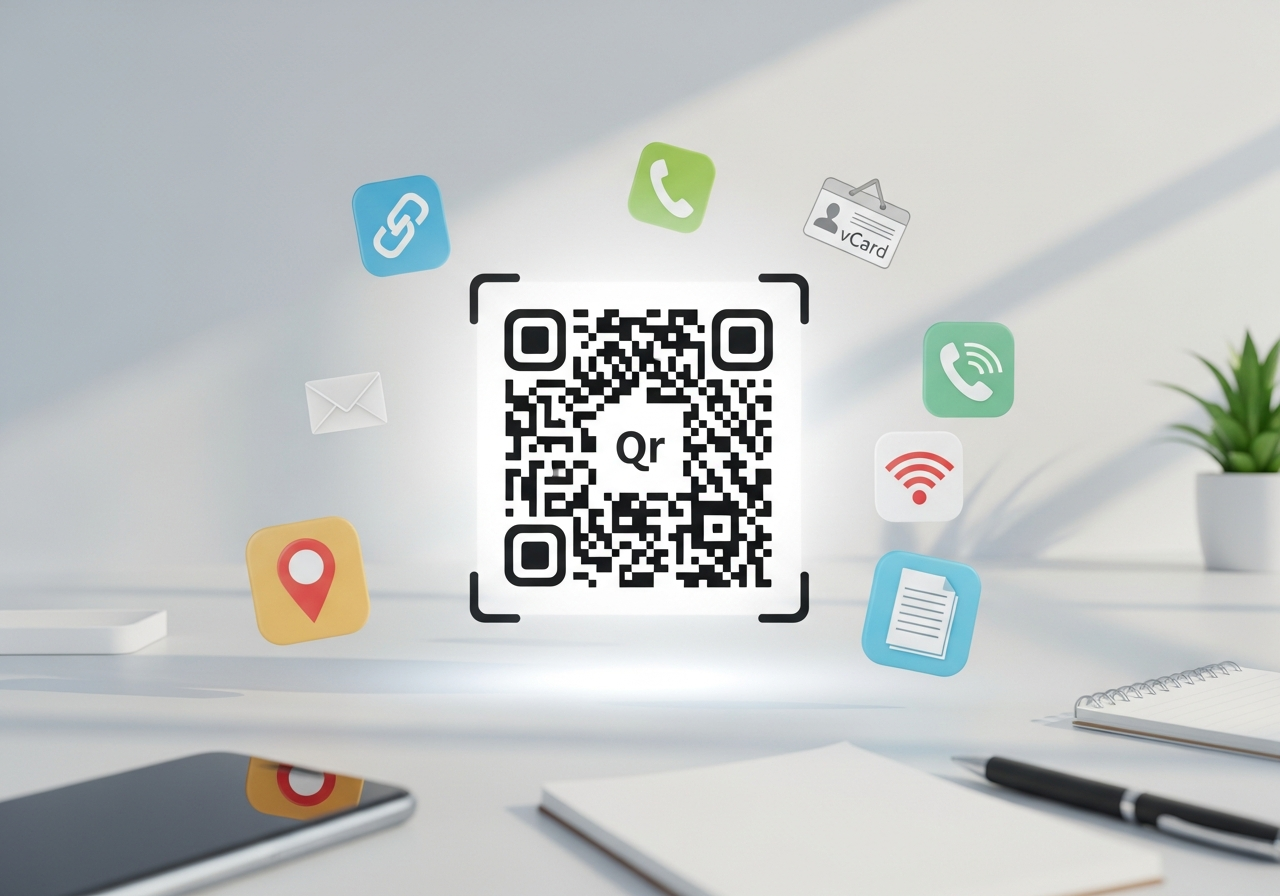
The first big decision is what your QR code will actually do when someone scans it. Most commonly, people link to a website, which is super straightforward. Just pop your URL into the generator. But you’re not limited to just websites. You could link to:
- A specific product page on your online shop.
- A video on YouTube or Vimeo.
- A PDF document, like a menu or a brochure.
- Your social media profile.
- A contact card (vCard) that people can save directly to their phone.
Think about what would be most useful for the person scanning it. For instance, if it’s on a flyer for an event, linking directly to the event registration page makes perfect sense. If it’s on a product, maybe it links to a ‘how-to’ video. The key is to make the destination clear and relevant to where the QR code is placed.
Customising Colours and Shapes
This is where Adobe Express really shines. You don’t have to stick with the default look. You can change the colours of the dots and the background to match your brand’s colour palette. This makes the QR code feel much more integrated with your marketing materials rather than just an add-on. You can even play around with the shapes of the dots and the corners, giving it a unique feel. Remember, while customisation is great, contrast is king – make sure there’s enough difference between the dark and light elements for reliable scanning [82dd].
Adding Your Logo for Brand Recognition
Want to make your QR code instantly recognisable as yours? Adobe Express lets you upload your logo and place it right in the centre of the QR code. This is a fantastic way to boost brand recognition. When people see your logo, they immediately know who the code belongs to. Just be mindful not to make the logo too large, as it can sometimes interfere with the scanning process if it covers too much of the code. Using a higher error correction level can help with this, making the code more resilient to obstructions like a logo [887b].
It’s worth noting that while Adobe Express is great for creating visually appealing static QR codes, for more advanced needs like updating links without reprinting or tracking scan data, services like Xcan.it are invaluable. They offer dynamic QR codes, which means you can change the destination link anytime, even after the code has been printed. This is a game-changer for campaigns, signage, and any physical assets where the linked content might change. Plus, Xcan.it provides a dashboard to track scans, giving you insights into how your QR codes are performing across print, signage, and other assets.
Enhancing Your Adobe Express QR Code
Once you’ve got the basics sorted, it’s time to make your QR code really stand out and work harder for you. Adobe Express gives you a few neat ways to do this, moving beyond a simple black and white square.
Utilising Frames and Text
Adding a frame around your QR code can make it more visually appealing and easier to spot. It also provides a handy space to add a call to action or a brief description. Think about what you want people to do when they scan the code – "Scan for Menu", "Visit Our Website", or "Get 10% Off". This little bit of text can make a big difference in encouraging scans.
Selecting Font Styles and Sizes
If you decide to add text to your frame, the font choice matters. You want something that’s easy to read, even at a distance. Adobe Express offers a range of fonts, so pick one that matches your brand’s overall style. Keep the size sensible; too small and it’ll be illegible, too large and it might clutter the design.
Understanding Gradient Options
While solid colours are straightforward, gradients can add a bit more depth and visual interest to your QR code’s elements, like the dots or the frame. You can choose from pre-set gradients or create your own to match your brand colours. Just remember, the key is always contrast. A good rule of thumb is to ensure there’s enough difference between the foreground and background colours so that scanners can easily read the data.
It’s worth noting that while Adobe Express offers great design tools, for advanced features like dynamic QR codes that let you update links without reprinting, and detailed scan tracking, you might look to a dedicated service. Platforms like Xcan.it allow you to manage all your QR codes from one dashboard, track their performance, and use dynamic codes to improve real-world campaigns across print, signage, and various assets. This means your marketing materials never go out of date, and you get valuable insights into what’s working.
Downloading and Implementing Your QR Code
Once you’ve designed your QR code in Adobe Express, the next step is to get it ready for the real world. This involves choosing the right file format and thinking about where and how it will be used.
Choosing the Right File Format (PNG, PDF, SVG)
Adobe Express gives you a few options when you download your QR code, and each has its strengths:
- PNG: This is a great all-rounder for digital use and most print applications. It’s a raster image format, meaning it’s made up of pixels. PNGs are good for web pages, social media posts, and general printing where you don’t need to scale the image massively.
- PDF: A Portable Document Format is ideal if you’re embedding your QR code into a larger document, like a brochure or a flyer design. It’s a vector-based format, which means it can be scaled to any size without losing quality, making it super flexible.
- SVG: Scalable Vector Graphics are perfect for professional printing and large-scale applications. Like PDFs, SVGs are vector-based, so they maintain crispness no matter how much you enlarge them. This is your best bet if you’re printing on large banners or signage.
Best Practices for Print Placement
Getting your QR code scanned isn’t just about the design; placement matters too. Think about how people will interact with it. Ensure there’s enough contrast between your QR code and its background – dark on light is usually best. Also, give it some breathing room; don’t cram it right up against other text or images. This ‘quiet zone’ around the code is vital for scanners to read it properly. Consider the viewing distance too; a code on a distant billboard needs to be much larger than one on a business card. A good rule of thumb is the ’10x rule’: the viewing distance should be about 10 times the width of the QR code.
Testing Your QR Code Before Deployment
This is a step that many people skip, but it’s really important. Before you send your design off to print or publish it online, always test your QR code. Use your own phone, and maybe ask a friend to try it too. Scan it from the screen if you’re testing a digital version, or from a test print if it’s for physical use. Make sure it leads to the correct destination and loads quickly. If you’re planning on using dynamic QR codes, which allow you to change the destination link later, testing is still key to ensure the initial setup works. Services like Xcan.it are brilliant for this, as they let you update links without reprinting and track scans from a single dashboard, which is a game-changer for improving real-world campaigns across print, signage, and assets.
Advanced Tips for Adobe Express QR Codes
Ensuring Scanability: Contrast and Size
Making sure your QR code actually works is pretty important, right? It sounds obvious, but a few simple checks can save a lot of hassle. The golden rule is contrast: dark on light, always. Think black on white, or a very dark blue on a pale yellow. Avoid light colours on dark backgrounds, metallic inks, or anything that looks a bit washed out. Also, give your code some breathing room – a clear border, at least four modules wide, stops it from looking cramped and helps scanners pick it up.
Size matters too. A good rule of thumb is the ’10x rule’: the distance someone will be from the code should be about 10 times the width of the code itself. So, if it’s on a poster people will see from a few metres away, make the code bigger. If it’s on a business card, it can be smaller.
Troubleshooting Common QR Code Issues
Sometimes, despite your best efforts, a QR code just won’t scan. Don’t panic! Often, it’s one of the basics we just talked about. Is the contrast good enough? Is there enough space around it? Is it too small for where it’s placed? If you’ve used a long URL, the code can get quite dense, making it harder to read. In these cases, shortening the URL or using a dynamic QR code can really help. Dynamic codes, like those offered by Xcan.it, let you update the destination link without needing to reprint the code, which is a lifesaver if a URL changes or you want to update a campaign.
The Benefits of Dynamic QR Codes
While Adobe Express is great for creating static QR codes, for more advanced use cases, dynamic QR codes are the way to go. These aren’t just about changing links; they offer a whole lot more. With a dynamic QR code service, you can track how many times your code has been scanned, giving you insights into which placements are working best. This is incredibly useful for marketing campaigns. You can see if the QR code on your flyer is getting more scans than the one on your poster. Plus, the ability to update the destination link means your physical marketing materials never go out of date. This is a huge advantage for managing real-world campaigns across print, signage, and various assets, allowing for flexibility and performance tracking all in one place.
When designing your QR code, always consider the final placement. A code on a glossy magazine page might catch glare differently than one on a matte sign. Testing your code in a similar environment to its final use is always a good idea before you commit to printing large quantities.
Leveraging Your Adobe Express QR Code for Marketing
So, you’ve designed a snazzy QR code with Adobe Express. Now, how do you make it work hard for your marketing efforts? It’s not just about having a scannable square; it’s about making it a dynamic part of your campaigns.
Integrating QR Codes into Campaigns
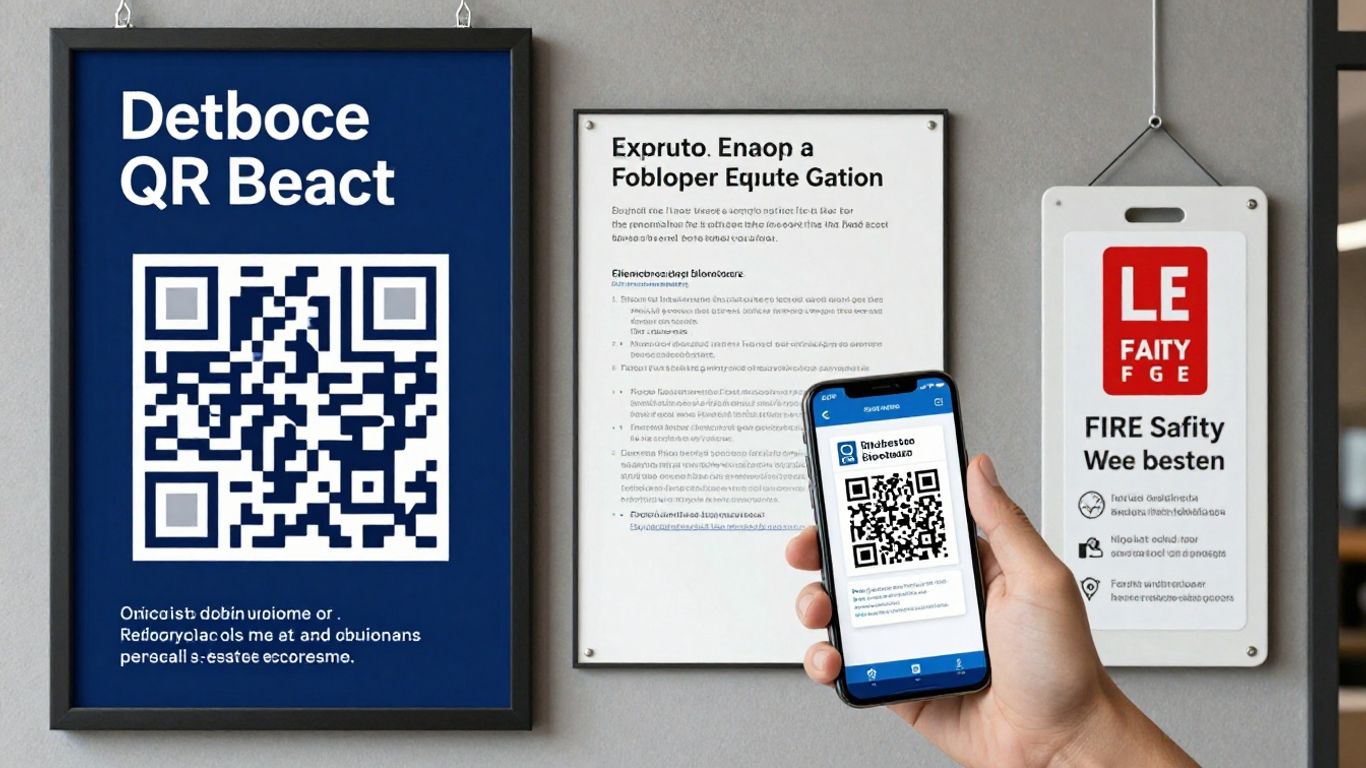
Think of your QR code as a bridge. It connects your physical marketing materials – like posters, flyers, or even product packaging – directly to your online content. This could be your website, a special offer page, a video, or even a PDF document. The key is to make the connection relevant and valuable for the person scanning it. For instance, a QR code on a restaurant menu could link directly to a special online ordering page or a video about the chef’s specials. It’s about adding an extra layer of interaction that static print can’t offer. You can even convert PDFs into QR codes for enhanced marketing campaigns, making important documents easily accessible.
Tracking Scans and Performance
This is where things get really interesting. Simply putting a QR code out there is one thing, but knowing how it’s performing is another. Tools like Xcan.it offer a dashboard where you can track exactly how many people are scanning your codes. This data is gold! You can see which posters are getting the most attention, which flyers are being scanned more often, or even which locations are driving the most engagement. This insight helps you understand what’s working and what’s not, so you can adjust your campaigns accordingly. Understanding scan data helps you refine your marketing strategy.
Updating QR Code Destinations
One of the biggest headaches with traditional print marketing is that once it’s out there, it’s fixed. If a link changes, a promotion ends, or a product is updated, you might need to reprint everything. This is where dynamic QR codes, like those offered by Xcan.it, truly shine. With a dynamic code, you can change the destination link anytime, even after the QR code has been printed and distributed. This means your physical marketing materials never go stale. Running a special offer this week? Link to it. Next week, update the code to point to a new product launch or a seasonal sale. It’s a game-changer for keeping your campaigns fresh and relevant without the cost and hassle of reprinting. This
Using your Adobe Express QR code for marketing is a smart move! These codes can easily lead customers to your website, special offers, or social media pages. Make sure your QR code is clear and easy to scan, and place it where people will see it. Want to see how easy it is to create and manage your own QR codes? Visit our website today to learn more and get started!
You’ve Got This!
And there you have it! Creating a QR code with Adobe Express is pretty straightforward, isn’t it? You’ve seen how easy it is to go from a web address to a scannable code. Now you can use these codes for all sorts of things, whether it’s for your business cards, a poster, or even just sharing a link with a friend. Give it a go, play around with the customisation options, and see what you can create. It’s a simple tool that can make a big difference.
Frequently Asked Questions
What exactly is a QR code, and how does it work?
A QR code, which stands for Quick Response code, is like a super-powered barcode. It’s a square grid of black and white squares that can hold information. When you scan it with your phone’s camera, it instantly takes you to a website, shows text, or connects you to Wi-Fi, all without you having to type anything in. It’s a quick way to bridge the gap between the physical world and digital information.
Why should I use Adobe Express to make my QR codes?
Adobe Express is a great tool for creating QR codes because it lets you make them look exactly how you want. You can change the colours to match your brand, add your company logo right in the middle, and even choose different shapes for the code itself. This makes your QR code more than just a functional tool; it becomes a part of your brand’s visual identity, making it more noticeable and professional.
Can I change where my QR code leads after I’ve already printed it?
Yes, you can! This is one of the biggest advantages of using certain types of QR codes, often called ‘dynamic’ QR codes. Even if you’ve printed thousands of flyers or posters with your QR code on them, you can go back and change the link it points to. This is super handy if a website address changes or you want to direct people to a new promotion without having to print everything again.
How do I make sure my QR code is easy for phones to scan?
To make sure your QR code scans well, keep a few things in mind. Use strong contrast, like black on white, and avoid putting it on shiny or curved surfaces. Make sure there’s a bit of clear space around the code (called a ‘quiet zone’), and don’t make the code too small for how far away people will be. If you add a logo, keep it small and centred so it doesn’t cover up too much of the code.
What’s the difference between a static and a dynamic QR code?
A static QR code is fixed once created; the information it holds, like a website link, cannot be changed. A dynamic QR code, on the other hand, is much more flexible. It uses a short redirect link, allowing you to update the final destination URL anytime without needing to reprint the code. Dynamic codes also usually come with tracking features, so you can see how many times your code has been scanned.
Can I use different file types for my QR code, and which is best?
You can usually download your QR code in several file formats, like PNG, PDF, and SVG. PNG is good for general use online and in documents. PDF is great for printing as it’s a vector format, meaning it won’t lose quality when resized. SVG is also a vector format, making it ideal for professional printing and scaling to any size without any loss of clarity.