
Why Businesses Are Moving Away From Static QR Codes in 2026
Businesses are moving away from static QR codes because static codes lock important decisions too early. Once a static code is printed, the destination is fixed. If the page changes, the campaign shifts, the product evolves, or the customer journey needs improving, the printed code cannot adapt. That creates waste, reduces control, and turns what should be a flexible digital tool into a rigid operational liability.
In 2026, businesses across London, Greater London, and the wider United Kingdom increasingly want QR codes that are editable, measurable, and useful long after the artwork goes to print. That is why dynamic QR workflows are gaining ground. They let teams update destinations, track scans, route people into better experiences, and connect packaging, stock labels, posters, equipment, and service points to live digital systems instead of frozen links.
💡 Short answer
Businesses are moving away from static QR codes in 2026 because static codes cannot be edited after printing and do not provide the same built-in scan visibility as dynamic QR systems. A static QR code is fine for fixed, permanent information, but most commercial use cases are no longer fixed. Product pages change. Campaigns evolve. Support content improves. Compliance records update. Dynamic QR codes solve that by letting businesses change the destination later, track scans, compare engagement, and keep one printed code useful for longer. In plain English: static QR codes store information, while dynamic QR codes support an operating system.
Quick facts: why businesses are replacing static QR codes
- Core shift: businesses want editable, measurable QR systems rather than fixed links baked into print.
- Static weakness: once printed, the destination cannot normally be changed without replacing the code.
- Dynamic strength: update links later, keep the same printed code, and track scans over time.
- Business upside: less waste, more agility, better customer journeys, and stronger insight into real-world engagement.
- Best fit: packaging, retail, logistics, facilities, support, events, compliance, and any use case where the digital destination may change.
Complete guide: why static QR codes are losing ground in 2026
1) What a static QR code actually is
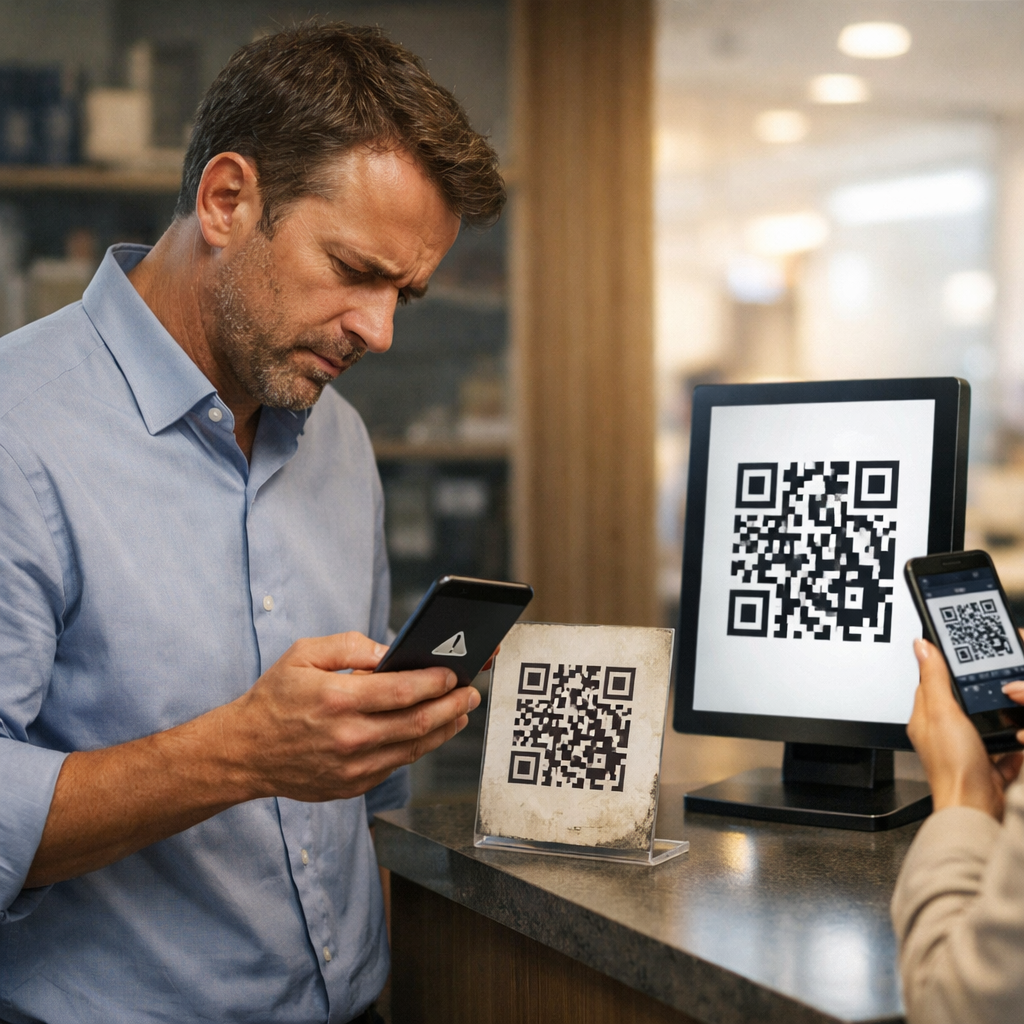
A static QR code stores its destination data directly inside the code itself. If the code contains a URL, that exact URL is locked into the pattern. If the landing page changes later, the printed code does not change with it. If the URL breaks, moves, or becomes irrelevant, the code becomes less useful or stops serving the original purpose.
That is why static QR codes still make sense only in very narrow conditions: the destination is permanent, the information will not change, and the business does not care about ongoing scan visibility. In reality, many commercial environments no longer meet those conditions. Most businesses today want campaigns they can improve, support pages they can refine, packaging journeys they can extend, and operational assets they can update without waste.
2) Why 2026 is a turning point
The issue is not that static QR codes suddenly stopped working. The issue is that business expectations changed. In 2026, QR codes are no longer treated as novelty shortcuts. They are expected to perform as live links between physical assets and digital systems.
Research and current platform guidance keep pointing to the same pattern: dynamic QR codes are preferred because they can be edited after print, they support scan-level reporting, and they avoid the cost of reprinting when the destination changes. That matters more now because businesses are using QR codes across packaging, direct mail, retail displays, trade materials, warehouses, field service assets, and compliance workflows — places where a fixed destination is often the wrong long-term design choice.
3) Why static QR codes fail in real business use
Static codes often look cheaper at the start because they are simple to generate, but they create friction later. Common failure points include:
- outdated links: the code still scans, but it sends the user to an old page, old offer, or dead destination
- reprint costs: marketing, packaging, labels, or signage must be replaced just to change a URL
- no built-in scan insight: the business cannot easily see whether the code is being used, where scans are coming from, or which materials are performing best
- limited optimisation: the physical asset is live in the world, but the business cannot refine the digital journey without replacing the code
- poor lifecycle thinking: the code is treated as a one-time object instead of part of a long-term operational system
That is why static QR codes are increasingly the wrong answer for any business that values agility, analytics, or customer experience.
4) What businesses are using instead
They are moving towards dynamic QR systems. A dynamic QR code usually points to a managed redirect rather than a fixed final destination. That redirect can then be edited in a dashboard. The printed QR code stays the same, but the destination can change.
This is the practical advantage described by Print Now, Link Later. Businesses can lock in artwork, packaging, stickers, posters, labels, or signage first, then update the destination later as the campaign evolves. That is a major operational improvement because the print cycle and the digital decision no longer have to happen at the same moment.
5) How dynamic QR codes work
The logic is simple:
- Step 1: the QR code is created with a managed redirect or short link
- Step 2: the code is printed on packaging, labels, posters, cards, equipment, or signage
- Step 3: when someone scans, they hit the managed redirect first
- Step 4: the system can record the scan event and send the user to the current destination
- Step 5: the business can later update the destination without changing the printed code
This is why dynamic QR infrastructure is more powerful. It separates the code from the final destination. That one design choice creates more flexibility, better reporting, and a stronger long-term asset.
6) Why tracking scans matters commercially
A surprising number of businesses still treat QR codes as passive links. That misses the bigger opportunity. When a code is dynamic and measurable, each scan becomes a signal. The business can start answering useful questions:
- which printed assets are actually being used?
- which branches or locations generate the most engagement?
- which product lines drive more post-purchase scans?
- which campaign placements are underperforming?
- when do users scan most often?
That is why scan tracking is not just a reporting feature. It improves decision-making. It helps teams stop guessing. A printed asset becomes measurable rather than invisible.
7) Investigative view: what the current research keeps showing
Looking across current industry explainers and platform guidance, the same themes keep repeating. Recent guides on static versus dynamic QR workflows keep framing dynamic codes as the stronger option where campaign control, tracking, and long-term efficiency matter.
The practical differences are consistent: dynamic codes are easier to update, more useful for tracking, and often more reliable on print because shorter redirect targets keep the encoded pattern cleaner. Static codes remain valid for truly fixed information, but they are increasingly the exception rather than the model for live business systems.
For businesses evaluating this shift, useful external reading includes Static vs. Dynamic QR Codes: What Enterprises Need to Know and Create Dynamic QR Codes and Measure Every Scan. For a UK-focused workflow angle, Print Now, Link Later and Start for Free show how editable codes and basic scan analytics are being positioned as practical business infrastructure rather than one-off marketing extras.
8) Why businesses benefit operationally
The benefits are wider than marketing. Businesses gain advantages across operations, support, fulfilment, compliance, and field workflows.
- less wasted print: change the destination without reprinting labels, inserts, signage, or packaging
- faster campaign launch: approve artwork before the final destination is fully settled
- more useful support journeys: send scans to setup guides, warranty pages, troubleshooting, or the latest onboarding flow
- better stock and asset visibility: use QR labels to route staff to current records, forms, or instructions
- cleaner compliance: open the exact checklist, service log, or inspection record instead of a generic document folder
- stronger reporting: compare scan behaviour by location, campaign, branch, or printed asset
Once you see QR codes as long-term infrastructure rather than a one-time graphic, moving away from static codes becomes the obvious choice.
9) How this plays out in London and Greater London
London businesses often work across fragmented environments: high-footfall retail, busy transport corridors, office estates, field service teams, multi-site stockrooms, event venues, and customer-facing packaging. That fragmentation makes static QR codes harder to justify because static links assume stability.
Dynamic QR workflows fit these conditions much better:
- Camden retailer: product cards and window signage can point shoppers to current product pages, care instructions, or limited-time offers without replacing the printed display
- Park Royal wholesaler: warehouse labels and pick-point stickers can route staff to live stock references, handling notes, or current reorder workflows
- Canary Wharf office operation: facilities and compliance stickers can open updated room information, incident forms, equipment guides, or service schedules
- Croydon field service business: van stock labels, tool tags, and specialist parts can point to the latest fitting notes, safety instructions, and maintenance records
- Stratford event supplier: case labels and venue assets can shift from prep instructions to event-day troubleshooting to return procedures using the same printed code
These are not edge cases. They are exactly the kinds of environments where fixed codes become fragile and dynamic ones become commercially sensible.
10) Driving engagement and tracking scans
This is one of the biggest reasons businesses are moving away from static QR codes. A modern business does not just want the scan to work. It wants to learn from the scan.
Examples of where that matters:
- packaging inserts: see which products trigger the most post-purchase scans and whether customers are using setup or support content
- retail displays: compare scan activity by branch, placement, or campaign period
- event signage: measure which posters, stands, or zones attract the most scans
- asset tags: identify which locations or teams rely most heavily on manuals and service records
- customer support: test which landing pages, FAQs, or forms lead to better outcomes after a scan
That is a clear business upgrade. Static QR codes can link people somewhere. Dynamic QR codes can link people somewhere and help you understand what happened next.
11) Advanced use cases where static codes are clearly too limited
- dynamic packaging journeys: the same printed QR can move from launch content to support content to reorder content over time
- multi-branch campaign testing: use separate codes by branch or asset to compare real scan performance
- field engineering support: equipment labels can route crews to updated procedures, certificates, or fault forms
- facilities and compliance: asset tags can point to live inspections, risk logs, and service history
- trade counters and showrooms: product signage can shift between spec sheets, demos, stock forms, and follow-up offers
- direct mail and printed promotions: track which audience segments, regions, or creatives drive more scans
- bulk QR deployment: one organisation can manage hundreds or thousands of printed codes without treating each one as a dead-end object
These are not “nice to have” extras. They are what make QR codes useful as part of a modern business system.
12) Dedicated examples section: what strong implementation looks like
Example A — London ecommerce brand: a skincare company prints one QR code on every product insert. In month one it links to setup guidance. In month two it links to repeat-purchase bundles. In month three it routes people to a loyalty offer. The packaging stays the same, but the post-purchase journey improves over time.
Example B — Greater London trade supplier: a wholesaler uses different dynamic QR labels across branches. Every branch points shoppers to the same product family, but scan data reveals which locations drive more engagement and which displays need improving.
Example C — West London facilities contractor: plant room and maintenance labels no longer open old PDF folders. They now open the current inspection forms, service logs, and asset-specific notes. The code stays on the equipment while the linked records stay current.
Example D — Croydon field service team: van stock and specialist parts carry QR labels that route technicians to updated fitting instructions and warranty rules. That reduces avoidable callbacks caused by crews relying on old paperwork or memory.
Example E — Stratford event business: cases, cables, and production assets have QR labels that change destination by event stage. Before the event the label opens prep notes. On event day it opens troubleshooting. After the event it opens return and check-in workflows.
13) YouTube video example (one)
This video is a relevant visual explainer because it clearly breaks down the difference between static and dynamic QR codes, which is the core decision behind why more businesses are moving away from static models in 2026:
14) Quote section: Mark Hickman, Co-founder
“Static QR codes are fine when nothing changes. Business never works like that. The moment your packaging, campaign, support journey, or compliance record needs updating, a static code becomes a limitation. The real value comes from treating QR codes as live digital infrastructure, not fixed artwork.”
— Mark Hickman, Co-founder
15) External and internal reading worth embedding
Useful external reading includes Bitly’s comparison of static and dynamic QR codes, which is useful for understanding the business trade-off between fixed and editable QR journeys, and Create Dynamic QR Codes and Measure Every Scan, which is strong on analytics, reporting, and why measuring scans matters commercially.
On the Xcan It side, Print Now, Link Later is the clearest page to embed because it explains the operational logic behind printing first and deciding the destination later. Start for Free is also worth linking because it gives readers a practical route into editable codes, basic scan analytics, and real-world testing without committing to a bigger rollout immediately.
16) Practical checklist before moving away from static QR codes
If a business is still relying on static QR codes, these are the right questions to ask before the next print run:
- will the destination still make sense in six months?
- do we need to measure scans or compare engagement?
- could this code later need to point somewhere else?
- is this on packaging, signage, equipment, or a label that will stay in the real world for a long time?
- will support, compliance, or campaign content change during the life of the printed asset?
- do we want one printed code to remain useful across multiple stages of the customer or operational journey?
If the honest answer to any of those is yes, a static QR code is probably the wrong choice.
Conclusion: businesses are not just changing code type — they are changing mindset
Businesses are moving away from static QR codes in 2026 because static codes belong to a simpler, fixed model of communication. They assume the destination will not change, the campaign will stay the same, and the business does not need meaningful feedback from the scan. That is no longer how serious businesses operate.
Dynamic QR systems are becoming the preferred model because they give teams control after print. They let businesses update destinations, measure scan activity, reduce waste, and connect packaging, signage, labels, assets, and customer touchpoints to live digital experiences that can improve over time.
For businesses in London, Greater London, and across the UK, the biggest win is not just having a smarter code. It is building a more responsive system where the printed world and the digital journey stay connected, trackable, and commercially useful long after the first scan.
FAQs
Why are businesses moving away from static QR codes in 2026?−
Because static QR codes cannot be edited after printing and are far less useful when businesses need flexibility, scan tracking, or long-term control over the linked destination.
What is the main difference between static and dynamic QR codes?+
Static QR codes store fixed data directly in the code. Dynamic QR codes point to a managed destination that can be updated later, often with scan reporting and better operational control.
When are static QR codes still acceptable?+
They can still work for genuinely fixed information such as stable contact details or one-off content that is unlikely to change and does not need reporting.
Why do businesses care about tracking scans?+
Because scan tracking shows whether printed assets are actually being used, which locations drive more engagement, and how QR activity changes over time. That helps improve campaigns, packaging, support, and operations.
How can London businesses use dynamic QR codes more effectively?+
Use them where the destination may need to change or where engagement matters: retail displays, packaging, event assets, warehouse labels, asset tags, field service instructions, and compliance workflows across multi-site environments.
Talk to an Xcan It Specialist
Need QR workflows that go beyond static links? We’ll help you connect editable destinations, scan tracking, packaging journeys, operational labels, and measurable real-world engagement across London, Greater London, and UK-wide operations.