
QR Code Lifecycle Management
Add Your Heading Text Here
Introduction
QR codes are increasingly used as long-term links between physical assets and digital content. They appear on packaging, signage, marketing materials, equipment labels, and property displays, providing instant access to online information when scanned with a smartphone.
In many deployments, QR codes remain in circulation for months or years after they are printed. Because the digital resources they reference may change over time, organizations must consider how QR codes will be maintained and managed throughout their lifespan.
QR code lifecycle management refers to the processes used to deploy, monitor, update, and maintain QR codes across physical environments. Treating QR codes as managed digital interfaces rather than disposable marketing tools helps ensure that printed assets continue to provide reliable access to relevant digital information.
The Lifecycle of a QR Code
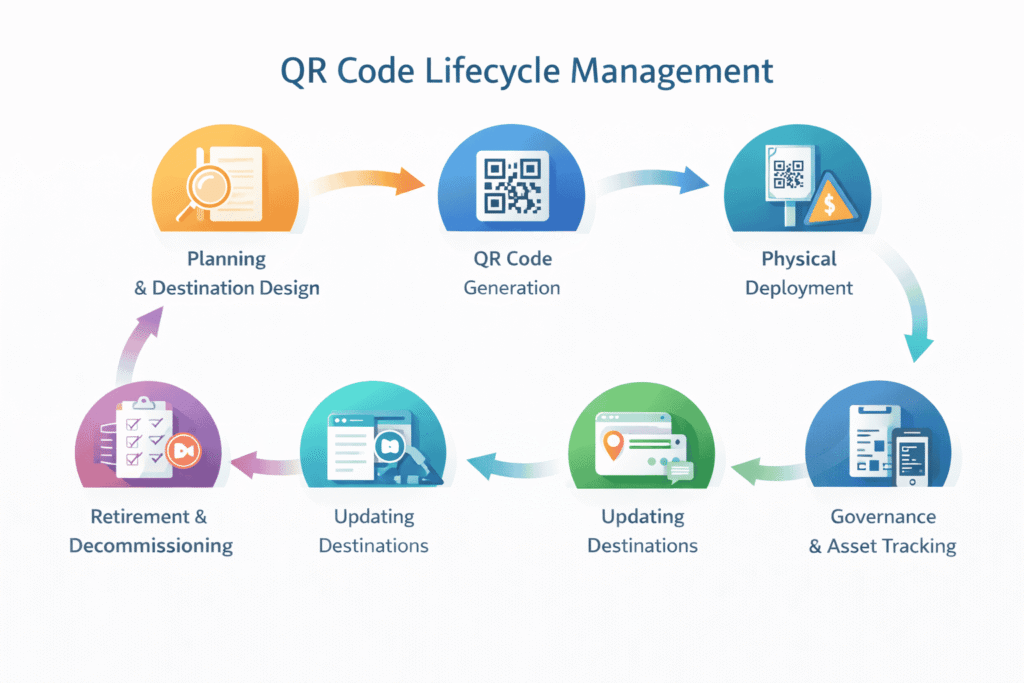
A QR code typically passes through several stages during its lifecycle.
These stages include:
Understanding these stages helps organizations maintain control over QR deployments and avoid common operational problems such as outdated links or unmanaged printed codes.
Planning and Destination Design
Before generating a QR code, organisations must determine the digital resource that the code will reference.
Planning considerations may include:
- whether the QR code links to a permanent resource or a campaign page
- how long the printed asset is expected to remain in circulation
- whether the linked content will need to change in the future
For long-term deployments, using updateable redirect systems allows the destination to evolve without requiring replacement of the printed QR code.
QR Code Generation
During the generation stage, the QR code is created and associated with a digital destination.
Organizations often assign identifiers or descriptive labels to QR codes so they can be tracked later.
Examples include:
- product packaging codes
- property listing codes
- marketing campaign codes
- equipment tracking codes
Maintaining clear records of generated codes is an important part of lifecycle management.
Physical Deployment
Once generated, QR codes are deployed across physical environments.
Common deployment locations include:
- product packaging
- printed advertising
- property signage
- restaurant tables or menus
- public infrastructure signage
At this stage, the QR code becomes part of a physical asset. Because replacing these assets can be expensive or difficult, organizations benefit from systems that allow QR destinations to be updated without altering the printed code.
Monitoring and Analytics
After deployment, organizations may monitor how QR codes are used.
Analytics collected from scan activity can help measure engagement with physical assets.
Typical metrics include:
- number of scans
- time and date of scans
- approximate location of scans
- device type used to scan the code
These insights help organizations understand how people interact with QR-enabled materials.
For example, marketing teams may evaluate the effectiveness of printed campaigns, while operational teams may monitor the usage of QR-enabled documentation or signage.
Updating Destinations
Over time, the digital content referenced by a QR code may need to change.
Examples include:
- updating product documentation
- redirecting to a new promotional campaign
- reassigning a property listing
- updating digital menus or service information
When QR codes are managed through redirect systems, administrators can modify the destination without replacing the physical code.
This ability to update links after deployment is a central element of QR lifecycle management.
Governance and Asset Tracking
Organizations with large QR deployments often implement governance practices to track and manage their codes.
Governance strategies may include:
- maintaining inventories of active QR codes
- assigning codes to campaigns or assets
- documenting where QR codes are deployed
- regularly verifying that linked content remains relevant
Without governance, QR codes may remain active long after their associated campaigns or resources have ended.
Retirement and Decommissioning
Eventually, some QR codes reach the end of their useful life.
Examples include:
- expired marketing campaigns
- discontinued products
- replaced signage
- outdated documentation
At this stage, organizations may deactivate the code or redirect it to a general information page.
Managing retirement helps prevent users from encountering outdated or irrelevant content.
QR Codes as Long-Term Digital Interfaces
As QR codes become embedded in packaging, infrastructure, and printed media, their role is evolving beyond short-term marketing campaigns.
Organizations increasingly treat QR codes as persistent interfaces connecting physical environments with digital services.
Managing these interfaces through structured lifecycle processes helps ensure that users consistently reach relevant information when scanning a code.
Conclusion
QR code lifecycle management provides a framework for planning, deploying, and maintaining QR codes across physical environments. By monitoring usage, updating destinations when needed, and tracking active deployments, organizations can ensure that QR-enabled assets remain reliable over time.
Treating QR codes as managed digital interfaces helps reduce operational risks while improving the long-term value of printed materials and physical infrastructure.
Frequently Asked Questions
QR code lifecycle management refers to the processes used to plan, deploy, monitor, update, and retire QR codes throughout their lifespan. Because QR codes are often printed on physical assets such as packaging, signage, or marketing materials, managing their lifecycle helps ensure they continue to deliver relevant digital content over time.
Many QR codes remain in circulation for months or years after they are printed. If the linked content becomes outdated or the destination page is removed, users may encounter broken links or irrelevant information. Lifecycle management helps organizations maintain accurate links and reliable user experiences.
When QR codes are managed through a redirect platform, administrators can update the destination link associated with the code without replacing the printed QR code. This allows organizations to correct errors, update campaigns, or repurpose printed materials.
In practice, administrators typically update these links through a dashboard that allows QR codes to be edited and reassigned to different destinations when needed.
QR codes are commonly used on assets that remain in the physical world for extended periods, including:
- product packaging
- property signage
- restaurant menus
- marketing posters
- equipment labels
- public information signage
Because these materials cannot easily be replaced, lifecycle management becomes important.
Organizations can monitor QR code usage through scan analytics. These analytics may include metrics such as the number of scans, time of day, approximate location, and device type. Monitoring scan data helps teams understand how users interact with QR-enabled assets.
A QR code should be retired when the physical asset is removed or when the digital content it supports is no longer relevant. In some cases, organisations redirect retired QR codes to a general information page rather than disabling them entirely, ensuring users still reach useful content.