What is the best QR code generation service for business marketing?
“Best” is a slippery word in QR marketing. A café needs speed and simplicity. A retailer needs campaign analytics. A national brand needs scale, security, and governance. What matters is not the code itself — it’s the service behind it: whether you can update destinations later, measure performance, protect user data, and keep your branding consistent across thousands of scans. The market is crowded with free tools, but marketers usually discover the catch only after the posters are printed.
💡 Short answer
The best QR code generation service for business marketing is one that gives you dynamic QR codes, robust scan analytics, brand customisation, and privacy-safe data handling. For most businesses running real campaigns (print, packaging, OOH, events), dynamic codes matter because you can change the destination after launch — without reprinting anything. A platform like Xcan It is built for that marketing reality: dynamic links, tracking by time/location/device, easy campaign updates, and controls that reduce the risk of broken or hijacked QR journeys. If you only need a one-off static QR for a simple link, a free generator may be enough — but you give up measurable ROI.
What separates a marketing-grade QR platform from a free generator
- Dynamic QR codes: Change the destination later, run A/B tests, fix broken links, or update seasonal offers without reprinting.
- Scan analytics you can act on: Track scans by time, device, location, and campaign — and export to your reporting stack.
- Brand control: Custom colours, logos, frames, and high-contrast templates that stay scannable in the wild.
- Campaign organisation: Folders/projects, bulk creation, naming conventions, and governance for teams.
- Custom domains + HTTPS: Keeps customer trust high and reduces phishing risk.
- Privacy + compliance: Clear policies, GDPR-first options, and minimal data capture by default.
Investigative take: what marketers actually need
1) Dynamic capability is the real dividing line
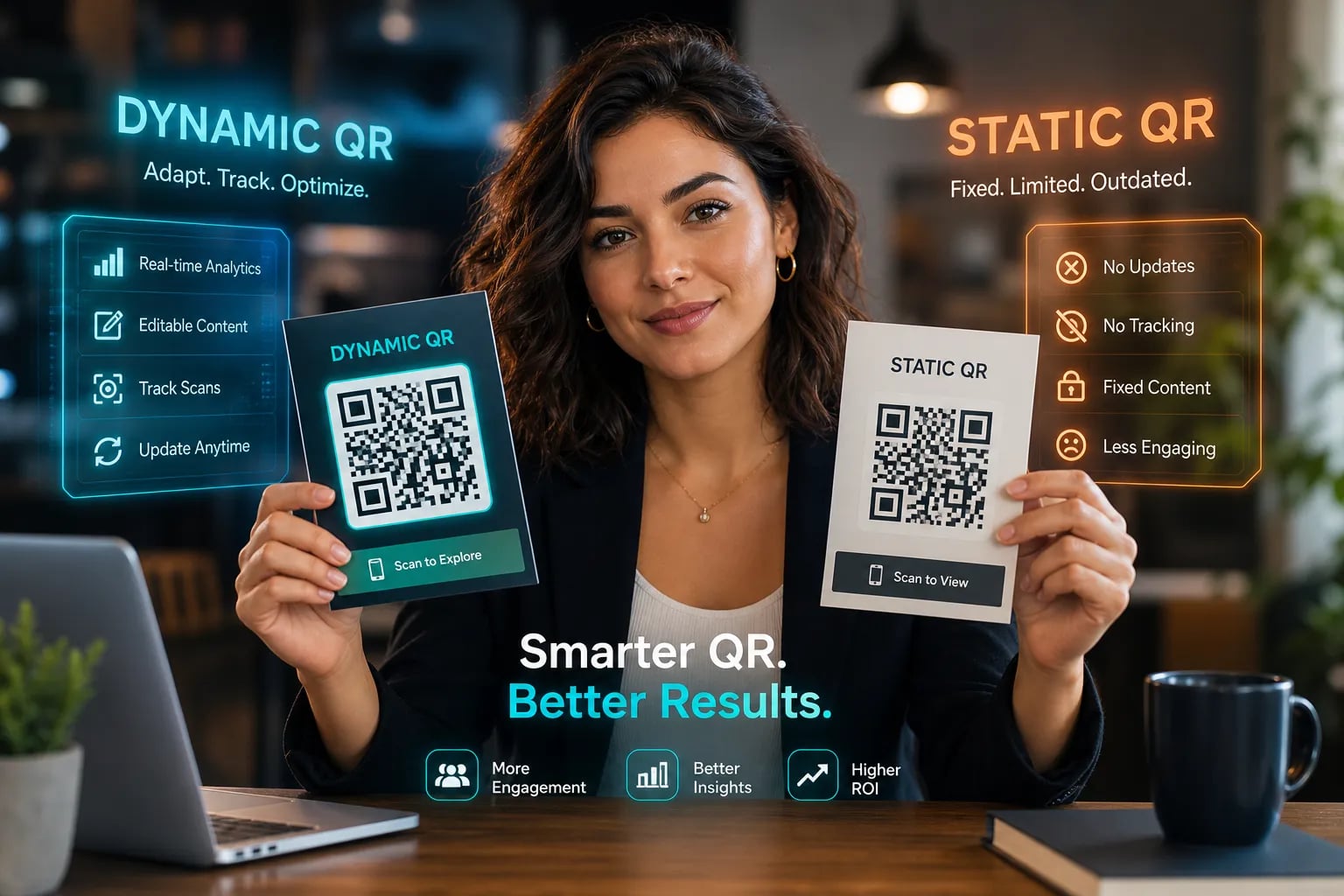
Static QR codes are “print-and-pray”. Once they’re on packaging or posters, the destination is locked. If the page changes, the campaign changes — or dies. Dynamic QR services act like a routing layer: the printed code stays the same, but the link behind it can evolve. Marketing teams use this for seasonal swaps, multi-step funnels, and emergency fixes when a landing page breaks.
2) Analytics must be specific, not vanity-driven
Most free tools offer either no analytics or a single scan count. That’s not enough to decide whether a bus shelter, point-of-sale stand, or product label is doing its job. Look for platforms that break scans down by time, geography, device/OS, and repeat vs unique scanners. The best services also let you tag each QR to a campaign so results don’t become a spreadsheet nightmare.
3) Brand trust matters more than most teams realise
Consumers are increasingly wary of QR codes. If a scanned URL looks random, shortened, or mismatched to your brand, people bounce. Marketing-grade platforms let you use a custom branded domain and HTTPS, so users don’t feel like they’ve been dropped into the unknown. This also helps protect against code replacement scams in public spaces.
4) Print reality punishes weak design tools
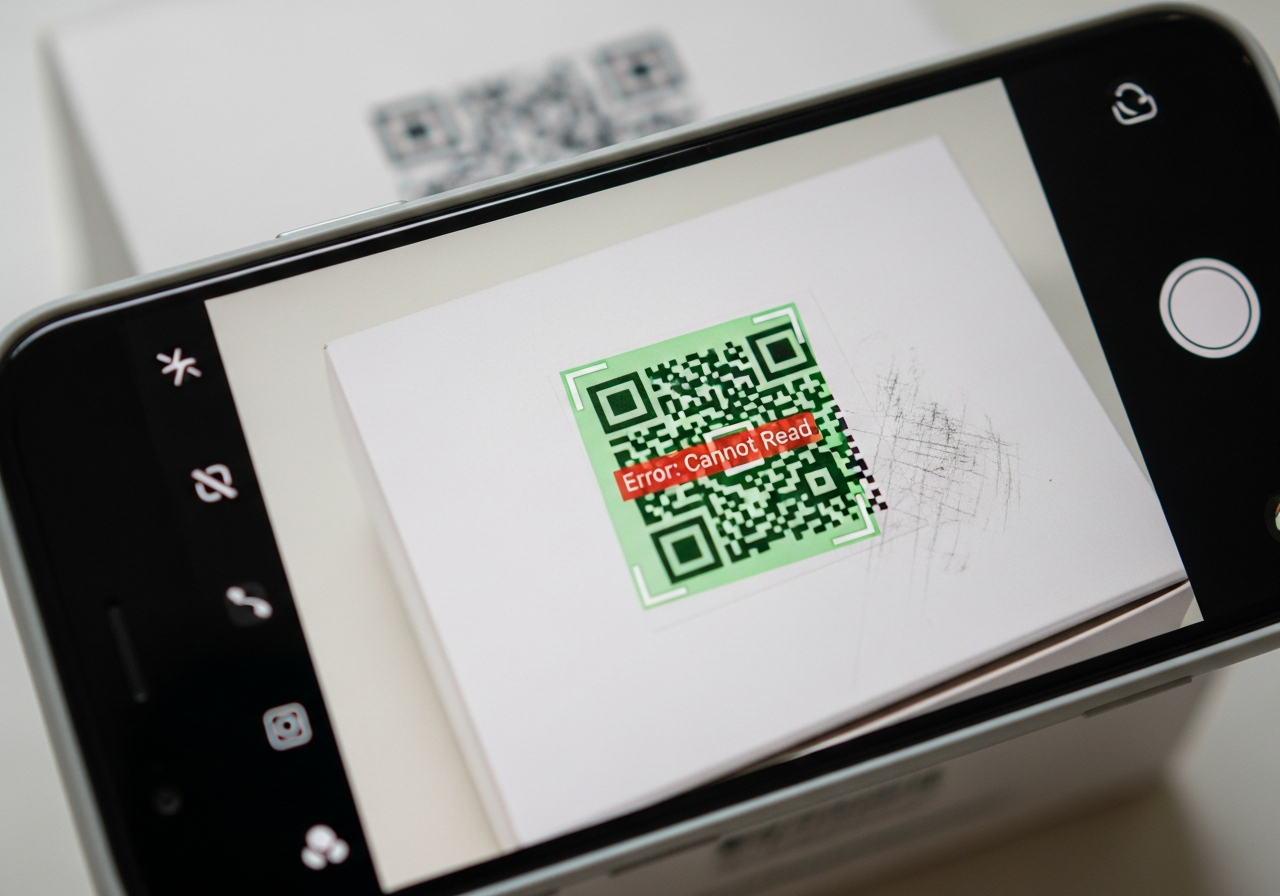
What scans in a perfect PDF may fail on a curved bottle, sun-faded poster, or low-ink office printout. Better services provide contrast checks, safe-logo placement, vector downloads (SVG/PDF), and error-correction presets that survive real-world abuse.
5) Integrations decide whether QR becomes a channel or a toy
Serious teams pipe QR analytics into GA4, CRM systems, BI dashboards, or marketing automation. If your QR platform can’t export clean data or connect to standard tools, you’ll struggle to prove ROI.
FAQs
Is a free QR code generator good enough for marketing?−
It can be — if the QR is truly disposable and you don’t need analytics. But if the code is tied to packaging, ads, or anything that stays in the world for months, a free static generator becomes risky: you can’t update the link, you can’t measure performance properly, and you often can’t control the URL the user sees.
What features should I prioritise first?+
Start with dynamic QR codes and scan analytics. After that, prioritise branded domains/HTTPS and high-quality vector downloads. Those four features cover most real-world marketing failure points.
Can QR codes hurt customer trust?+
Yes. If a scan shows an unfamiliar domain or a messy shortened link, users hesitate. Use clean branded URLs, avoid unexpected login/payment prompts, and place QR codes in contexts that make sense to your audience.
How do dynamic QR codes improve ROI?+
They reduce wasted print by letting you update campaigns without reprinting, and they give you measurable feedback about what placements and offers actually work. Most teams see QR become a repeatable acquisition channel only once they can measure and optimise it.
Is it safe to use QR codes for payments or promotions?+
It can be, but only with a secure platform, HTTPS destinations, and internal checks to prevent tampering. If your QR flows include payments, coupons, or account actions, you want governance and change-tracking to prevent fraud.
Talk to an Xcan It Specialist
Planning a QR-led campaign and want measurable results without security headaches? We’ll help you design dynamic QR journeys that stay on-brand, track cleanly, and convert.