5 Dynamic QR Code Generators UK Businesses Should Consider in 2023
In 2023, QR codes slipped from “pandemic workaround” to permanent infrastructure for UK businesses. They now sit on packaging, invoices, posters, and support journeys — which means the platform behind those codes is quietly deciding what is tracked, where data lives, and how painful it would be to switch later. This guide looks at five dynamic QR code generators that UK organisations actually use, and compares them on more than just template libraries.
💡 Short answer
If you run a UK business, the “right” dynamic QR code generator is the one that keeps your links editable, your data under control, and your costs predictable. In practice, that narrows the field to platforms that support dynamic (editable) QR codes, provide useful analytics, explain their GDPR / UK GDPR stance in plain English, and give you a way out if you ever need to migrate. In this guide, we focus on five serious contenders — Xcan It, Uniqode, Flowcode, QR TIGER, and QRCode.co.uk — and how they differ once you look beyond the marketing pages.
5 dynamic QR code generators worth a closer look
- 1. Xcan It — Dynamic QR built around real-world deployments Xcan It is a dynamic QR code management platform designed for businesses connecting print, products, and campaigns. It lets you create, update, and track QR codes from a single dashboard, with branded, high-contrast designs and a focus on keeping links editable over the long term. Its free QR generator makes it easy to experiment, while the subscription platform adds structured management and tracking for large estates of codes.
- 2. Uniqode (formerly Beaconstac) — Enterprise-ready with deep integrations Uniqode pitches itself as a full QR code management platform for businesses: editable (dynamic) QR codes, real-time analytics, bulk generation via CSV/API, and rich integrations with tools like Zapier, Slack, and Google Ads. Its enterprise materials highlight GDPR compliance and security certifications such as SOC 2 and HIPAA, alongside features like custom domains and multi-user governance — useful for larger teams that need more than just “download a PNG.”
- 3. Flowcode — Campaign-focused with strong first-party data story Flowcode is a dynamic QR platform that leans into marketing and offline-to-online attribution. Its Flowcode 2 enterprise product, API, and help materials emphasise real-time analytics, first-party data capture, and features like “Smart Rules” that route scanners based on device, time, or other signals. If you care about measuring campaign ROI and building owned audiences from QR scans, Flowcode is clearly positioned at that end of the spectrum.
- 4. QR TIGER — Feature-heavy with visible security credentials QR TIGER offers a broad mix of dynamic QR types (URLs, files, Wi-Fi, multi-URL, and more) plus branding tools and campaign analytics. What stands out is its security marketing: the company states that it is GDPR and CCPA compliant, and that its platform is ISO 27001 certified, which is a plus for organisations treating QR data as part of their wider information security landscape.
- 5. QRCode.co.uk — Long-standing UK presence with simple dynamic options QRCode.co.uk is a UK-based provider with static and dynamic QR options, allowing you to change destination URLs after printing and use a built-in short URL service. Its focus is on straightforward generation and branding rather than deep enterprise governance, which makes it a sensible option for UK businesses that want something familiar, local, and not overloaded with features.
All five platforms support dynamic QR codes and analytics. Where they diverge is in security posture, integrations, governance, and how clearly they explain pricing and limits once you leave the homepage and start reading the small print.
How to choose between these 5 dynamic QR platforms
- Start with your risk profile, not the logo editor. If QR codes will live on packaging, safety information, or customer communications, you need to care about uptime commitments, export options, and security certifications as much as colours and shapes.
- Decide what “good enough” analytics looks like. Some platforms specialise in deep campaign analytics and first-party data; others focus on simple scan counts over time. Work out whether you need detailed breakdowns by device and location, or just a reliable sense of usage trends.
- Check the GDPR / UK GDPR story in writing. Look for providers that publish GDPR pages, list subprocessors, and explain where data is stored. For anything more than basic link redirection, treat the platform as a data processor and make sure legal is comfortable with the documentation.
- Watch for soft limits and “fair use” clauses. Free and entry-level plans often cap dynamic codes, scans, or team members. Model your likely volumes in 12–18 months and see which platforms stay economical once your QR use grows beyond a handful of pilots.
- Plan the exit before you roll out. Prefer platforms that support custom domains and export tools, so that if you ever need to switch, you can move links and analytics without a full reprint. If a provider can’t explain how you would leave, that’s your early warning sign.
FAQs
What exactly is a dynamic QR code, and why do businesses prefer it?−
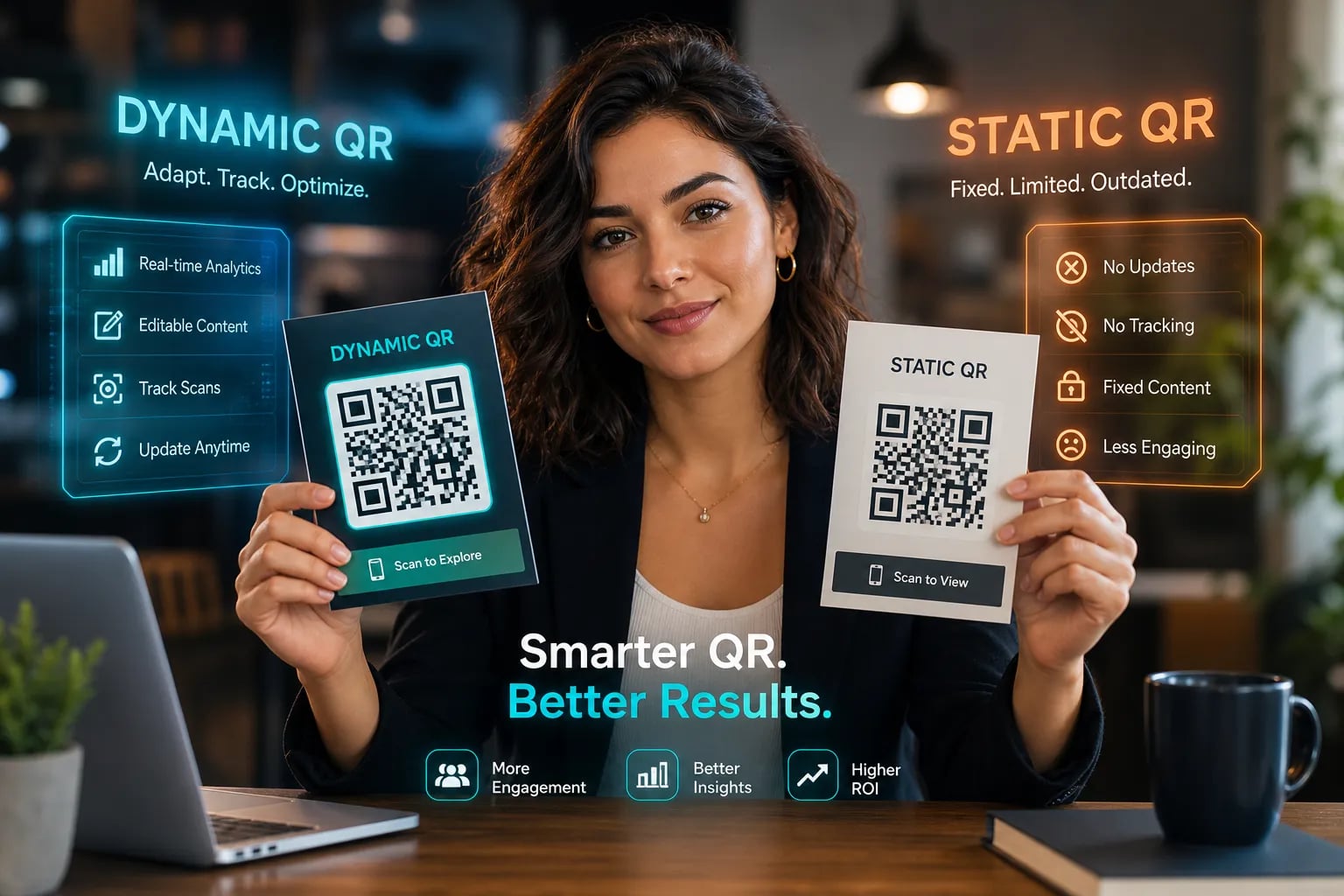
A dynamic QR code points to a short redirect URL on your QR platform instead of encoding the final destination directly. That extra hop lets you edit the target link after printing, collect scan analytics, and sometimes apply rules based on time, location, or device. Static codes are fine for simple, unchanging links; dynamic codes are better for anything that might need to change or be measured.
Are all dynamic QR code generators GDPR-compliant for UK use?+
No platform is “magically” GDPR-compliant by default — it depends how you configure and use it. That said, some providers are far clearer than others about GDPR and security. When you’re comparing options, look for published GDPR statements, data processing terms, and information on hosting regions and certifications (for example, SOC 2 or ISO 27001) and involve your legal or DPO early in the process.
Can I safely use free plans for customer-facing campaigns?+
Free tiers are good for experimentation, but they often come with hidden trade-offs: watermarks, limited or non-editable codes, stricter scan caps, or weaker contractual guarantees. For anything mission-critical — packaging, signage, service journeys — it’s safer to move to a paid tier where you understand the limits and have some kind of service commitment.
How do I avoid being locked into a single provider?+
The two big levers are custom domains and export options. If scans route through a domain you control, you can change where that domain points in future. If a platform lets you export your link mappings and analytics, you can rebuild them elsewhere. Without those, leaving often means reprinting and losing historical data.
Is it worth paying more for security certifications like ISO 27001 or SOC 2?+
If your QR journeys touch sensitive data or regulated industries, certifications like ISO 27001 and SOC 2 can make security and compliance reviews significantly easier, because they show the provider has formal controls and audits in place. For smaller, low-risk use-cases, they’re a “nice to have” rather than a deal-breaker, but they’re rarely a bad sign.
Talk to an Xcan It Specialist
Comparing dynamic QR platforms for your UK business? We can help you map the options to your real-world journeys — and design a QR setup that’s flexible today and defensible tomorrow.