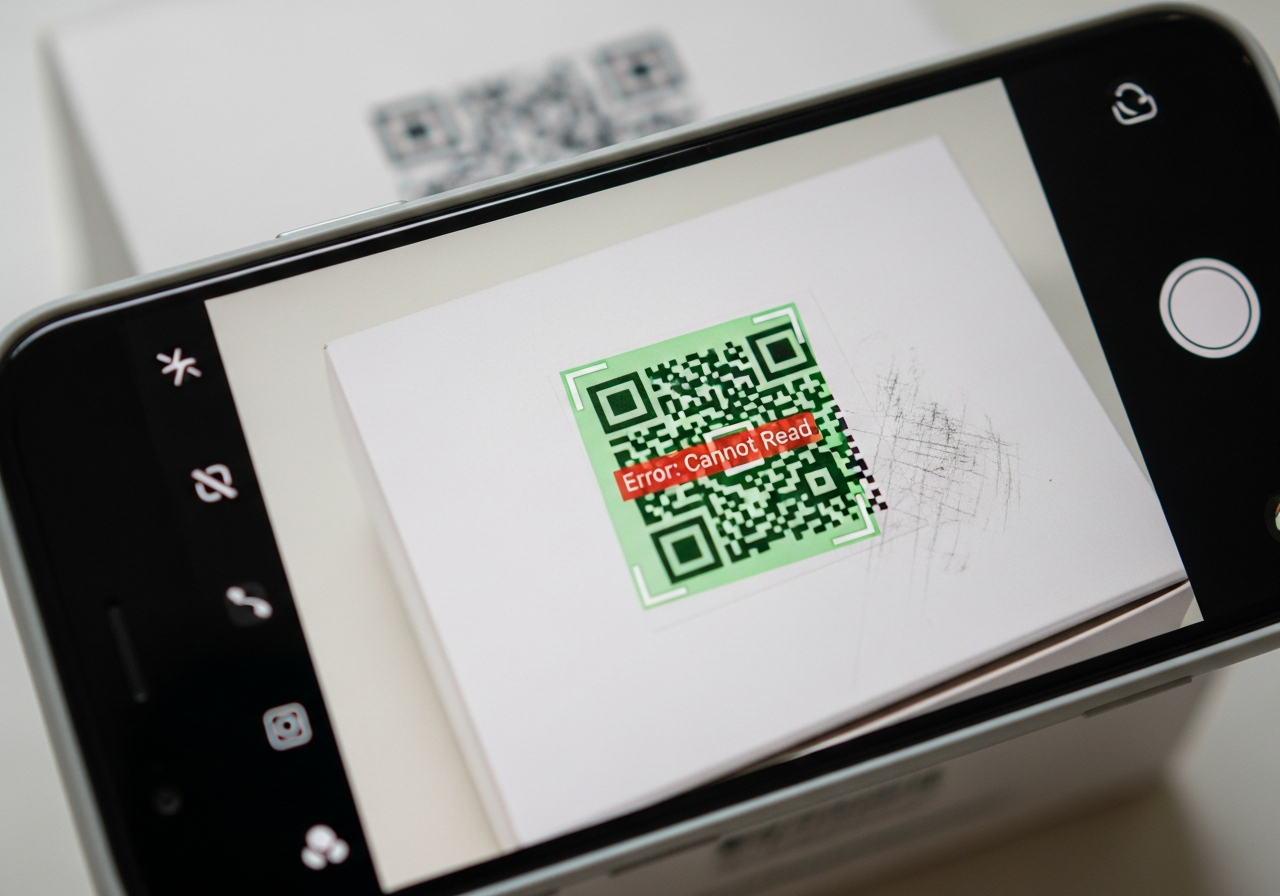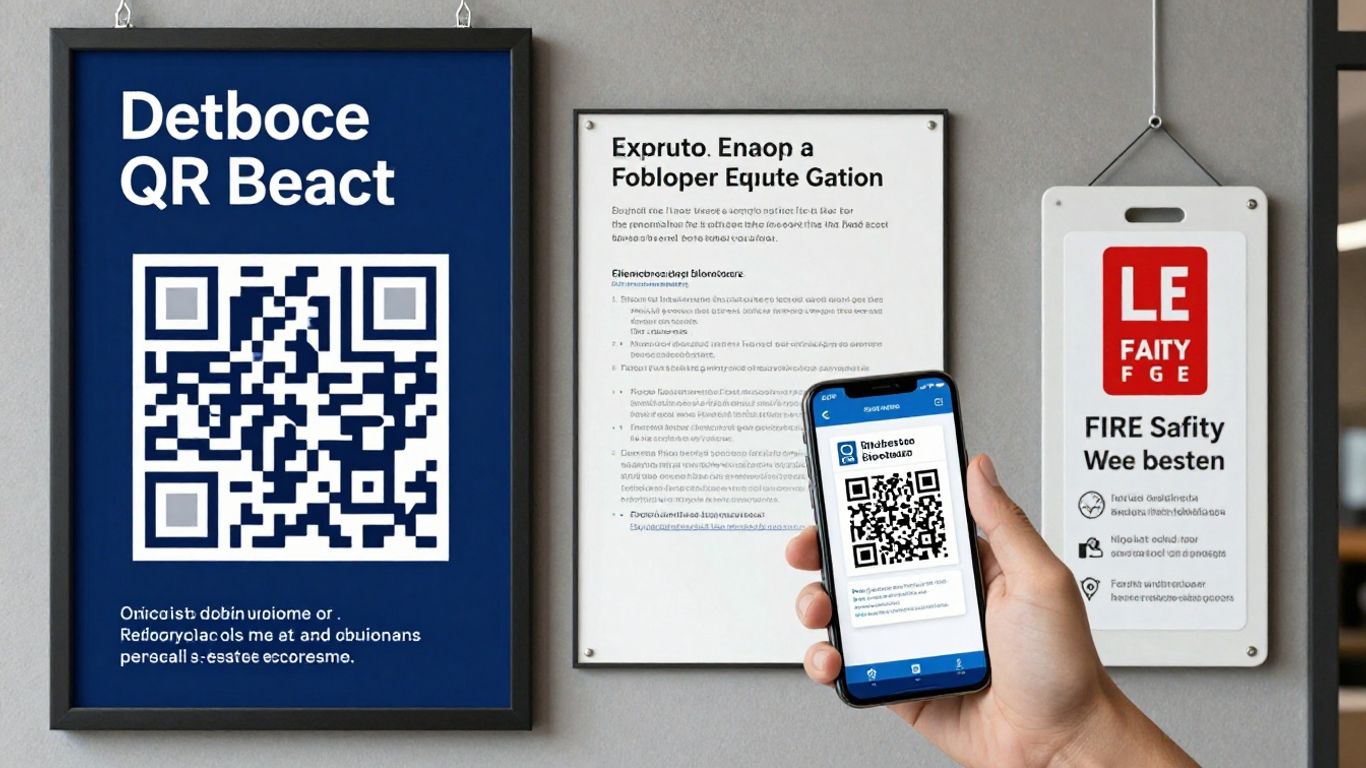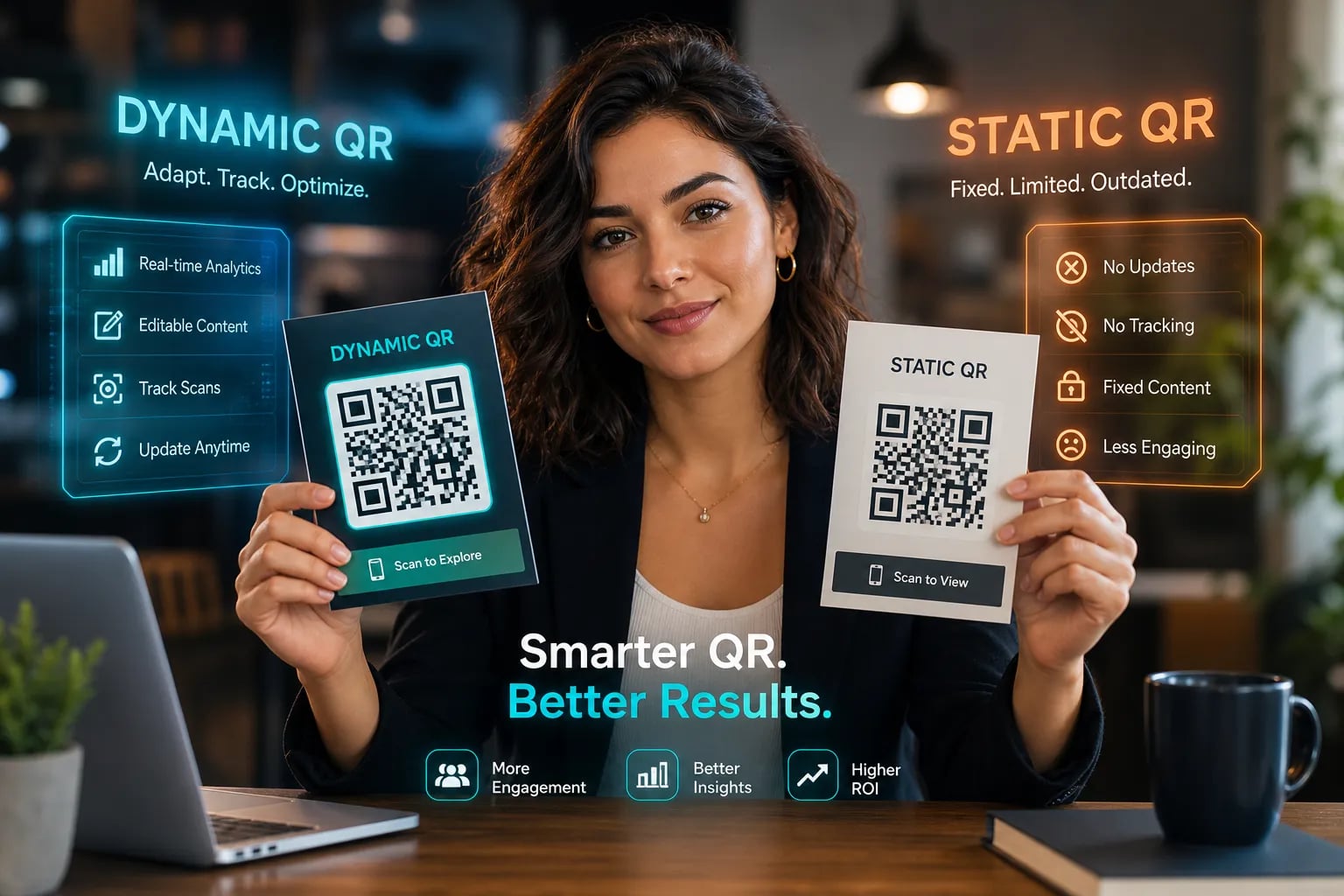

Dozens of QR code tools exist, and almost all of them are built for the same thing: digital campaigns. Short runs, screen-based distribution, and the assumption that if something needs changing, you just swap the file. That model works fine when a QR code lives on a webpage or a social media post. It completely breaks down when the code is printed on fire safety signage, fixed to equipment on a construction site, or embedded across a university campus on materials that cost thousands to reprint.
For UK organisations deploying codes on physical assets, choosing the right QR code management platform is one of the most consequential infrastructure decisions you will make before that first batch goes to print. A dead link six months later is not a campaign problem; it is an operational failure. This guide covers every criterion that matters for UK buyers: dynamic editing capability, analytics depth, GDPR and data residency obligations, sector-specific compliance, pricing structure, and procurement routes. By the end, you will know exactly how to build a shortlist and what to test before you commit.
Platforms like Xcan It are built specifically for this physical-world context. Many campaign-focused competitors are not. Understanding that distinction is the first and most important step in making the right decision.
Why most QR code tools fall short for UK organisations
The majority of QR platforms on the market were designed for digital marketing teams running time-limited campaigns. Their core assumption is that if something changes, you update the file and redistribute it. That works when a QR code appears on a digital banner. It is catastrophic when the code is laminated to a door, printed on packaging at scale, or installed on roadside signage maintained by a council.
Once a physical material is deployed, the tool underpinning it needs to behave like infrastructure, not a campaign widget. You need to update destinations without reprinting, monitor engagement without manual exports, and control access without calling a developer. Most QR generators cannot do any of these things, because they were never designed to. The gap between a QR generator and a genuine QR code management platform is wide, and UK organisations tend to discover it only after deployment, when the cost of switching is at its highest.
UK organisations also face a specific set of operating conditions that generic platforms rarely address. Public sector procurement requires compliant routes like G-Cloud. UK GDPR places obligations on any platform collecting scan data, including location and device information. Sustainability targets penalise wasteful reprinting. Sector regulations in construction under the Building Safety Act, in NHS asset management, and in fire safety all create audit and traceability requirements that a campaign-focused tool simply is not equipped to handle. A platform without these considerations built in creates work rather than removing it.
The essential features a QR code management platform must have
Dynamic destination editing is the single most important capability to confirm before anything else. This is the ability to change where a QR code points after it has been printed, without generating a new code or reprinting any physical material. Any platform that cannot do this is a design tool, not a management platform. Confirm also that dynamic editing is available on every plan, not just at enterprise tier. Several platforms advertise dynamic codes prominently but lock the feature behind pricing tiers that small and mid-market teams cannot access. For examples of how providers present dynamic features across plans, see the 5 Best Dynamic QR Code Generators for UK Businesses in 2023, Xcan.it.
A centralised dashboard is essential for any organisation managing more than a handful of codes. Without it, managing even a modest code inventory degrades into spreadsheet maintenance. The dashboard should allow teams to create, update, organise, and monitor all codes from a single interface, with role-based permissions that restrict access by department, client, or site. Xcan It’s Create, Connect, Control system is designed around exactly this lifecycle, giving teams full visibility from first print to ongoing management across every deployed code. That kind of structured oversight is what separates a scalable QR code management platform from a collection of individually generated static images. For a focused discussion of platform capabilities in marketing and campaign control, see Best QR Code Management Platform for Marketing and Campaign Control.
Professional QR code design matters more than it sounds. Codes deployed on public-facing physical materials need to look deliberate, not auto-generated. Colour customisation, logo embedding, and format flexibility (PNG, SVG, and print-ready PDF) are standard requirements for any organisation producing materials at a professional level. Check whether branded design is locked behind a premium tier, because some platforms treat it as an upsell rather than a baseline feature.
Scan analytics and reporting: what to actually look for
Core metrics your platform should provide
Basic scan counts tell you almost nothing on their own. A capable platform should provide geo-location data at city and country level as a minimum, device type and operating system breakdown, time-of-day scan patterns, and a split between total and unique scan counts. These metrics allow organisations to understand where engagement is happening, on which devices, and at which times, information that directly informs both operational decisions and campaign optimisation.
For marketing teams, the ability to append UTM parameters to QR destinations and pass data into Google Analytics, HubSpot, Salesforce, or a campaign dashboard is critical for attributing offline-to-online conversions accurately. Platforms like Uniqode support UTM tagging and offer documented integrations with major CRM and analytics tools. See Uniqode’s introduction to QR code analytics for details on the data fields and events their API surfaces. Before integrating scan data with any regulated system, UK buyers should verify whether that data flows through UK or EU-based infrastructure, particularly in healthcare, education, and public sector contexts where data residency matters.
Reporting access and export options
Reporting access is another area where platforms diverge considerably. Check whether analytics are available in real time through the dashboard, exportable as CSV or PDF for internal reporting, and accessible via API for teams that want to pull scan data into custom dashboards or business intelligence tools. Some platforms restrict export functionality to enterprise plans, which materially increases total cost of ownership for mid-market buyers who need reporting without enterprise-level spend.
UK-specific requirements that narrow the field
Any QR code platform that collects scan data, including location and device information, is processing personal data under UK GDPR. Organisations need to understand where that data is stored, whether it is processed on UK or EU servers, how long it is retained, and whether the platform signs a Data Processing Agreement positioning itself as a data processor. This rules out several US-headquartered platforms that store data in jurisdictions outside the UK adequacy framework without adequate transfer safeguards. For a concise primer on how UK GDPR applies to digital services, see this UK GDPR overview.
The Information Commissioner’s Office does not issue specific QR code guidance, but general GDPR principles apply in full. Platforms that anonymise scan data by default (no full IP addresses, no individual identifiers) meaningfully reduce compliance risk for organisations operating in regulated sectors.
Certain UK sectors carry specific obligations that intersect directly with QR deployments. Construction firms using QR codes for asset tracking and safety inspections under the Building Safety Act need auditable records, version-controlled content updates, and controlled access permissions. NHS trusts managing equipment labels need traceable service histories that align with GS1 asset management standards. Councils maintaining public notices need the ability to update destinations instantly without issuing new physical materials. A platform built for generic digital campaigns is not designed for these environments, and the operational risk of using one is real.
UK public sector organisations should check whether their preferred vendor is accessible via the G-Cloud Digital Marketplace through the Crown Commercial Service. G-Cloud allows councils, NHS trusts, universities, and other public bodies to procure cloud software without running a full tender process, which can cut procurement timelines by weeks. Note that QR-specific listings on the marketplace may be sparse, so a direct search using terms like “QR code management software” is worth running before assuming availability. For software not listed on G-Cloud, the Crown Commercial Service Technology Products and Associated Services framework (TePAS 2, running until October 2027) may provide a compliant route. UK-native vendors already familiar with these frameworks will accelerate procurement compared to global platforms with no existing relationship with UK buying processes. Check the relevant G-Cloud listings on the Crown Commercial Service site for the current procurement agreements and framework details: G-Cloud / RM1557.15 details.
Pricing models and total cost of ownership
Most platforms price on a combination of active dynamic QR code count, monthly scan volume, and user seats. Entry-level plans typically start between £5 and £15 per month and cover a limited number of active codes with capped scans. Mid-tier plans in the £40 to £100 range unlock higher code volumes, deeper analytics, and team features. Enterprise pricing is bespoke and generally includes SLA commitments, dedicated support, and API access at scale. These ranges reflect typical market positioning across vendors including Hovercode, Uniqode, and comparable mid-market tools; always verify current pricing directly with each vendor.
Xcan It offers a free plan with ten active dynamic QR codes and no expiry, which makes it genuinely useful for initial evaluation rather than just a lead generation tool. At £150 per year, the annual plan works out to £12.50 per month and includes unlimited dynamic QR codes, scan analytics, branded styling, and a centralised dashboard. The monthly plan is £29.95, with additional seats at £19.95 per month. There are no per-scan or per-code charges, and a 30-day money-back guarantee applies to paid plans. For organisations that need physical QR code production alongside the software, Xcan It also provides in-house printed QR code services, a practical differentiator for UK buyers who want to consolidate their software and print supply chain with a single domestic provider. If you’re evaluating options specifically as a startup, this roundup may be useful: 3 Best Dynamic QR Code Generators for UK Startups with Pros & Cons, Xcan.it.
The most significant hidden cost in this category is reprinting, and it is the one that QR code platforms never advertise. When a static code is used, or when a platform is shut down and codes become orphaned, organisations face the full cost of reprinting every affected physical asset, plus the operational disruption of dead links in the interim. Dynamic platforms eliminate this cost, but only if the subscription remains active and the platform provides genuine link continuity. Before committing to any vendor, ask explicitly what happens to your deployed codes if you cancel your subscription or migrate to a different platform. The answer tells you more about a platform’s design philosophy than any feature list. For a practical explainer on the difference between static and dynamic QR codes, Bitly’s overview of dynamic QR codes provides a clear technical comparison.
API access, integrations, and scalability
For marketing agencies and in-house teams, the ability to connect QR scan data to HubSpot, Salesforce, or similar CRMs matters for lead attribution and campaign ROI reporting. Uniqode provides a documented REST API with webhook support for real-time scan events, rate limits of approximately 1,000 requests per hour on standard plans (confirm current limits with Uniqode directly, as enterprise agreements may vary), and pre-built integrations with Salesforce, HubSpot, and Google Analytics. Before committing to any platform, confirm that the integration you need is available on the plan you are evaluating, not just at enterprise level. Several platforms advertise API access prominently while limiting it to custom-priced tiers in practice.
Facilities managers, construction firms, and large estates teams often need QR data to flow into asset management systems, ERP platforms, or compliance records. This requires a stable API with documented endpoints, clear rate limits, and a data schema that maps to the target system without custom development work. Platforms designed for marketing campaigns typically have weak or absent asset management integration stories, because their architects never considered that use case. Purpose-built physical-environment platforms have a structural advantage here that campaign-focused tools cannot easily replicate through feature updates alone.
When evaluating scalability, ask vendors for concrete answers on three specific points: how many active codes the plan supports, how many scans per month are included, and what happens operationally and financially when you exceed either limit. Platforms that obscure this information in sales conversations typically have inflexible pricing structures that penalise growth. A vendor confident in their scalability should give you a clear, direct answer without a follow-up sales call.
Comparing your shortlist: platforms available to UK teams
Uniqode (Singapore-headquartered, formerly Beaconstac) appears consistently in UK enterprise evaluations of QR code management platforms. It holds ISO 27001 certification, offers a strong REST API with CRM integrations, and provides one of the more comprehensive analytics suites available, including anomaly detection, city-level geo data, and OS and browser breakdowns. It is a credible choice for organisations whose primary use case is digital marketing with physical touchpoints, particularly where Salesforce or HubSpot integration is a hard requirement.
Scanova (India-based, globally compliant) provides detailed analytics including UTM support, Google Analytics integration, branded design with AI-generated styling, and competitive pricing at mid-market tiers. Flowcode (US-based) is used by high-profile brand campaigns and focuses on design-forward QR codes with solid scan reporting. Both are capable platforms for campaign-focused use, but neither is purpose-built for the physical management requirements that dominate UK regulated sectors. Data residency considerations also apply to both, as neither operates from UK or EU infrastructure by default.
Xcan It is a UK-native QR code management platform built specifically for organisations deploying codes on physical assets at scale. Its centralised dashboard supports real-time destination updates, role-based permissions, and scan analytics across all deployed codes. The in-house printed QR code production service is a practical differentiator: it allows organisations to source both the management platform and print-ready physical assets from one UK provider, eliminating the coordination gap between software and physical deployment that most other platforms on this shortlist leave unresolved. For councils, NHS trusts, universities, construction firms, and agencies managing multi-site print campaigns, that combination is a genuine operational advantage. UK GDPR compliance is designed in rather than retrofitted, support runs in UK business hours, and the product roadmap responds to UK sector requirements rather than global campaign marketing trends.
How to run a trial and move to procurement
QR code management platform UK procurement checklist
Before booking demos, document your requirements across four categories: code volume (how many active dynamic codes you need now and in twelve months), analytics depth (what metrics your team actually acts on), compliance obligations (GDPR, sector regulation, procurement route), and integration priorities (which existing systems must connect). Vendors who cannot answer these questions directly in a first conversation are unlikely to meet your requirements after purchase. A vendor who asks you clarifying questions before presenting a solution is a much stronger signal.
The only valid trial for organisations deploying QR codes on physical assets is one that mirrors that scenario. Print a test code, fix it to a real surface, update the destination twice during the trial period, scan it from multiple devices, and export the resulting analytics. This process will surface every operational limitation that a dashboard-only evaluation misses, including redirect speed, mobile compatibility, and analytics latency. A trial that stays entirely within the software interface and never touches a printed code is not a meaningful test of physical-world suitability.
Public sector buyers should search the G-Cloud Digital Marketplace first, framing the requirement around QR code management software specifically rather than broader digital signage or communication tools. Check the Digital Marketplace and TePAS 2 for supplier availability, and note that live searches are necessary because QR-specific listings may be limited. For requirements not covered by G-Cloud, TePAS 2 provides a compliant procurement route through the Crown Commercial Service until October 2027. UK-native vendors already operating within these frameworks will reduce your procurement timeline considerably.
For organisations ready to evaluate a QR code management platform built for the UK market and the physical world, Xcan It’s free plan requires no card details and gives you ten live dynamic codes to test against a real deployment scenario. Start there, run a genuine physical trial, and make your decision based on what the platform does when the code is fixed to a wall.