PIX QR Codes: Why Brazil’s Instant-Pay System Is Leading the QR Revolution
PIX is Brazil’s instant-pay system, built and run by the Central Bank, that lets people and businesses move money in seconds, 24/7. PIX QR codes turn that rail into something you can print, stick and share anywhere — cafés in São Paulo, taxis in Rio, beach kiosks in Bahia. For organisations in Yorkshire who sell to Brazilians, employ Brazilian staff, or operate in Latin America, understanding PIX QR journeys isn’t just “nice context”; it’s a glimpse of where QR-first payments and engagement are heading globally, and a chance to experiment today using Xcan It’s dynamic QR platform.
💡 Short answer
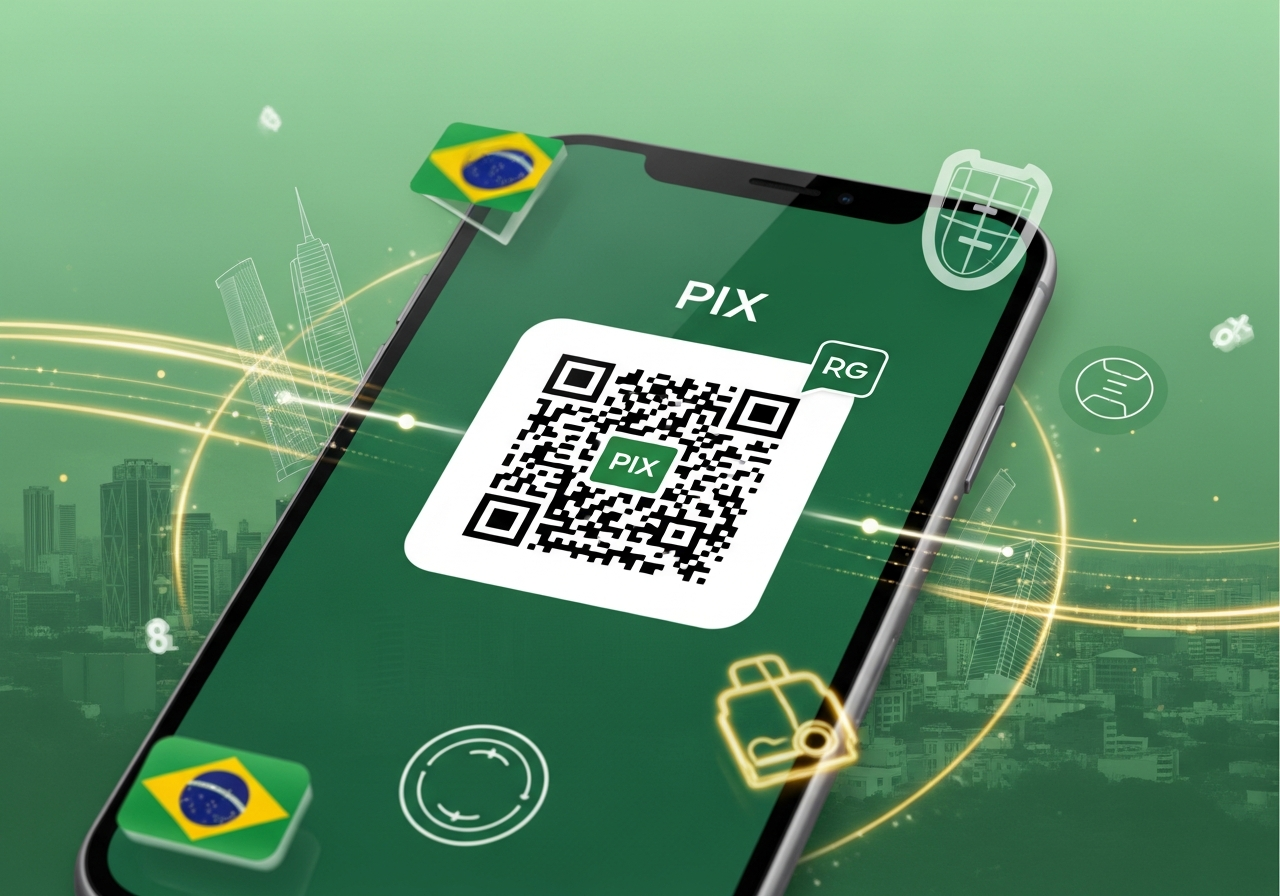
PIX QR codes are scannable codes that trigger an instant payment on Brazil’s national PIX network. A customer opens their banking app, selects PIX, scans the QR and confirms; money moves in seconds from one bank account to another, with both sides receiving realtime confirmation.
PIX QR codes come in static and dynamic forms, and sit on everything from market stalls and utility bills to e-commerce checkout pages. For Yorkshire businesses with Brazilian customers or partners — think online retailers in Leeds, engineering firms in Sheffield, universities in York, or fintechs in Bradford — PIX QR codes are a way to get paid in Brazilian real via rails locals already trust.
By routing those journeys through Xcan It’s dynamic QR platform, you keep Brazilian banks and PSPs handling the money, while Xcan It tracks scans, A/B tests creative, manages campaigns and unifies PIX QR journeys with 15 other QR types in one place.
PIX QR codes in 30 seconds
- What they are: QR codes that initiate an instant payment on Brazil’s PIX network — the national real-time payment rail run by the Central Bank of Brazil.
- Where they work: on paper bills, in-store at tills, street markets, taxis, e-commerce checkout pages, donation forms and P2P transfers between Brazilian accounts.
- Who they help: Brazilian consumers and merchants, plus international businesses (including those in Yorkshire) selling into Brazil or serving Brazilian customers and partners.
- What you need: a Brazilian bank or PSP account that supports PIX, and a way to generate, display and manage PIX QR codes in your apps, invoices or signage.
- Why Xcan It: plug PIX QR journeys into a multi-type dynamic QR platform so you can track scans, label campaigns, test creative and orchestrate PIX alongside 15 other QR types.
How PIX QR codes work — step by step
1) What is PIX and what role do QR codes play?
PIX is Brazil’s national instant payment scheme: a public digital rail where money moves in seconds between accounts, at any time of day, via banks, fintechs and digital wallets. PIX supports several ways to initiate a payment:
- PIX keys (aliases) – phone number, email, tax ID or random key that maps to an account.
- PIX “copy and paste” strings – long payloads that encode payment info.
- PIX QR codes – visual codes that contain the payment payload in a standard format.
PIX QR codes follow Brazil’s BR Code standard for payment QR codes, which builds on EMVCo QR specifications. This ensures any compliant Brazilian banking app can decode and act on a PIX QR, regardless of which bank or fintech issued it.
2) Static vs dynamic PIX QR codes
Brazilian PIX QR codes are usually divided into three types:
- Static PIX QR
- Typically tied to a merchant or person rather than a single invoice.
- Amount may be fixed (e.g. R$10 donations) or left open for the payer to fill.
- Ideal for small merchants, tips, collections and posters where each scan is a separate payment.
- Dynamic PIX QR
- Generated per transaction or per bill.
- Encodes due dates, specific amounts and references.
- Often hosted by a URL so the QR can be updated or expired server-side.
- Composite PIX QR
- More advanced patterns that combine multiple elements (for example, payment + metadata).
At the user level, that complexity disappears. Someone in São Paulo opens their bank app, taps PIX, scans a QR, confirms via PIN or biometrics and sees the money leave their account in seconds.
3) Why PIX QR codes took off so fast in Brazil
Brazil has more than 150 million active PIX users and processes trillions of reais in PIX transactions each month. QR codes are a big part of why adoption exploded:
- They’re inclusive: a simple printed QR lets micro-merchants accept PIX without a card terminal.
- They’re cheap: PIX is free for most individuals and low-cost for businesses, undercutting card fees for many use cases.
- They’re omnipresent: from street food to high-end retail, PIX QR codes are visible everywhere, normalising “scan to pay”.
- They’re flexible: new features like recurring PIX and planned PIX instalments add subscription and “buy now, pay later”-style behaviour on top of core QR journeys.
In other words, PIX QR codes didn’t succeed because they were novel, but because they were woven into everyday life and priced to displace older rails like cash, boleto and high-fee card instalments.
4) How PIX QR codes fit Yorkshire organisations
You might reasonably ask: “We’re in Yorkshire — why should we care about a Brazilian instant-pay system?” A few practical reasons:
- Cross-border e-commerce: Leeds-based online shops selling fashion, football shirts or digital goods to Brazil can offer PIX as a checkout option via local PSPs. At the point of sale, Brazilian customers may see a PIX QR on screen or in-app.
- Brazilian students and staff: universities in York, Leeds and Sheffield often work with Brazilian students, agents and partners. When those partners pay fees via Brazilian banking channels, PIX is increasingly the default rail.
- Tourism and hospitality: Yorkshire hotels, attractions and events that market to Brazil via tour operators may not take PIX directly on-site, but their partners and resellers in Brazil almost certainly do — often via QR.
- Fintech and payments teams: Bradford or Leeds-based fintechs looking at “what’s next” in account-to-account (A2A) payments can study PIX QR journeys as a template for future open banking QR flows in the UK and EU.
Even if you never directly accept PIX in Yorkshire, understanding how PIX QR works teaches you what customers will expect from instant-pay QR journeys globally — speed, clarity, low friction and visible confirmation.
5) Xcan It supports PIX and 15 other QR types
Within Xcan It, PIX sits alongside 15 other QR types you can use to design complete journeys:
URL, text, phone, SMS, Email, WhatsApp, Facetime, Location, WiFi, Event, vCard, Crypto, PayPal, UPI Payment, EPC Payment, PIX payment.
That means a Yorkshire business can build flows such as:
- Brazil-focused landing page → URL QR for campaign information, followed by a PIX payment QR generated or displayed in a partner environment.
- Event QR → PIX QR for Brazilian attendees: registration handled via an Event QR, with PIX QRs used by Brazilian partners to collect local-currency payments.
- vCard QR + PIX QR: Brazilian agents representing a Yorkshire university or tourism operator can carry collateral with both contact and payment QR journeys embedded and tracked via Xcan It.
In all of these, banks and PSPs still run the PIX rails. Xcan It operates one step earlier in the funnel, orchestrating and tracking how people interact with the QR itself.
6) What can Xcan It track around PIX QR journeys?
Xcan It isn’t a bank and doesn’t see PIX balances or transaction details. Instead, it tracks scan behaviour — the missing analytics layer around otherwise opaque payment flows. For PIX-related QR journeys you can see:
- Scan volume and timing – for example, when a social campaign in Brazil actually drives QR scans for a Yorkshire brand.
- Rough geography – which Brazilian regions are interacting most with your collateral (São Paulo vs Rio vs the South, etc.).
- Channel performance – separate codes for Brazilian partner websites, email campaigns, WhatsApp messages and printed leaflets.
- Creative performance – A/B test two different “Scan to pay with PIX” designs or calls to action to see which gets more scans.
Finance teams can still rely on PSP or banking reports for reconciliation, while marketing and commercial teams in Yorkshire finally get sight of “what actually gets scanned” in Brazil.
7) Realistic examples: PIX QR journeys that matter to Yorkshire
A few realistic patterns where PIX QR codes and Xcan It could intersect for Yorkshire-based organisations:
- Leeds e-commerce brand selling into Brazil – A fashion retailer partners with a Brazilian PSP to offer PIX at checkout.
- The on-screen PIX QR that appears after checkout is reached via a dynamic QR URL managed in Xcan It.
- Different Xcan It labels distinguish traffic from Meta ads, Google ads and email campaigns in Brazil.
- Marketing sees which campaign groups actually drive PIX QR scans, not just visits.
- York university working with Brazilian agents – An international office relies on agents in São Paulo and Rio to recruit postgraduate students.
- Agents are given collateral featuring a URL QR to a co-branded landing page plus a PIX QR journey for local fee collection handled by a Brazilian partner.
- Each agent’s QR is tagged separately in Xcan It so the university can see which agents generate the most engagement.
- Sheffield tech consultancy helping UK brands localise payments – The consultancy advises brands on adopting PIX in Brazil.
- They publish case studies as URL QRs and run webinars promoted with Event QRs tracked in Xcan It.
- Where clients implement PIX QR checkouts in Brazil, Xcan It is used to track the “pre-PSP” QR engagement layer.
- Bradford remittance or FX provider – A remittance firm lets Brazilian expats in Yorkshire send money home using corridors that ultimately land in PIX-enabled accounts.
- Shopfront posters in Leeds, Bradford and Huddersfield use dynamic QRs to drive app downloads.
- Brazil-facing campaigns use separate QRs for São Paulo vs Northeast Brazil, giving granular scan data.
- Hull tourism operator partnering with Brazilian travel agencies – A cruise or tour company advertises via Brazilian agencies that collect payment via PIX.
- Each Brazilian agency gets a unique Xcan It QR in their digital brochures, which then routes visitors to the agency’s PIX-based checkout.
- Hull’s commercial team finally sees which agencies actually drive high-intent QR scans.
See PIX QR in action, step by step: this English-language tutorial, “HOW TO PAY BY PIX USING QR CODE (STEP BY STEP)”, walks through the exact screens a customer sees when they scan a PIX QR in Brazilian banking apps. It’s a practical way for Yorkshire teams to visualise how PIX QR journeys feel in the real world — from scanning through to instant confirmation.
8) Pairing PIX QR codes with other QR journeys
Because Xcan It supports multiple QR types, you don’t have to treat PIX QR codes as isolated payment gimmicks. You can design joined-up journeys that combine awareness, education and payment:
- Content + PIX: run Portuguese-language content for Brazilian audiences using a URL QR, then follow up with PIX QR journeys embedded in partner invoices or subscription flows.
- Event + PIX: for hybrid conferences co-hosted with Brazilian partners, Event QRs manage registrations while PIX QRs handle local ticket payments, all labelled in Xcan It.
- Support + PIX: QR codes on packaging or instructions in Brazil can first route to a help page (URL QR) and, if needed, onward to a PIX refund or adjustment flow.
All of this becomes more manageable when QRs for Brazil, the UK, India (UPI), Europe (EPC) and global card journeys live in one dynamic platform instead of scattered across separate tools.
Conclusion: learn from Brazil’s QR future, then apply it to Yorkshire
Brazil’s PIX QR codes show what happens when instant-pay rails, clear standards and QR-first experiences line up. In just a few years, PIX has moved from experiment to default, quietly replacing cash, boletos and even a chunk of card volume in everything from street food to rent payments.
For organisations in Yorkshire, PIX isn’t just an exotic case study. If you sell to Brazilian customers, work with Brazilian partners or want to understand where account-to-account payments are heading, PIX QR journeys are a practical pattern to study and, in some cases, plug into.
By building those journeys on Xcan It’s dynamic QR platform, you don’t need to become a Brazilian bank. You let local PSPs handle PIX while you focus on:
- where your QRs live,
- who scans them and when,
- which campaigns and creatives actually move the needle.
A sensible starting point is to pick one Brazil-facing experiment — a single campaign, a pilot with one partner, or a dedicated landing page for Brazilian visitors — and wire it up with dynamic QRs, including PIX where appropriate. Watch the scan data, make small tweaks, then decide if and how to scale.
In doing so, you’re not trying to “copy Brazil”. You’re using one of the world’s most advanced QR-driven payment systems as a live testbed for how your own customers — in Brazil, in Yorkshire and beyond — will expect instant, QR-first journeys to behave in the years ahead.
FAQs
Can a Yorkshire business actually accept PIX payments?−
Not directly via a UK high-street bank, but yes via partners. Many PSPs, acquiring banks and cross-border providers now offer PIX as a payment method. In practice, a Yorkshire business would integrate with a PSP that:
- connects into PIX in Brazil,
- shows a PIX QR to Brazilian customers, and
- settles funds back to the business in GBP or another currency.
Xcan It doesn’t replace those PSPs; it helps you track and manage the QRs that lead into those payment experiences.
Is PIX safe for businesses and customers?+
PIX was designed and is operated by the Central Bank of Brazil, with bank-grade security, strong customer authentication and anti-fraud controls. As with any instant-pay rail, there are fraud and social-engineering risks, which Brazilian banks and regulators continuously address. For UK or Yorkshire organisations, the key is to:
- work only with reputable PSPs or partners for PIX acceptance,
- ensure clear branding and messaging around QR codes, and
- monitor payment performance and disputes via your PSP’s reporting.
Does Xcan It see PIX transaction details or bank balances?+
No. Xcan It focuses on QR scans and redirects, not on underlying PIX transactions. Your PIX flows sit with banks or PSPs in Brazil. Xcan It simply records when a QR is scanned, from what device and which campaign or label it belongs to, before handing users off to the relevant payment or landing page.
What happens if our Brazilian PSP or PIX setup changes?+
If you hard-print PIX QRs that are tightly bound to a specific PSP URL or payload, you may need to regenerate them when you change provider. If you instead route people through dynamic Xcan It URLs, you can often:
- update the destination URL or journey behind the QR,
- switch PSPs or landing pages, or
- introduce extra steps (e.g. disclosures, language choice) before payment,
without reprinting the original QR artwork.
Can we use different PIX QR journeys for different Brazilian markets or partners?+
Yes — and it’s usually the right approach. With Xcan It you can create distinct dynamic QRs and labels for, say, São Paulo vs Rio vs Brazil’s Northeast, or for each Brazilian reseller, and still terminate those flows at the same or related PIX-enabled checkouts. That gives your Yorkshire team clearer reporting on who is really driving engagement.
Will PIX QR codes ever matter inside the UK itself?+
PIX itself is local to Brazil, but the pattern — national instant-pay rails + QR-first experiences — is spreading. The UK already has Faster Payments and is moving towards more open banking-based A2A journeys; other regions have their own schemes. Studying PIX QR now helps Yorkshire businesses prepare for similar QR-driven instant-pay flows in their home markets, even if the logos and acronyms are different.
Talk to an Xcan It Specialist
Thinking about Brazil, PIX, or QR-first payments more broadly — and want to actually see how people interact with your codes? We’ll help you plug PIX, UPI, EPC, Payment, Event and URL QR flows into Xcan It’s dynamic tracking, routing and branding tools for your Yorkshire-based team.